The Feast After the Fast…
There is a reason that Italian Easter food is so abundant and elaborate, and it has everything to do with what preceded it. The traditional forty days of Lent – forty days of abstinence from meat, from eggs, from the rich and the indulgent – have whetted appetites and foodie desires that the delights of Easter Sunday release all at once.
Although few Italians now follow Lenten strictures punctiliously (you might find people giving up chocolate or alcohol for the season, but not much more), the traditions of Lent remain imprinted into the cuisine of Easter, which is simultaneously sensory and symbolic. Everything on the table means something. The lamb means something. The egg means something. Even the shape of the bread means something.
Italy has been doing this for a very long time. The Easter foods we know are a layering of ancient Roman spring ritual, Jewish Passover symbolism absorbed into early Christianity, medieval monastic ingenuity, and extravagant regional diversity. The result is a food culture of incredible richness. And although each region does things its own way, certain constants – the lamb, the egg, the dove-shaped cake – appear everywhere in variations on the same theme.
What follows is a guide to seven of the most essential Italian Easter foods, with a particular focus on Rome. If you are lucky enough to be in Italy at Easter, this is your eating agenda. The sacrifices of Lent are over. Pile your plate accordingly!
Rome Tours
Explore the Magic of Rome
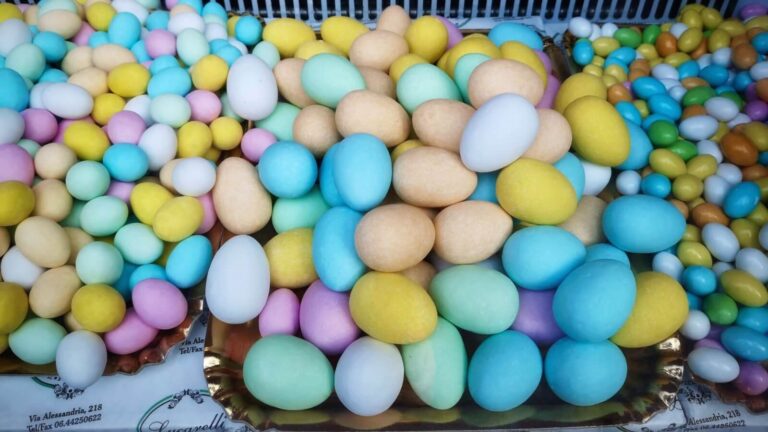
Before we get to the main dishes, a word about how Easter Sunday actually begins in Rome – because the Italian Easter breakfast is a ritual in its own right, and one that most visitors never encounter.
Romans do not go straight to the roast lamb. The day begins with la colazione pasquale, an Easter breakfast spread that would constitute a substantial meal at any other time of year. At its centre is pizza di Pasqua (more on this below), cut in thick slices and laid alongside corallina — a characteristic Roman Easter salami, coarse-grained and peppery, its fat distributed in generous white cubes through the pale pink meat — and hard-boiled eggs, their shells sometimes still dyed red in an echo of an old Byzantine tradition.
There may be slices of lonza (cured pork loin) or capocollo, olives, a wedge of sharp pecorino. There is always good bread. There is always espresso, and sometimes a small glass of something sweet. For the more adventurous there will also be coratella, made from lamb offal, which we’ll cover in detail later in this article.
The logic of the Easter breakfast is the logic of the fast ended: everything that was forbidden for forty days appears at once, in quantity, at the first meal of the feast. Much loved in Rome, it is the meal that marks the transition from Lent to Easter in the consciousness of the city.

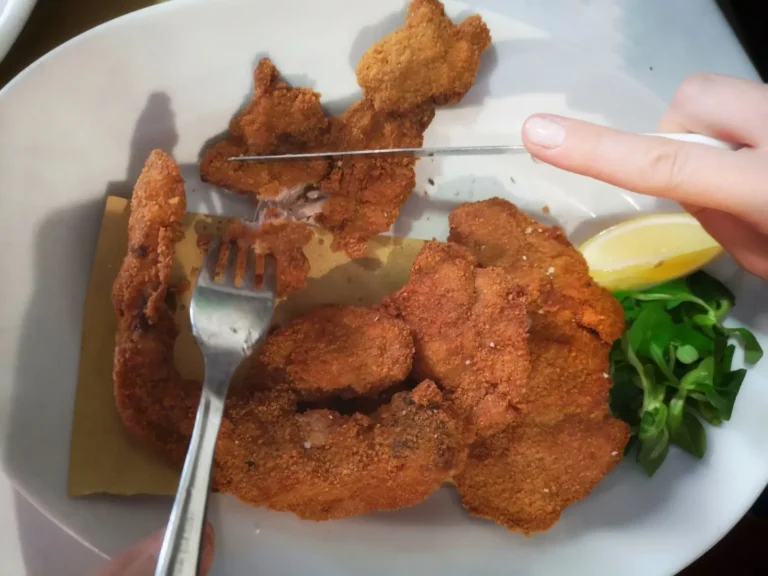
Lamb will be the proud centrepiece of lunch tables all across Italy on Easter Sunday, and Rome is no exception. The tradition stretches back to the Jewish festival of Passover, when a lamb was sacrificed every spring to mark the deliverance of the Israelites from slavery in Egypt.
Christians adapted this symbolism to represent Christ’s self-sacrifice, honouring the Lamb of God with a meal whose meaning has accrued two thousand years of additional resonance since the first Easter.
In Rome you won’t be offered agnello — the standard Italian word for lamb — but abbacchio: milk-fed spring lamb from the pastures of the Castelli Romani and the Roman countryside, slaughtered young and cooked with a tenderness that reflects its brief, pastoral life.
The most classic preparation is abbacchio al forno — roasted slowly in the oven with potatoes, rosemary, white wine and a little garlic until the meat falls from the bone and the skin crisps to something magnificent. You’ll also find cutlets breaded and fried, or panato, which tends to be meltingly tender.
But the version that most specifically belongs to the Roman Easter table is abbacchio a scottadito — small lamb chops grilled directly over charcoal and eaten immediately. Scottadito literally means ‘burned finger,’ and the name gives you a clue as to what you are in for!
On Pasquetta (Easter Monday), when Romans head to the countryside for the traditional gita fuori porta, these chops are grilled outdoors over open fires in a ritual that’s as specifically Roman as the Colosseum.
Muster your courage and grab the bone whilst it’s still fiercely hot; savour the delicious flavour, and nurse your scalded digits like a true Romano.
- Where to Try it: Tried and tested Da Armando al Pantheon is a bastion of traditional Roman cooking just steps from Rome’s iconic ancient temple. Their abbacchio a scottadito is to die for.
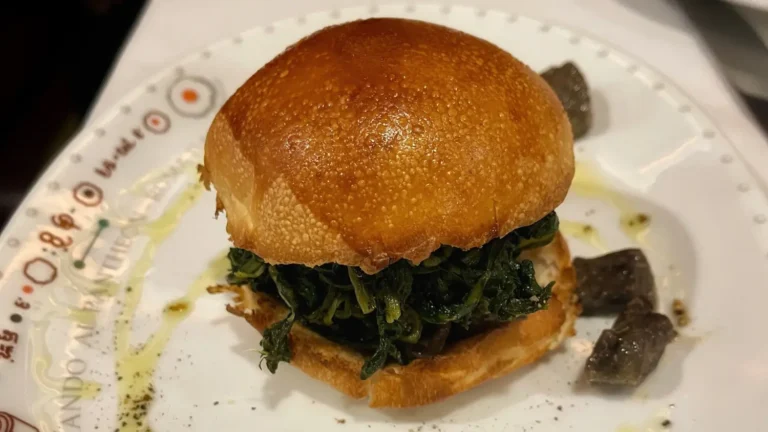
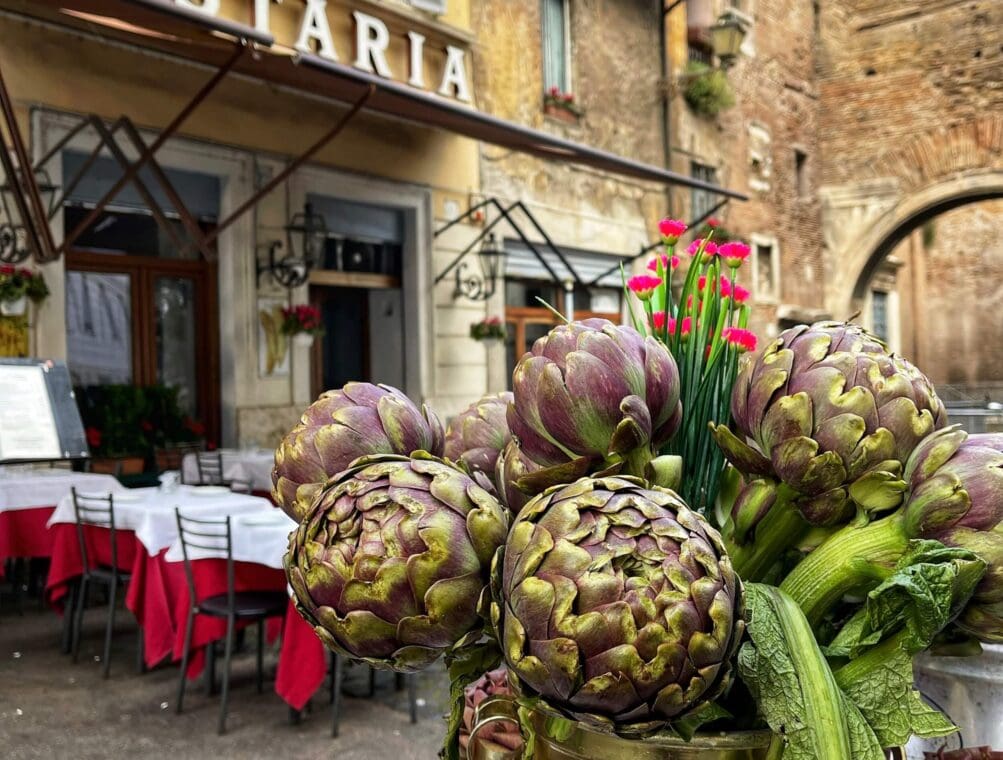
For those who want to eat as Roman as it gets at Easter, this is the dish. Coratella is a preparation of lamb offal – heart, liver, lungs, and sometimes spleen – cooked in a pan with white wine, a little rosemary, and the seasonal artichokes that arrive in the Roman markets at precisely this moment of the year. It’s a dish that wastes nothing and apologises for nothing.
The combination of lamb offal and artichokes is not an accident of convenience, but a considered pairing of two of the season’s defining ingredients, each one accentuating the qualities of the other: the iron richness of the offal, the clean bitterness of the artichoke, the white wine cutting through both.
Coratella belongs to what Romans call the quinto quarto tradition – the paradoxical fifth quarter made up of the offal and secondary cuts left after the four noble quarters of the animal were sold to those who could afford them. These were the foods of the working-class neighbourhoods of Testaccio, Trastevere and the old slaughterhouse quarter, developed by cooks with limited means and considerable ingenuity into a culinary tradition of genuine originality.
At Easter, coratella was traditionally eaten at breakfast, before the main Sunday lunch. The offal was cooked quickly while the lamb roasted slowly, the two preparations marking the sequence of the feast.
If the thought of a savoury plate of intestines with your morning espresso seems a step too far, however, you will still earn plenty of kudos if you order coratella for lunch or dinner instead. You’ll easily find coratella on the menu of most traditional trattorias in Rome on the days around Easter.
- Where to Try it: Flavio al Velavevodetto is a traditional restaurant in Testaccio that specializes in the quinto quarto tradition. Another reliable option is Augustarello, also in Testaccio.
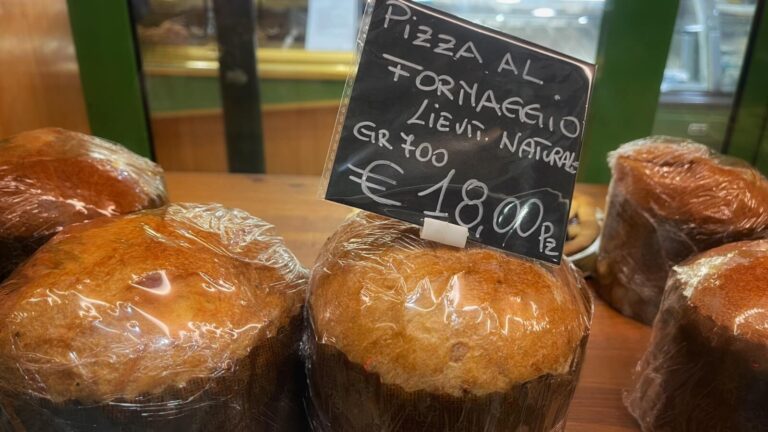
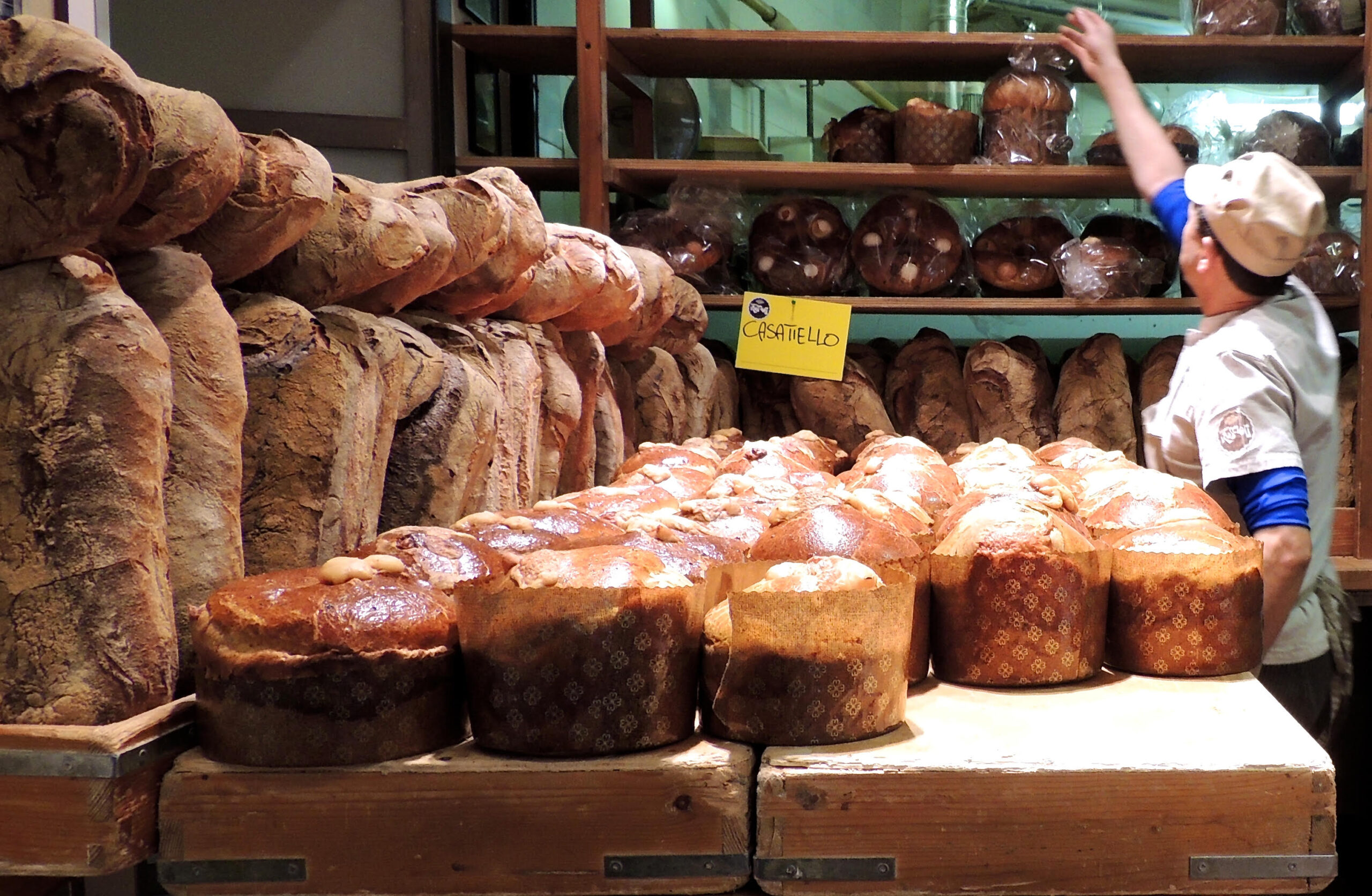
Don’t be confused by the name. This is not pizza. It has nothing to do with the flatbread of Naples or the great slabs found in Rome’s pizza al taglio counters. Pizza di Pasqua, also known in some versions as pizza di formaggio or torta al formaggio, is a tall, golden, leavened bread, round like a small Bundt cake and enriched with eggs, olive oil and a generous quantity of aged cheese: pecorino, parmesan, or a combination of both depending on the recipe.
It’s a bread of considerable antiquity, and its origins are firmly in the central Italian tradition. Umbria and Marche claim the most ancient versions, and the first written recipe has been traced to a convent in the latter region, where it was noted in a monastic cookbook sometime in the late medieval period. The cheese that enriches the bread was among the foods forbidden during Lent, explaining why it appears with such particular emphasis at Easter. The bread was traditionally made on Good Friday and left to rest until Sunday morning: as with Easter itself, the waiting is built in.
In Rome, pizza di Pasqua is the non-negotiable centerpiece of Easter breakfast. It is sliced and eaten with corallina salami and hard-boiled eggs, and is one of those combinations so specific to a time and place that eating it anywhere else, at any other moment, produces only a pale reflection of the experience.
- Where to try it: The good forni and salumerie of the city start producing pizza di pasqua in the week before Easter. Try it at renowned Roscioli, near Camp de’Fiori.
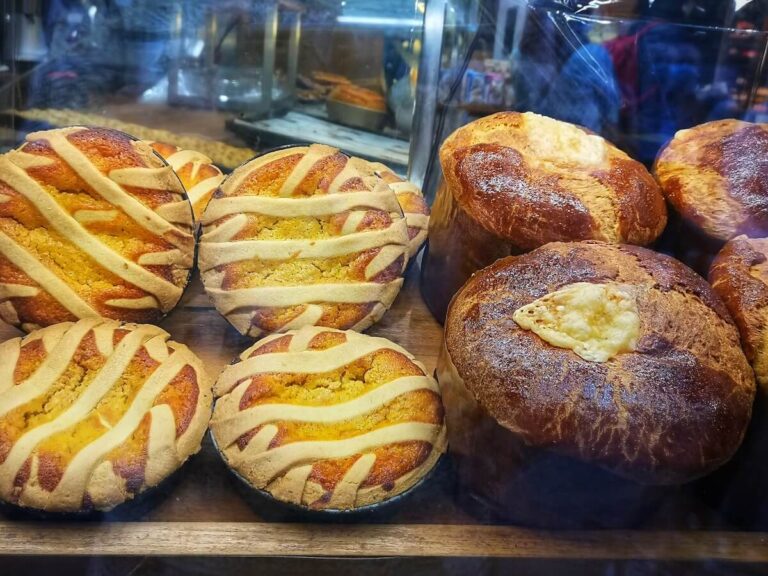
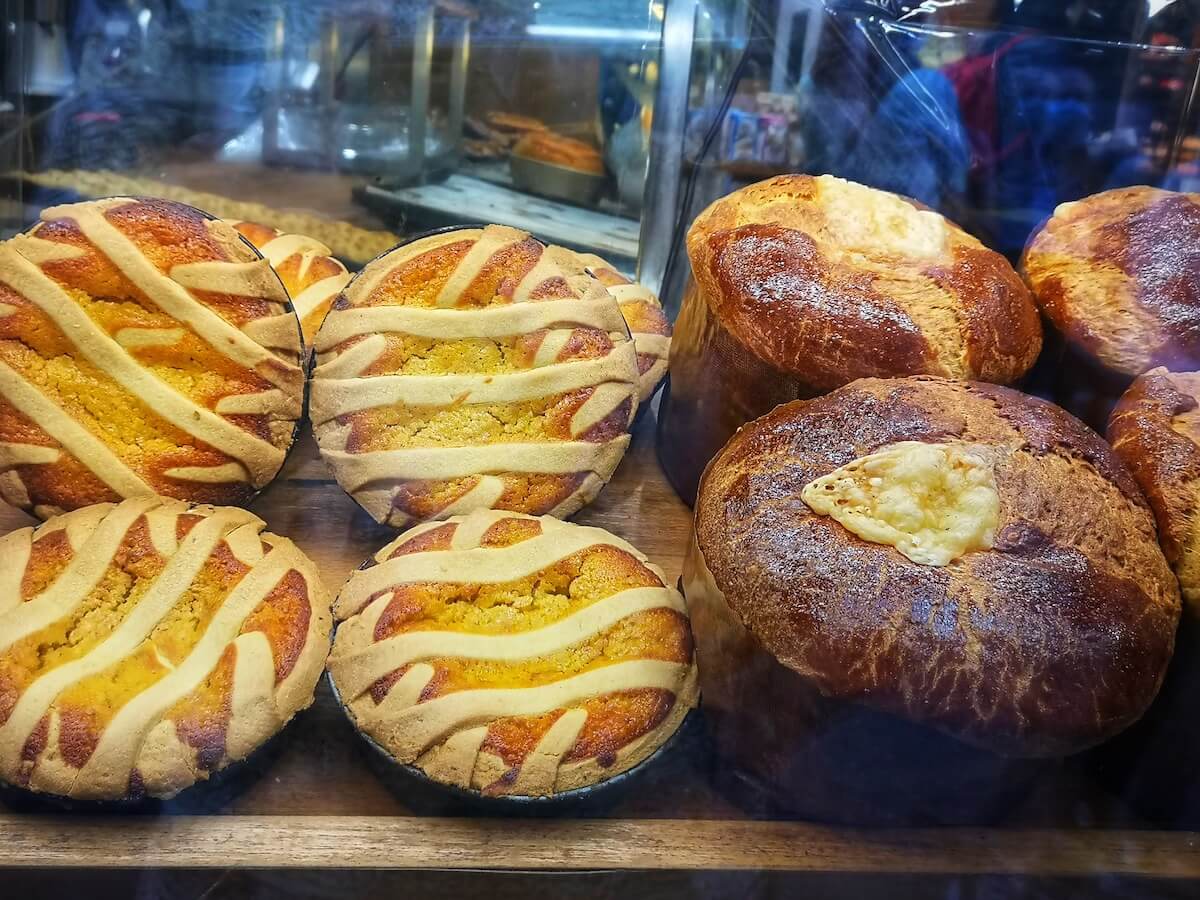
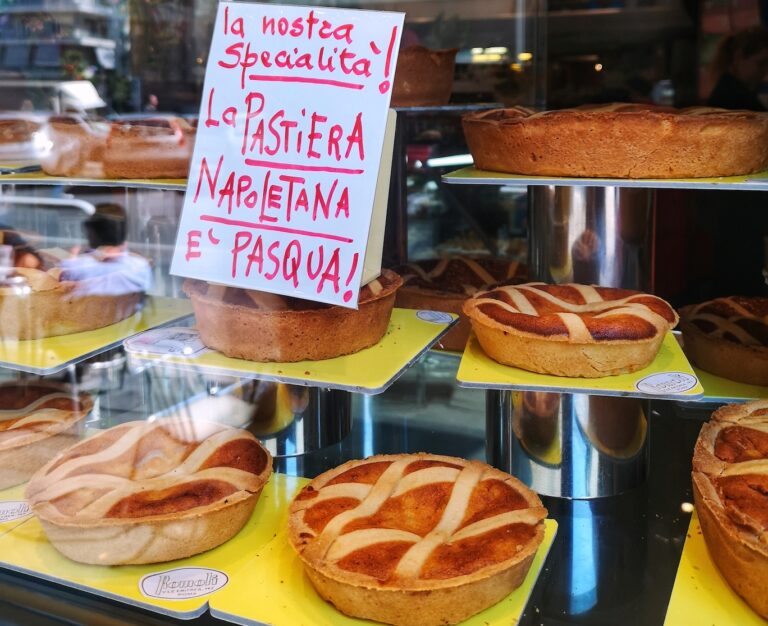
Every Italian city has its Easter sweet, and Naples has one of the most extraordinary: the pastiera, a tart of such specific complexity and such deep roots in the city’s culinary and spiritual life that it has its own legends, its own controversies about the correct recipe, and even its own moment in royal history.
The pastiera is built on a shortcrust pastry shell filled with a mixture of cooked wheat berries, fresh ricotta, eggs, sugar, candied citrus peel, orange flower water, and a combination of spices – cinnamon, vanilla and the bitter orange that grows in the cloisters of Neapolitan convents – that produces a fragrance unlike anything else in the Italian Easter repertoire.
The filling is dense and gentle simultaneously, the wheat providing a slight chewiness against the lightness of the ricotta, the orange flower water rising through the whole thing in a perfume that is, to those who grew up with it, the smell of Easter itself.
The legend most associated with the pastiera connects it to a convent of Neapolitan nuns who, wishing to create an Easter food rich in symbolic meaning, combined the grains of the earth with the eggs of new life, the blossoms of the orange trees in their cloister, and the exotic spices brought by traders from the East. These industrious sisters quickly transformed their pious baking into something approaching a small industry, producing hundreds of pastiere every Easter for the city’s middle classes.
The royal moment belongs to Ferdinand II of Bourbon, King of the Two Sicilies, and his queen, Maria Teresa of Austria. The lugubrious Maria Teresa was not known for her good humour; according to legend, the queen once tasted a pastiera at Easter and was so overcome by its deliciousness that she smiled – a thing she had apparently never been observed to do at the royal table.
His queen, Maria Teresa of Austria, reportedly said that it had taken a pastiera to accomplish what she had never managed. Whilst almost certainly apocryphal, the story has the logic of a good myth: this is a tart capable of softening even the sternest disposition.
- Where to try it: Although pastiera is a proudly Neapolitan creation, Romans have a considerable taste for it too, and you will find it in any number of the city’s pastry shops in the weeks around Easter. We love the version at Pasticceria Grué on Viale Regina Margherita.
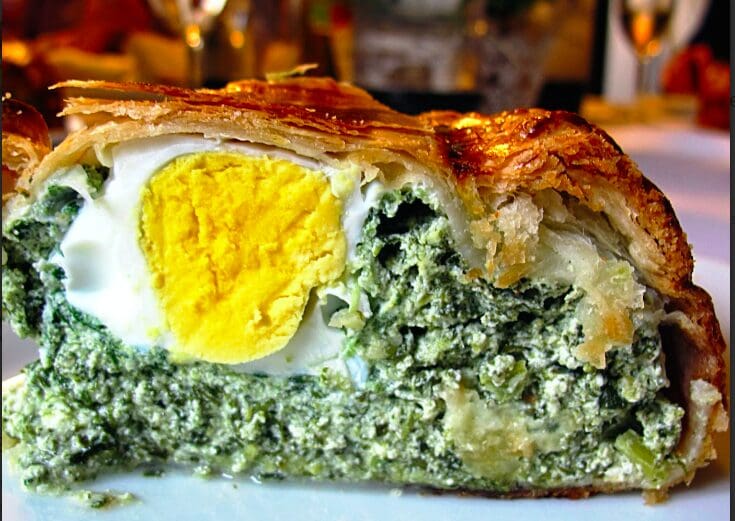
Vegetarians breathe a deep sigh of relief: not all Italian Easter dishes are based on sheep. Originally hailing from Genoa and eaten in Liguria since at least the sixteenth-century, this is a savoury vegetarian tart stuffed full of eggs, a Genovese cheese called prescinsêua (like a tangy ricotta), and a leafy Spring vegetable such as chard or beet-tops. The eggs are whole, nestled into the filling before the lid of the tart is applied, so that when the tart is sliced each portion reveals a perfect cross-section of yolk and white.
Sounds pretty simple? Not so fast. According to tradition, the tart had to be rigorously composed of no fewer than 33 layers of razor-thin pastry, one for each year that Christ spent on earth.
These days the 33 layers are usually reduced to a more manageable 8-10, but it is still a painstaking and time-consuming process. The result, when well made, is a tart of considerable lightness and elegance, the pastry almost flaking into transparency, the filling gentle and aromatic with the spring greens and fresh cheese.
- Where to Try it: You don’t need to head all the way to Genoa to get the good stuff. Volpetti in Testaccio is one of Rome’s finest delicatessens, and does an excellent version of the torta pasquilina.
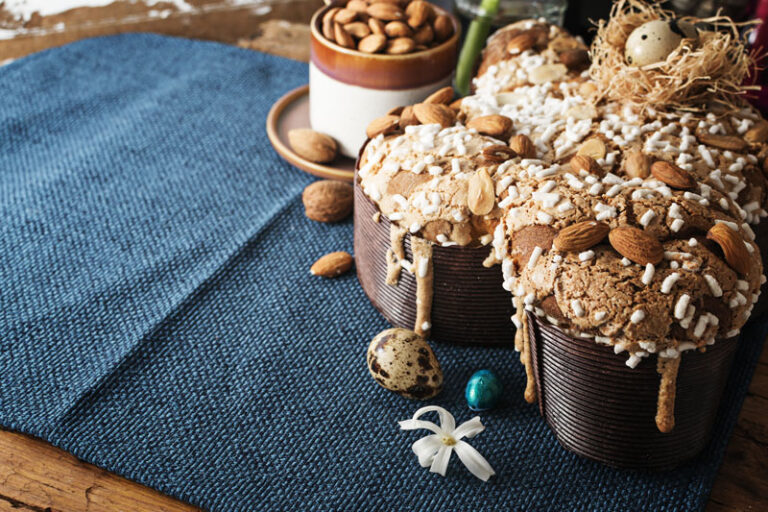
If lamb marks the presence of Christ at the Easter table, another member of the holy Trinity makes its appearance in the sweet Colomba cake. The cake takes the symbolic shape of a dove, representing the Holy Spirit in Catholic worship, and is one of the defining Easter foods for all Italians. Like the famous Christmas Panettone, the Colomba is an eggy cake studded with candied fruits and covered with crystallised sugar and almonds.
The origins of the cake’s unusual shape are obscure; according to one tradition a young girl from Pavia managed to save her town from invasion by baking a cake in this shape as a peace-offering to a ruthless king bent on the city’s destruction.
Another traces it to the meeting between the Irish missionary and future saint Colombanus and the Lombard queen Theodelinda in 612 AD. According to the tale, the Lombard court prepared a lavish banquet of game to welcome the pious abbot. Colombanus, however, would not eat, as Lent was ongoing. After Theodelinda became offended the saint apparently relented, agreeing to eat the meat after blessing it. As he did so, the game miraculously transformed into a dove-shaped bread, which he could eat with no qualms.
A third – more historically grounded – connects it to the same Milanese baking tradition that produced the panettone, the festive enriched bread becoming the template for a seasonal Easter version. The modern commercial colomba was definitively established in the 1930s by the Milanese confectioner Dino Villani. In its industrial form the Christmas panettone and the Easter colomba are indeed very similar – produced by the same companies, sold in the same cardboard boxes, found in the same supermarket aisle.
Made by a proper pasticceria with naturally leavened dough and quality ingredients, however, it is something considerably finer: light and fragrant, the candied peel giving a concentrated sweetness against the buttery crumb, the almond crust adding a pleasing crunch.
Where to Try It: In Rome everyone has their favorite neighborhood pasticceria churning out their own naturally leavened versions in small batches in the weeks before Easter. Two of our favorites are historic bakery Albanesi in the Portuense district and Forno Conti in Esquilino. The renowned Sicilian pastry shop Fiasconaro, meanwhile, ships internationally.
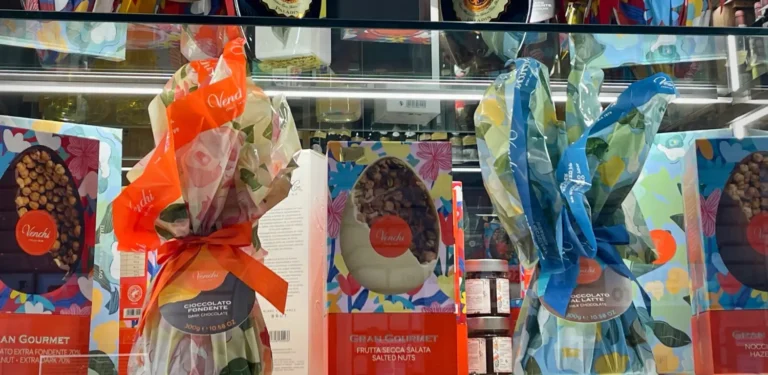
Did you know that the chocolate Easter egg is an Italian invention? It was developed in the chocolate workshops of Turin in the early years of the 20th century, when the chocolatiers of that city applied their considerable skills to adapting the ancient tradition of the decorated Easter egg into something new: a hollow chocolate shell large enough to contain a sorpresa (a surprise), inside.
The uova di Pasqua is a national obsession for children in Italy, for whom the weeks before Easter involve an escalating negotiation about which egg, of which brand, containing which promised surprise.
But beneath the modern industrial version lies a much older history. The egg as a symbol of spring and rebirth is ancient — the Romans gave painted eggs as gifts at the spring festivals of Cybele and Flora, and the early Church absorbed this symbolism so completely that the hard-boiled egg became a fixture of the Easter table across the Christian world.
The practice of decorating eggs — with dye, with paint, with gold — was widespread in medieval Europe, and the Fabergé tradition of the jewelled Easter egg, created for the Russian imperial court, represents the furthest elaboration of the same impulse: the ordinary egg transformed into something extraordinary, the common object made sacred by the attention lavished upon it.
Where to Try It: In Italy today the finest chocolate Easter eggs come from the artisan chocolatiers who work in small batches with high-percentage chocolate and seasonal flavourings – salted caramel, pistachio, blood orange – and whose surprise tends toward the handcrafted rather than the plastic. The Fabbrica Giuliani in Via Paolo Emilio produces some of the finest in the city, alongside a range of colombe and Easter confections that make the shop in the weeks before Easter a delight.
The best Easter food in Rome is not found in the city’s tourist-facing restaurants but in the neighbourhood trattorias, forni, salumerie and pasticcerie that cater primarily to Romans who take the quality of what they eat at the most important table of the year very seriously indeed.
For the savoury dishes the neighbourhoods of Testaccio, Trastevere, San Lorenzo and the area around Campo de’ Fiori are the best hunting grounds. Testaccio in particular, home of the old slaughterhouse and the quinto quarto tradition, is the natural habitat of coratella and the full range of lamb preparations: Piatto Romano, Agustarello and De Felice are all strong addresses for a memorable Easter lunch, as is Da Cesare al Casaletto a little further afield in Monteverde.
Volpetti, the legendary delicatessen on Via Marmorata, is the destination for pizza di Pasqua, torta pasqualina, corallina and the full range of Easter charcuterie; arrive in the week before Easter and the counter will be at its most abundant and most specifically seasonal. For the sweet things – colomba, pastiera, the chocolate eggs – Antico Forno Roscioli on Via dei Chiavari is the address at the top of many Romans’ lists.
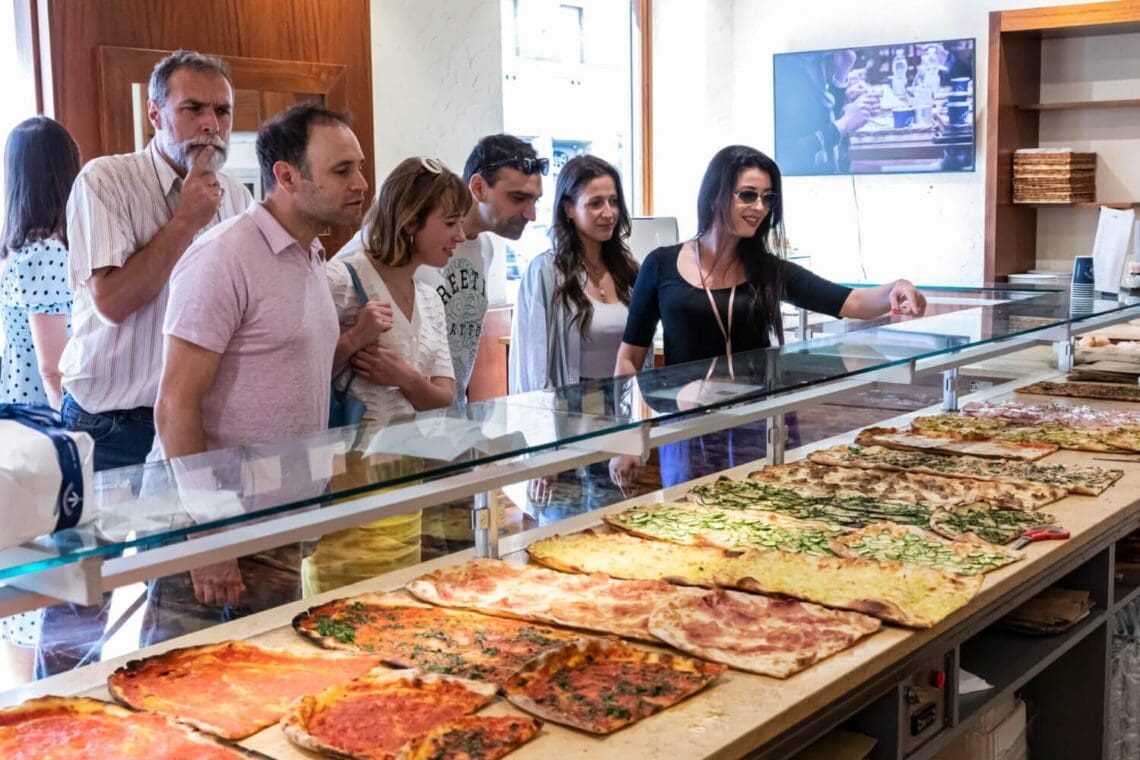
If you want to explore Rome’s food culture more systematically, our food tours of the city take you through the neighbourhoods where this food is made and eaten – from street food in the historic center to the culinary delights of Trastevere and the Jewish Ghetto – with guides who know not just where to go but why it tastes the way it does, and what it means!
Book Your Rome Adventure!