There are cities where Easter is just another holiday, and there is Rome, where Easter is something else entirely. For one week every spring, the Eternal City becomes the spiritual capital of the world – a place where two thousand years of Christian tradition meet the theatrical grandeur of the papacy, the extravagant beauty of Baroque architecture, and the irrepressible energy of one of Europe’s great metropolises in its finest season.
This guide covers everything you need to know to make the most of Easter in Rome: the full Holy Week calendar for 2026, how to attend the papal ceremonies, the ancient pilgrimage tradition most visitors never discover, Easter concerts and cultural events, the Easter food you need to try, practical information on what’s open and closed, and how to spend Easter Monday the way Romans do.
Note: Easter Sunday falls on 5 April 2026. Holy Week runs from Palm Sunday, 29 March, through Easter Monday, 6 April.
Best Rome Tours
Explore the Eternal City this Easter
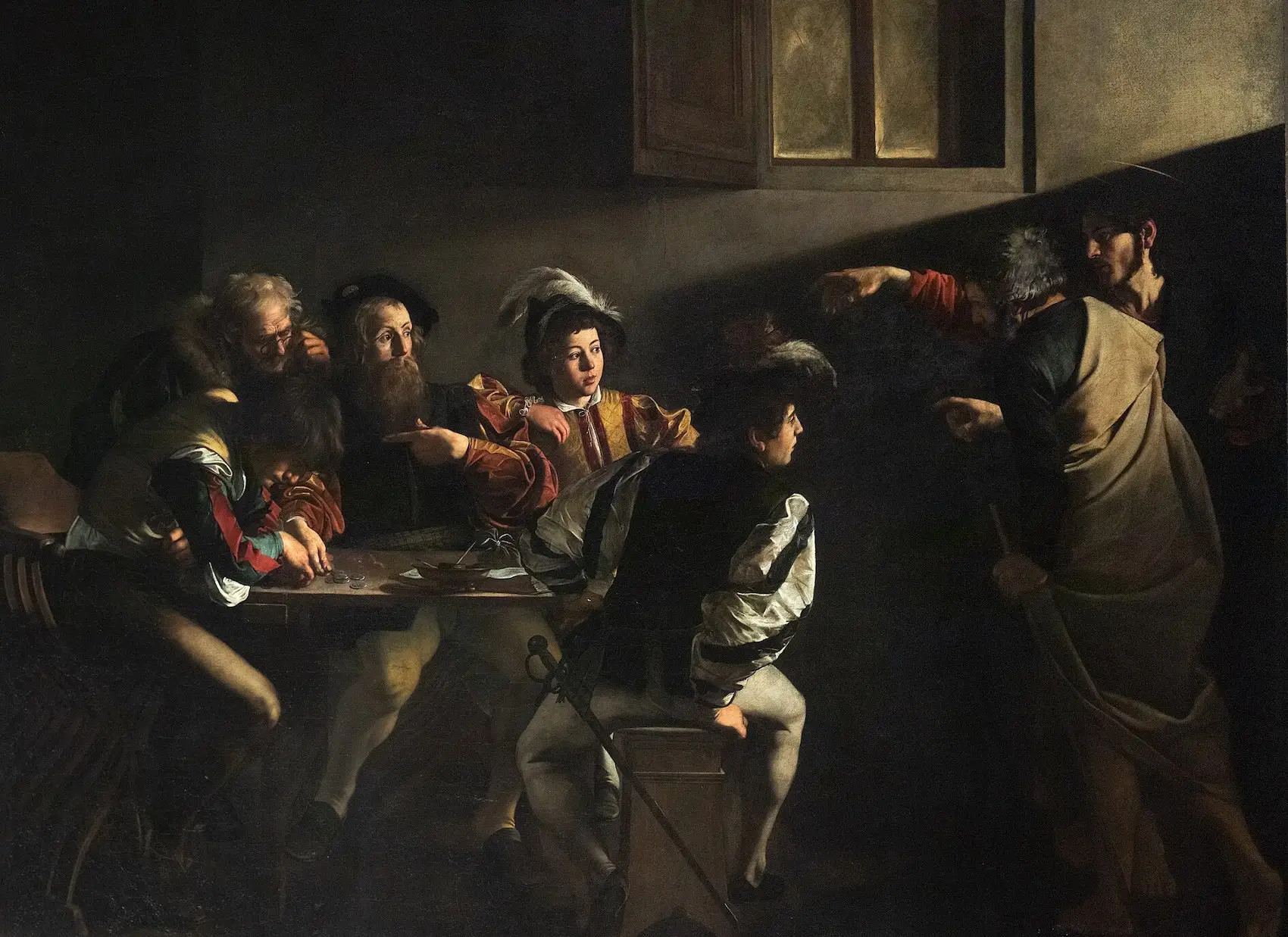
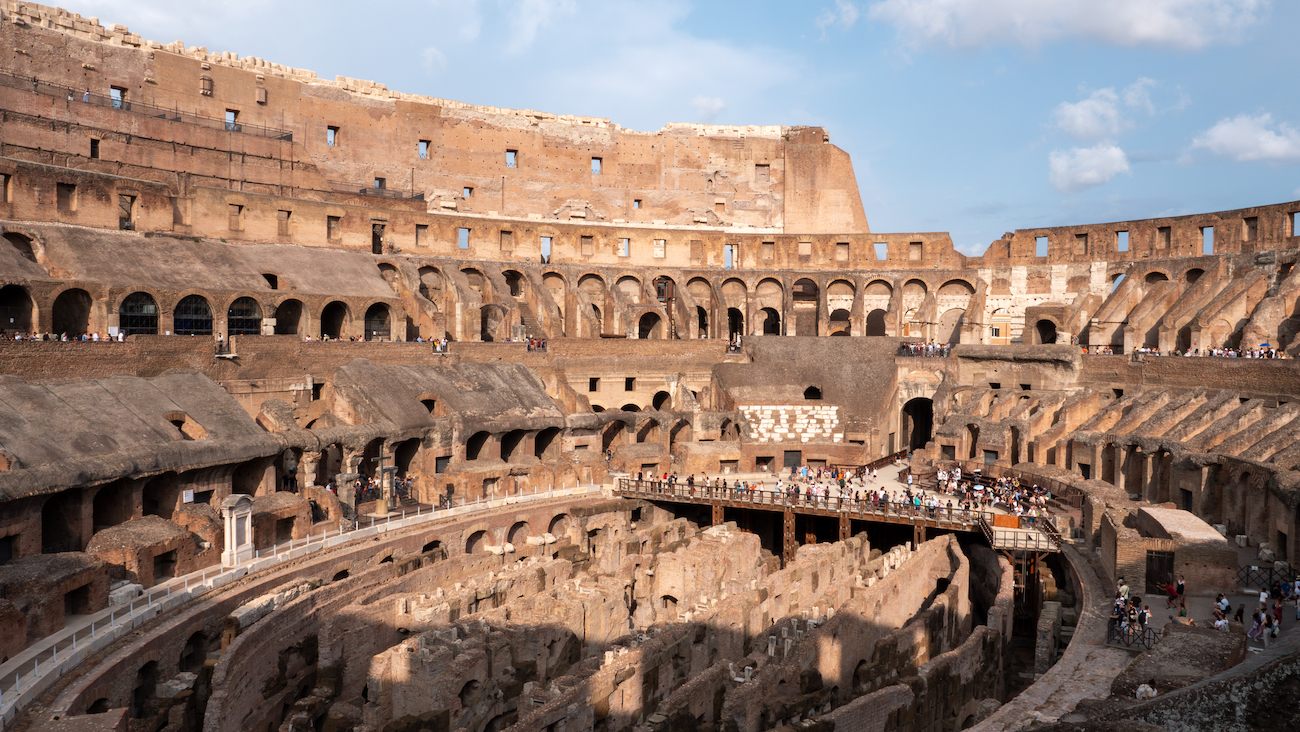
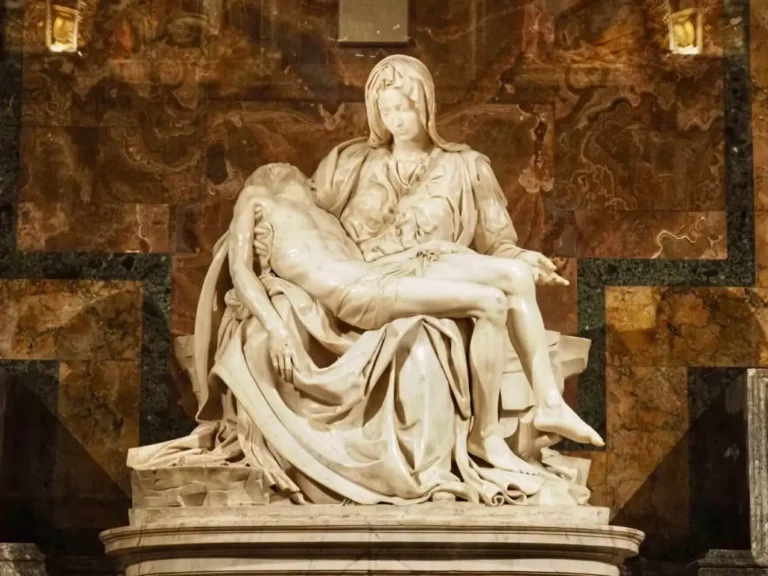
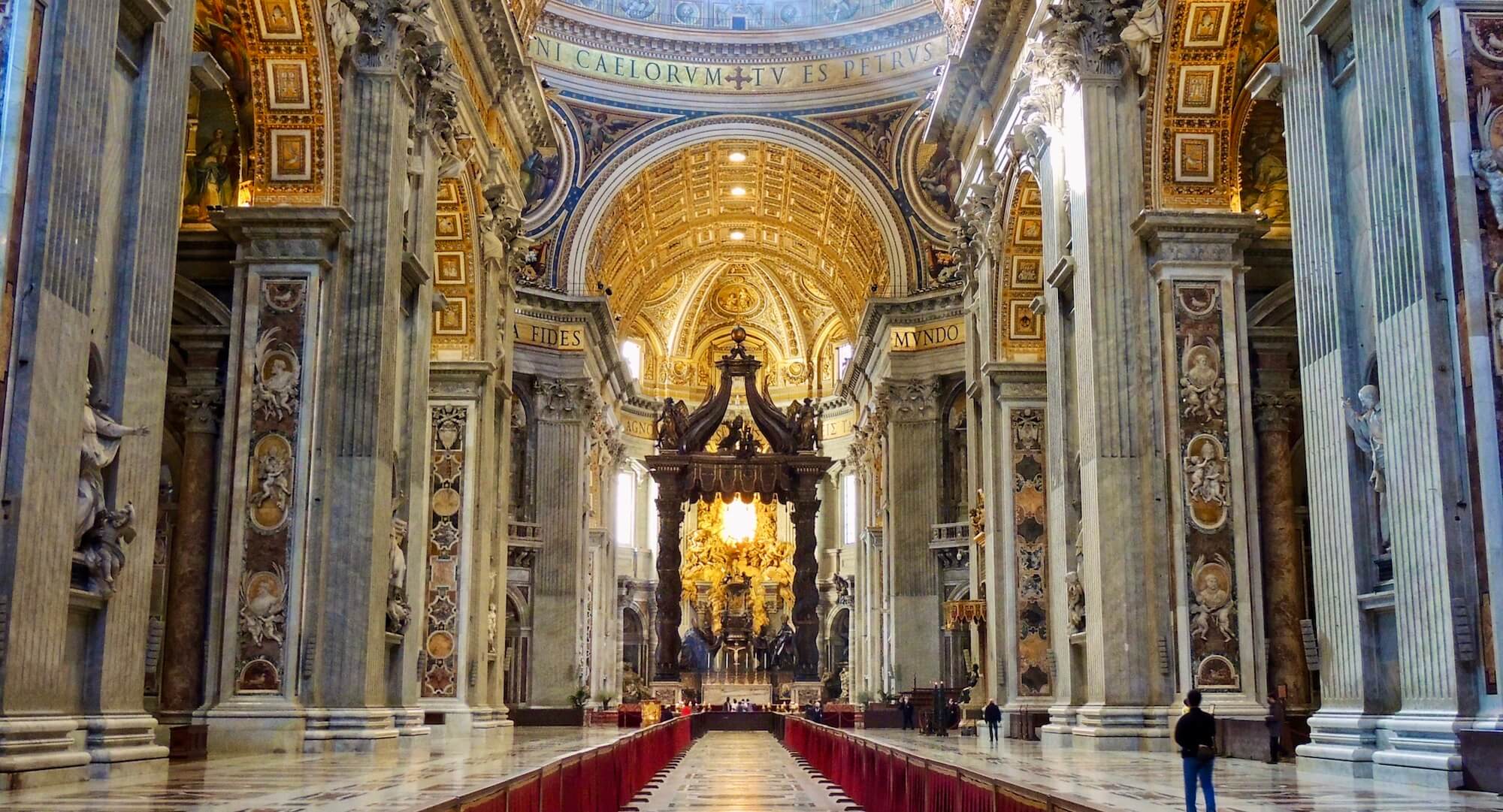
Michelangelo’s Pieta in Saint Peter’s Basilica
The scale of what happens in Rome during Settimana Santa – Holy Week – is unlike anything in the Christian world. Hundreds of thousands of pilgrims descend on the city. Ancient liturgies are performed in churches of incomparable magnificence. The Pope leads a torchlit procession around the Colosseum. Sacred music fills the city’s basilicas. And on Easter Sunday morning, St Peter’s Square fills with a vast crowd gathered to celebrate Christ’s resurrection.
Beyond the great ceremonies, Rome at Easter is also simply Rome in spring – the azaleas cascading down the Spanish Steps, the gardens coming into bloom, the light on the Tiber in the long April evenings. Simply put, it’s one of the best times of year to be here.

Holy Week in Rome: The Essential Overview
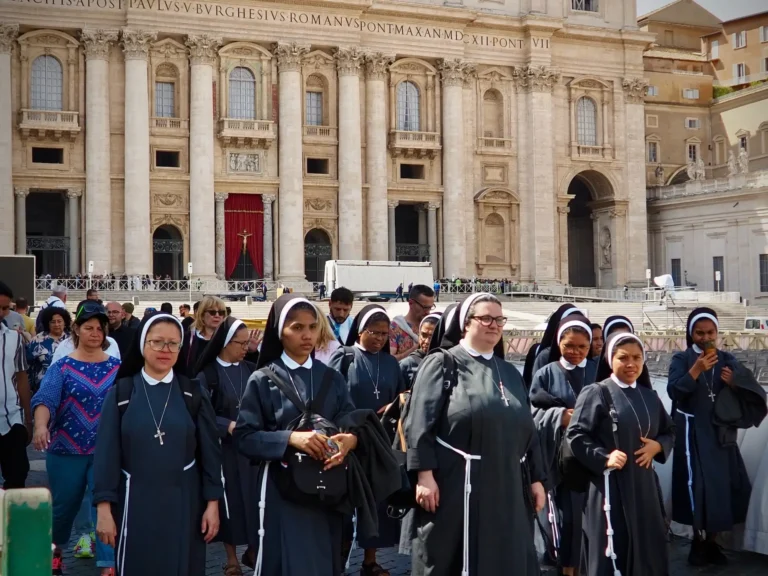
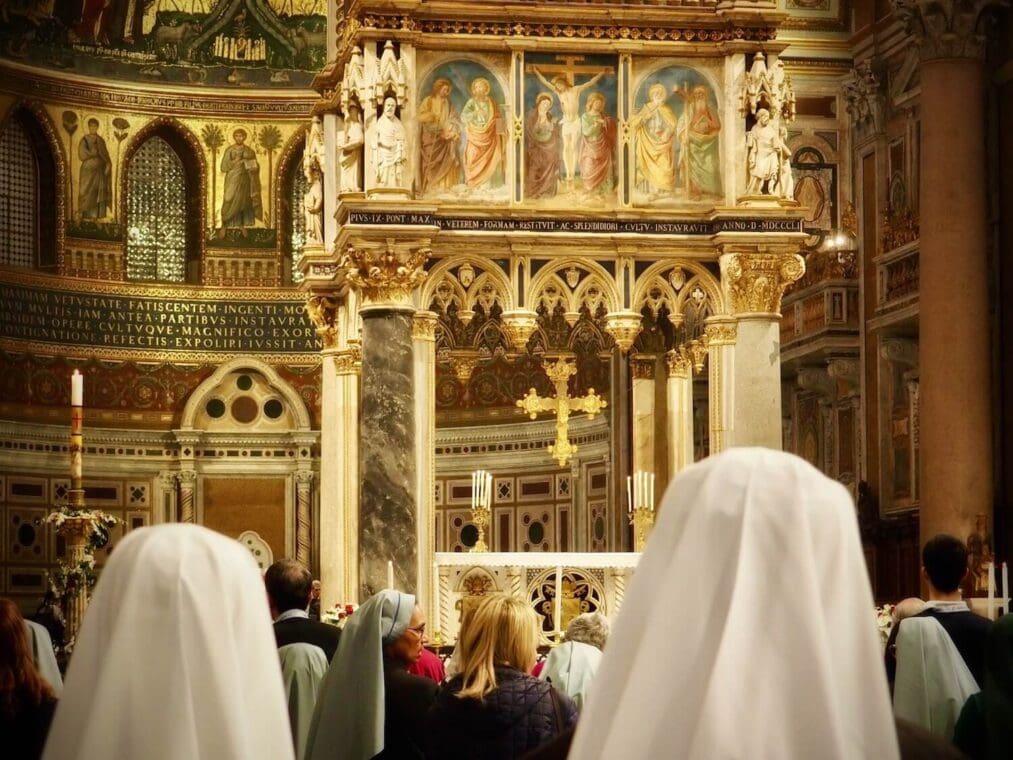
Pilgrims, priests and nuns converge on Rome for Easter in their millions
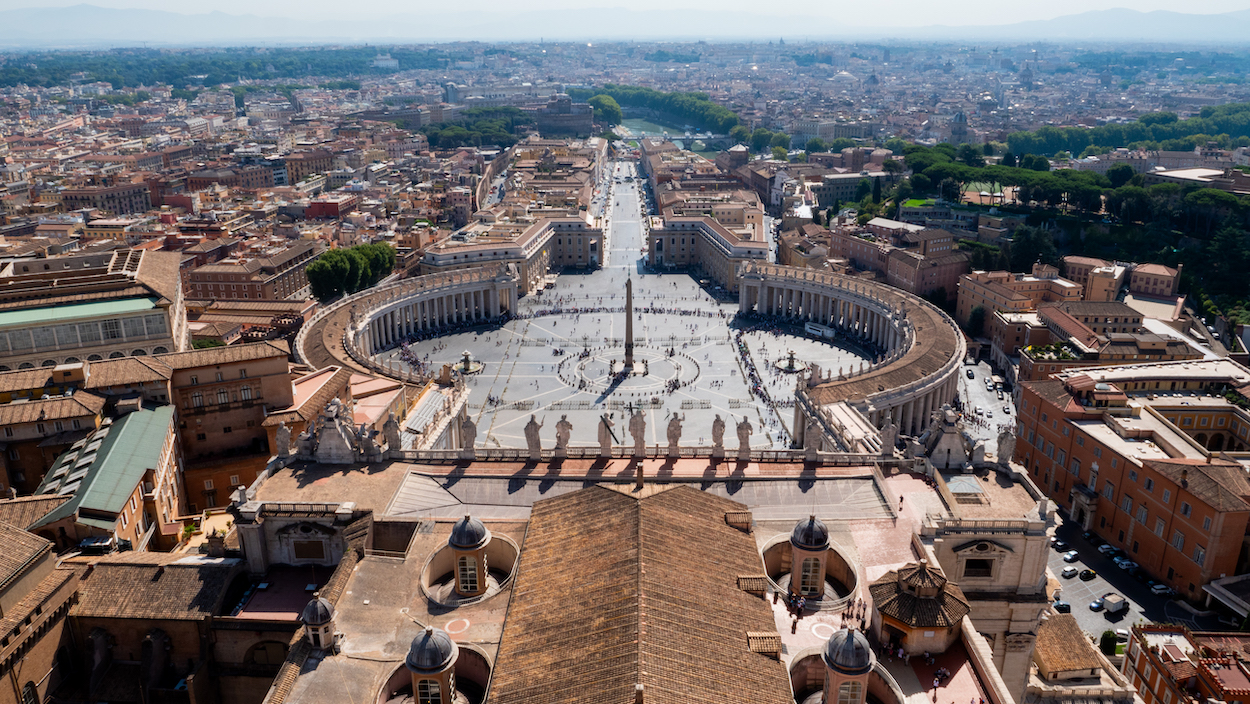
Holy Week begins on Palm Sunday (29 March) with the Papal Mass in St Peter’s Square, where olive branches are blessed and distributed in a ceremony that fills Bernini’s colonnade with a forest of waving palms.
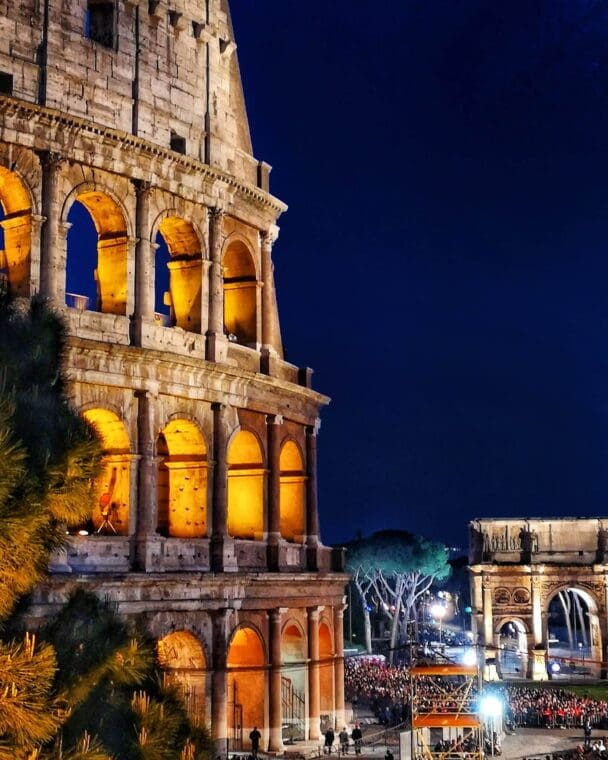
The week then moves through the solemnity of Holy Thursday – the Mass of the Lord’s Supper (held in San Giovanni in Laterano), the washing of feet, the stripping of the altars – into the penitential silence of Good Friday, which reaches its emotional peak with the torchlit Via Crucis at the Colosseum at 9:15pm.
Holy Saturday is a day of waiting and suspension, poised between Christ’s death and resurrection, which ends with the Easter Vigil in St Peter’s Basilica at 9:00pm.
Easter Sunday meanwhile brings the great Papal Mass at 10:30am in St. Peter’s Square and the Urbi et Orbi blessing at noon – the Pope’s address to Rome and to the world – broadcast live to hundreds of millions of people.
Easter Monday, known in Italy as Pasquetta, is a national holiday with its own distinct and very enjoyable traditions, when citizens flock to the countryside with friends and family.
Each day of Holy Week has its own character, its own ceremonies, and its own practical implications for visitors. For the full liturgical calendar with timings, ticketing information and guidance on each individual day, see our dedicated guide:
The Papal Mass and Urbi et Orbi: How to Attend
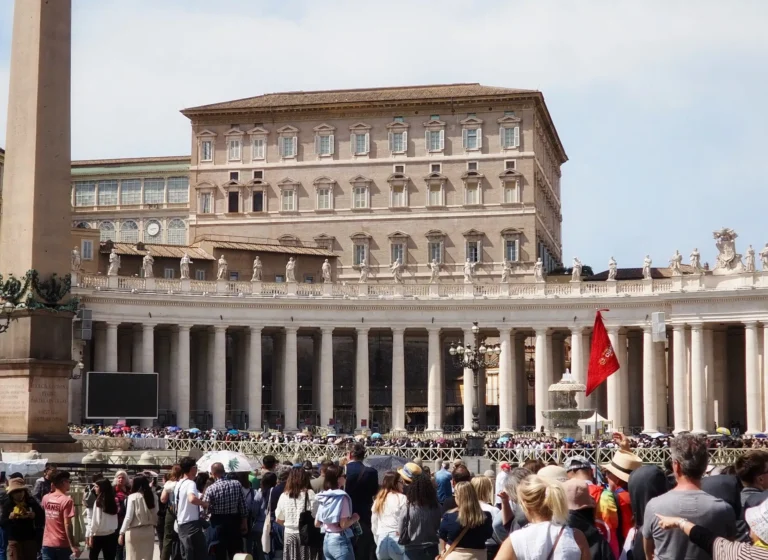
Expect huge crowds for the Easter Mass in St. Peter’s Square
Attending the Easter Sunday Mass in St Peter’s Square is one of the great collective experiences available to any visitor to Rome. Best of all? It’s free. The logistics, however, require attention.
In past years it has been necessary to book tickets for reserved seating via the official website of the Prefecture of the Papal Household at the Vatican. This year, however, is different, with official sources saying the mass will not be ticketed.
In other words, the square will be freely open to all on a first come first served basis. That means that things are going to be extremely busy. The mass begins at 10.15 AM, but the best positions along the central axis will be claimed hours earlier than that. Bear in mind that airport-style security screening at all entry points will add significant time to entry.
The Urbi et Orbi blessing at noon, delivered from the central balcony of the Basilica, draws a second wave of crowds and can be experienced from a wider area of the piazza and surrounding streets. No ticket is required for this.
The Via Crucis at the Colosseum: How to Attend
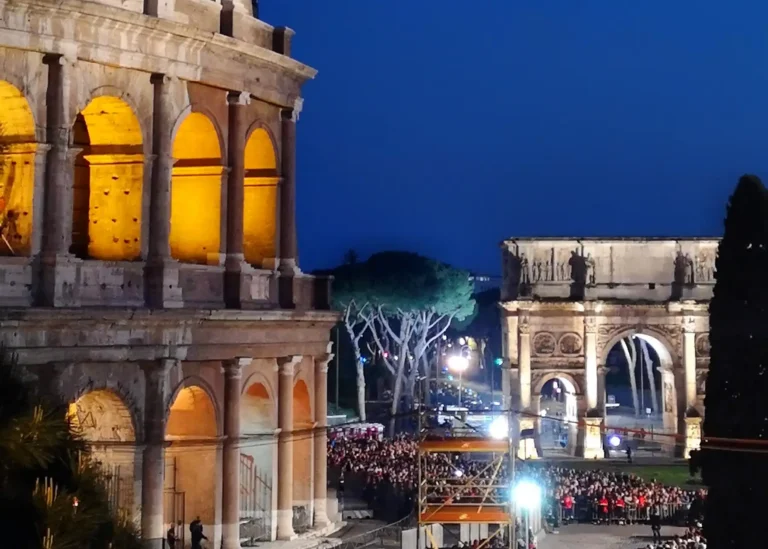
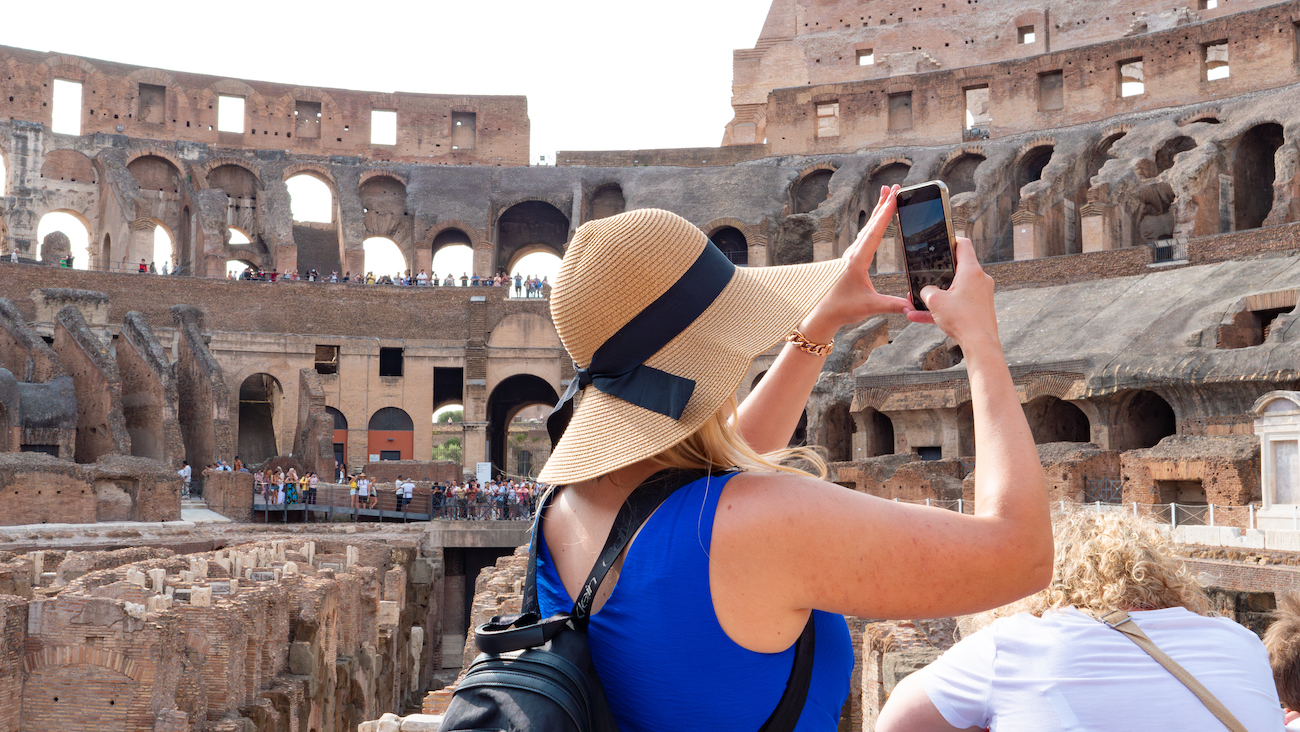
The Via Crucis at the Colosseum is one of Rome’s Easter highlights
The torchlit Stations of the Cross on Good Friday evening is one of the most atmospheric events in the entire Roman calendar: a procession of extraordinary visual power set against the ancient stones of the Colosseum, open to everyone regardless of faith or belief. In 2026, the ceremony begins at 9:15pm. No ticket required.
Access is managed through crowd-control barriers that go up progressively through the afternoon. The best vantage points are along Via dei Fori Imperiali and on the Giardinetto del Monte Oppio above – the small garden on the hillside behind Colosseo metro station, which gives elevated and unobstructed views. For positions along the front perimeter directly facing the Colosseum, arrive by early evening at the latest.
The Colosseum archaeological area closes at 1pm on Good Friday (last entry at noon) in preparation for the evening ceremony. If you are planning to visit the site itself on Good Friday, organise your morning accordingly. Transport around the entire Colosseum area will be subject to security restrictions from the afternoon onward, and Colosseo metro station will be closed.
We have a dedicated guide to the history and practicalities of the Via Crucis — including the fascinating story of how the modern ceremony came to be associated with the Colosseum in the 18th century — here:
The Giro delle Sette Chiese: Rome's Ancient Easter Pilgrimage
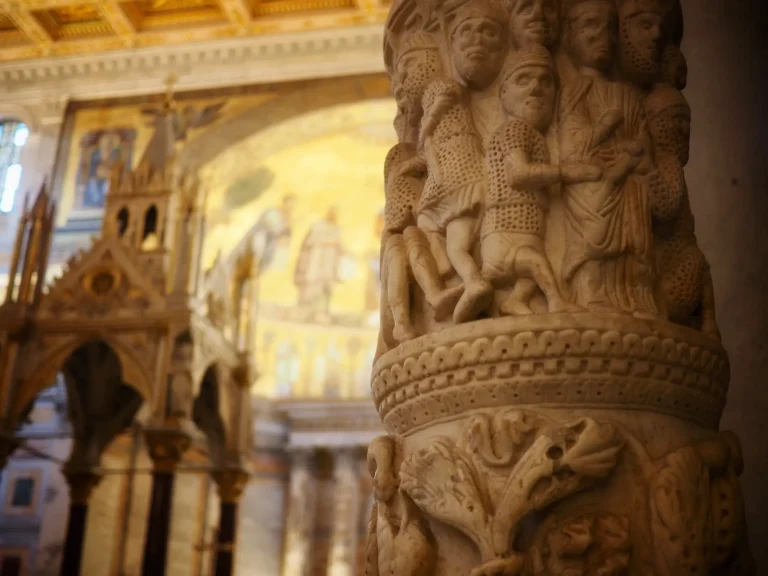
San Paolo fuori le Mura is one of the stops on the Sette Chiese pilgrimage
Here is a piece of Rome’s Easter tradition that most tourists are unaware of, but one that is woven so deeply into the city’s collective consciousness that the Italian language even has a dedicated idiom relating to it: in Roman slang, fare il giro delle sette chiese is an ironic way of describing aimless wandering or fruitless enterprise without a clear end goal. Long-winded it may be, but this urban pilgrimage is quite the experience!
The origins of the Seven Churches Pilgrimage stretches back to at least the 5th century, but was transformed in 1552 by a young Florentine priest named Filippo Neri (later canonised and now known as the ‘Apostle of Rome’). Neri began leading groups of companions on a sociable all-night walk between the city’s seven major basilicas punctuated by picnics, music and prayer.
What began as a small act of devotion grew within a decade into an annual procession of thousands, eventually receiving formal papal recognition from Pope Sixtus V in 1586.
The route connects seven basilicas across approximately 20 kilometres of Roman streets and roads: Saint Peter’s, San Paolo fuori le Mura, San Sebastiano fuori le Mura, San Giovanni in Laterano, Santa Croce in Gerusalemme, San Lorenzo fuori le Mura, and Santa Maria Maggiore. Traditionally the seven churches were all visited between Holy Thursday evening and Good Friday morning, although these days you can stretch the full route over a couple of days.
It makes for an extraordinary walking itinerary through layers of Roman history: wander past early Christian basilicas, along stretches of ancient road, through working-class neighbourhoods and on to the Via Appia itself. Even a partial walk – the stretch from San Paolo fuori le Mura (whose Paschal candle is pictured above) to San Sebastiano along the Via delle Sette Chiese, for instance – is one of the most genuinely distinctive ways to spend a morning in Rome at Easter.
Easter Concerts and Cultural Events 2026
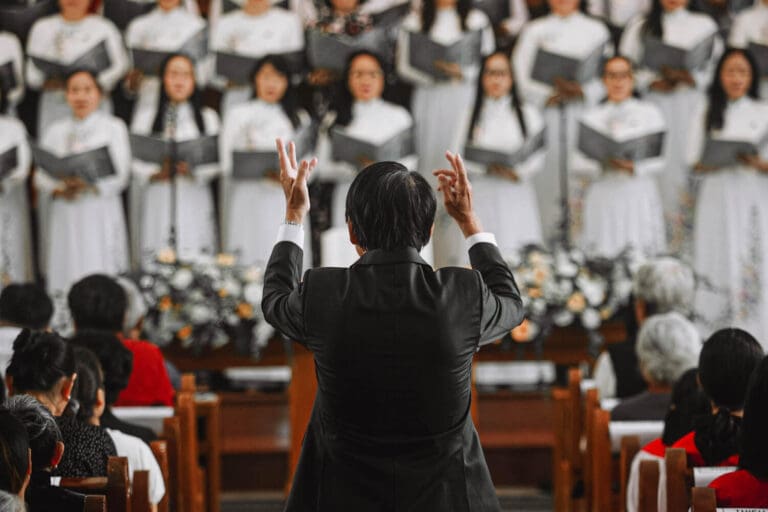
An Easter concert in Rome
Rome’s musical life intensifies considerably during Holy Week, and the city’s great basilicas and historic churches become concert halls of extraordinary acoustic beauty.
The centrepiece of the 2026 programme is the Festival di Pasqua, now in its 29th edition, running from 29 March to 24 May across Rome’s major basilicas. Founded in 1998, it has become one of the most prestigious sacred music festivals in Italy.
In 2026 the opening concert takes place at the basilica of San Crisogono on the evening of March 28 with a performance of Mozart’s requiem. The central Easter Sunday concert on 5 April is at Santi Bonifacio and Alessio on the Aventine hill and will be dedicated to Saint Francis of Assisi; a special concert on Pasquetta (6 April) takes place at the Pantheon. Tickets are available through the festival’s official website.
The Teatro dell’Opera di Roma also runs an annual Concerti di Pasqua initiative in parish churches across the city’s neighbourhoods for free concerts of sacred music. The 2026 series (19–28 March) featured Fauré’s Requiem and works by Palestrina, Pergolesi, Haydn and Rossini. The series runs slightly ahead of Holy Week itself this year, but is an annual tradition well worth planning around for future Easter visits.
Easter Food in Rome
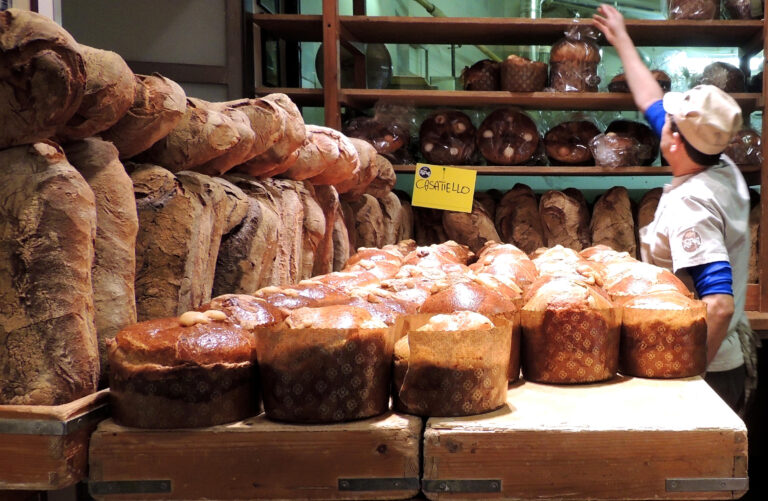
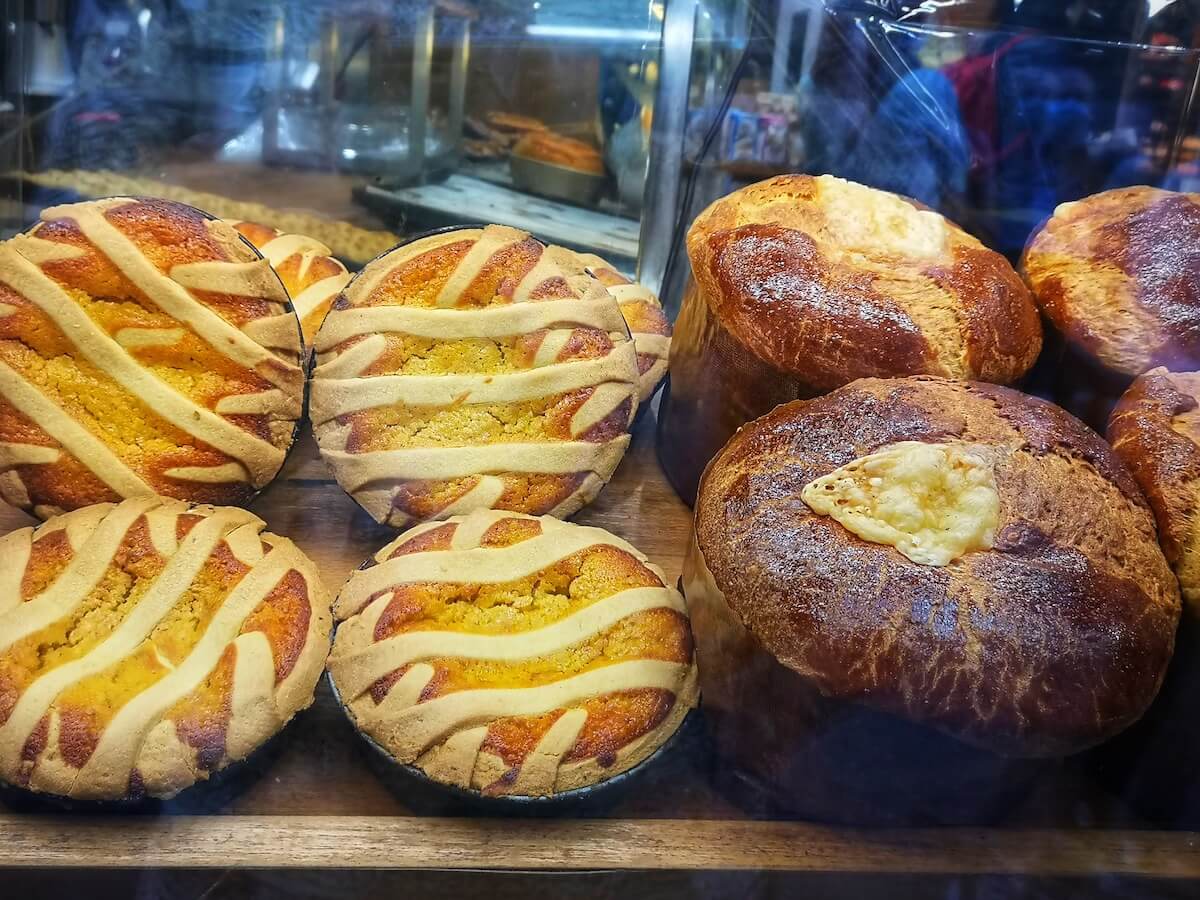
Colombe in the window of Forno Roscioli in Rome
The Roman Easter table is one of the most specific and time-honoured in Italy, governed by a food culture that ties the pleasures of eating to the rhythms of the liturgical year.
The Easter breakfast (la colazione pasquale) is a ritual in itself. The table is spread with pizza di Pasqua, a tall golden cheese bread leavened with yeast and studded with pecorino, alongside corallina, a characteristic coarse-grained pork salami synonymous with Easter, as well as hard-boiled eggs symbolising rebirth.
The centrepiece of Easter lunch is abbacchio — tender milk-fed spring lamb, roasted in the oven with potatoes, rosemary and white wine, or grilled scottadito style (the name means “finger-burning”, a reference to eating the small chops directly from the bone while they’re still hot). In Rome and its surroundings you might also find lamb cutlets breaded and fried for lunch. No other dish says spring in Rome quite so emphatically.
The other seasonal treasure of the Easter table is the carciofo romanesco, the great round artichoke of the Roman countryside. You’ll find it prepared alla giudia (deep-fried whole until crackling, a preparation from Rome’s Jewish community that has become universal) or alla romana (braised with garlic, mint and parsley).
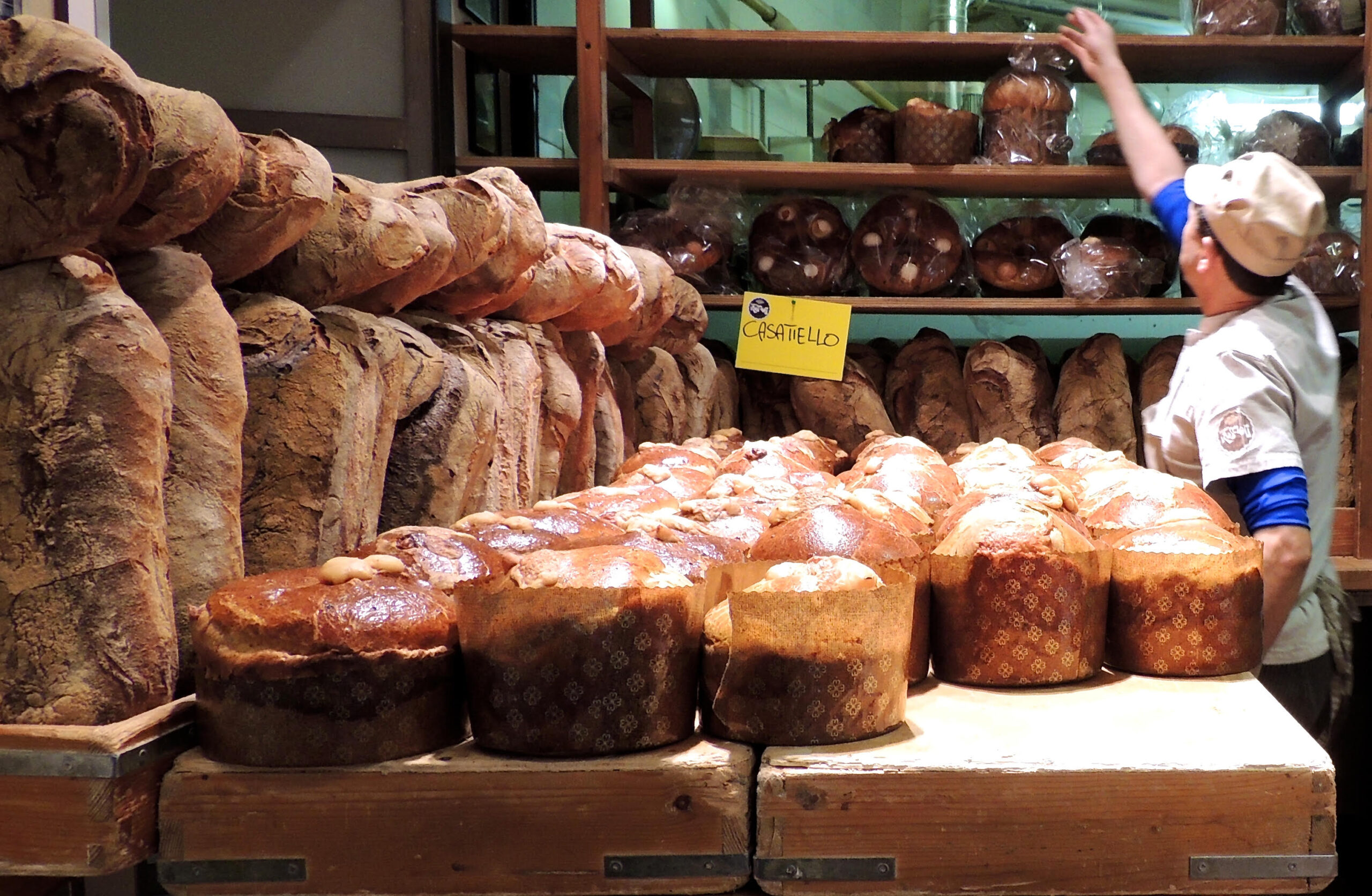
And for dessert, colomba pasquale is de rigeur – this dove-shaped sweet bread studded with candied citrus peel and topped with sugar and almonds fills every bakery window in the city from February onward. The best are made by artisan pasticcerie using naturally leavened dough; most Romans will have put in their order at their favourite bakery weeks in advance.
Pictured above is Forno Roscioli, just off Campo de’Fiori, which is famous for its colomba.
Visiting Rome's Monuments and Museums at Easter
A Practical Guide
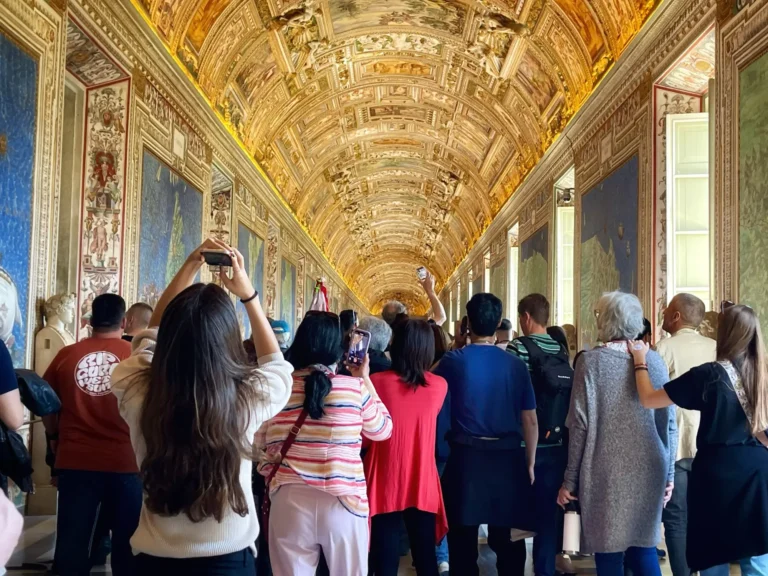
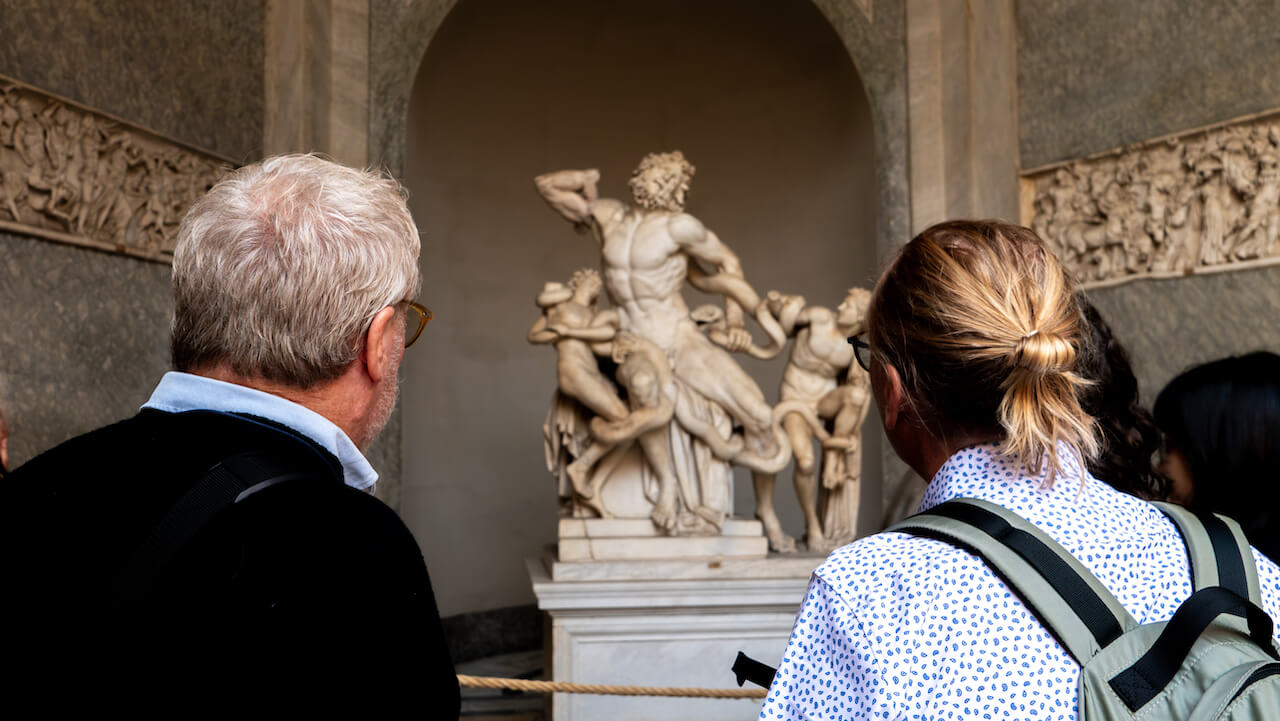
Expect the Vatican museums to be exceptionally busy at Easter.
Easter is one of the busiest periods of the year in Rome, and the combination of high visitor numbers, ceremony logistics and holiday opening hours requires some forward planning.
- What’s closed: The Vatican Museums and Sistine Chapel are closed on Easter Sunday (5 April) and Easter Monday (6 April). This happens every year, so don’t plan Vatican Museum visits on these days. St Peter’s Basilica has restricted access around the Easter Sunday ceremonies until approximately 1pm. The Colosseum closes early on Good Friday (last entry at noon).
- What’s open: The Colosseum and Roman Forum are open throughout Easter (subject to the Good Friday hours above). Many museums usually closed on Monday throw open their doors on Pasquetta: the Capitoline Museums are open on both Easter Sunday and Monday, as is the Galleria Borghese (you’ll need to book ahead for the Borghese). The Pantheon, Palazzo Barberini, Palazzo Doria Pamphilj and Palazzo Corsini are all open too.
- Outside Rome, Villa d’Este and Hadrian’s Villa in Tivoli offer free entry this year on Easter Sunday, as do other state-run museums and archaeological sites, because it’s the first Sunday of the month. Ostia Antica meanwhile is exceptionally open on Easter Monday and makes an excellent half-day excursion.
- Crowds: The biggest concentrations of crowds will be around the Vatican, the Colosseum, the Spanish Steps and the Trevi Fountain. Away from these focal points, much of Rome is surprisingly manageable. The strategic times to visit major monuments are at opening (usually 9am) or in the final 90 minutes before closing.
Pasquetta: Easter Monday in and Around Rome

Pasquetta is the perfect day for a ‘gita fuori porta’ to the Roman countryside
Easter Monday, known in Italian as Pasquetta or Lunedì dell’Angelo, is a national holiday with a character entirely distinct from Easter Sunday. Where Sunday is somewhat formal and ceremonial, Monday is convivial and to be spent with friends.
The defining Roman tradition is the gita fuori porta (literally an excursion out of the city gates) – a mass migration to the surrounding countryside, hills and lakes for a day of outdoor eating, walking and collective decompression after the intensity of Holy Week.
For visitors this offers two appealing options: stay in a city that is noticeably quieter as denizens of Rome disperse to the countryside, or join the exodus and discover why the Roman landscape has been beloved since antiquity.
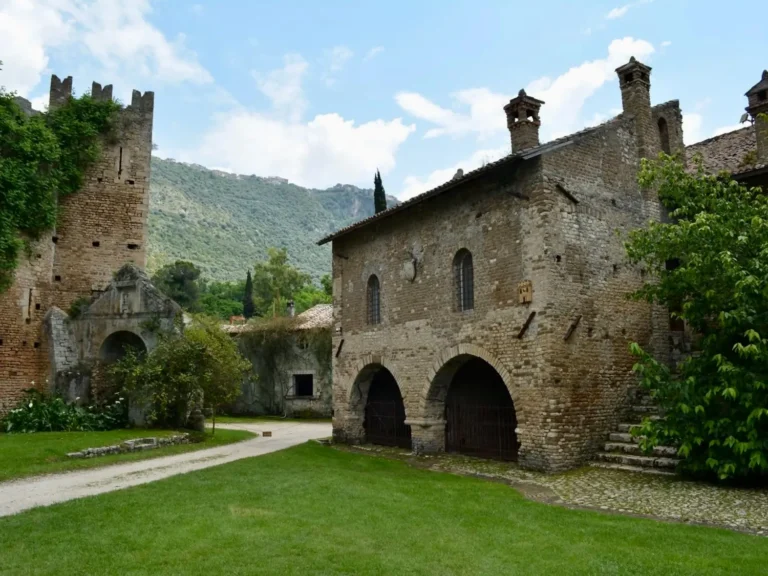
The spectacular Giardini di Ninfa
- The Castelli Romani: The string of volcanic hill towns south-east of Rome – Frascati, Ariccia, Castel Gandolfo and others – have been the Roman weekend escape since the days of Empire, and Pasquetta is their most festive day. The tradition is gastronomic above all: porchetta from Ariccia (the great herb-roasted pig, carved and served in a bread roll from the market stalls), local Castelli white wine from one of the old fraschette, and the pleasure of sitting outdoors on the hillside with views across to Rome in the distance. Castel Gandolfo, overlooking the blue volcanic Lago di Albano, is arguably the most beautiful of the towns and worth the journey for the view alone.
- Tivoli: Thirty kilometres east of Rome, and home to two UNESCO World Heritage Sites. The Villa Adriana was Hadrian’s vast imperial complex sprawling across 120 hectares of countryside and is an ideal setting for a long Pasquetta morning. Villa d’Este’s Renaissance gardens of fountains and water features are equally magnificent, and the two pair beautifully on a full day itinerary. Both are reachable by public transport. Alternatively you can visit on a guided tour which will take care of the transport.
- Giardino di Ninfa: Widely considered one of the most romantic gardens in Italy – a medieval town abandoned to nature and gradually transformed into an extraordinary garden through the 20th century – the gardens are open on both Easter Sunday and Pasquetta 2026 (€15.75; advance booking essential as it will be busy). Located about an hour from Rome by car.
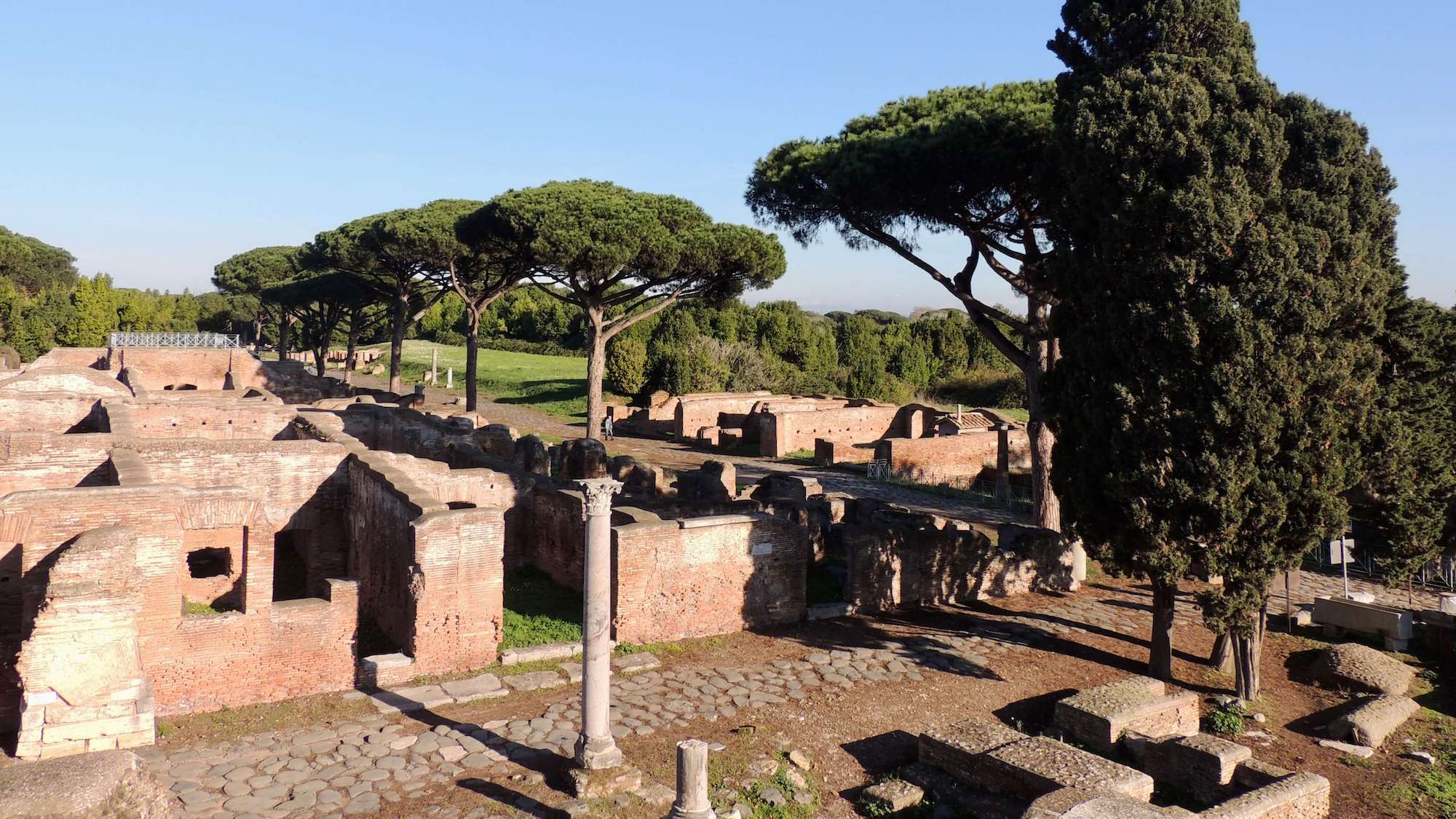
- Ostia Antica: The ancient port city of Rome, open on Pasquetta and reachable by metro and local train in under an hour. Often called Rome’s answer to Pompeii for its remarkable state of preservation, it makes an excellent archaeological half-day that most Easter visitors never think to make.
For more day trip ideas from Rome including some real out of the way options, see our article here:
Rome in Spring
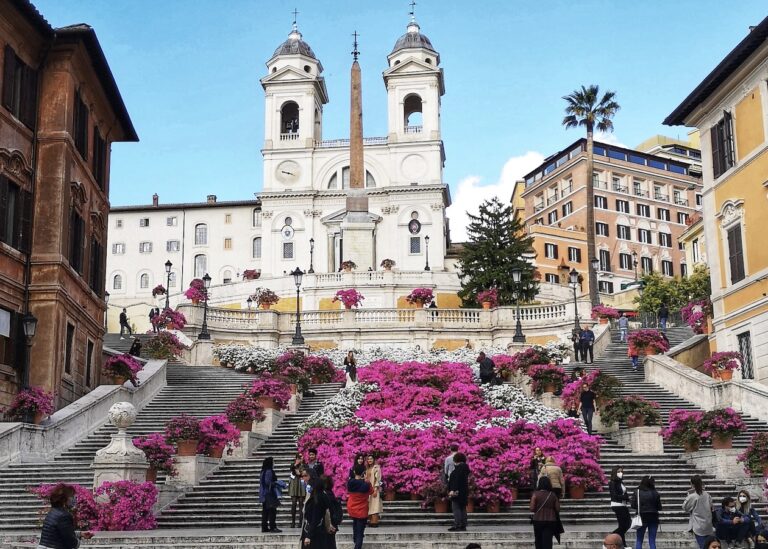
Spring is our favorite season to visit Rome
Easter falls in the middle of what many who know the city well consider its finest season. The azaleas cascade down the Spanish Steps. The umbrella pines of Villa Borghese catch the morning light. The Forum and Palatine Hill are alive with wildflowers. The April evenings are long and warm and the terraces fill early.
If your visit extends beyond Easter weekend, or if you’re planning a spring trip to Rome without the Holy Week focus, our full guide to Rome in spring covers the season in depth: the best parks and gardens, the outdoor markets, the seasonal food culture, and the tours and experiences that make the most of Rome at this particular time of year.
FAQ: Visiting Rome at Easter
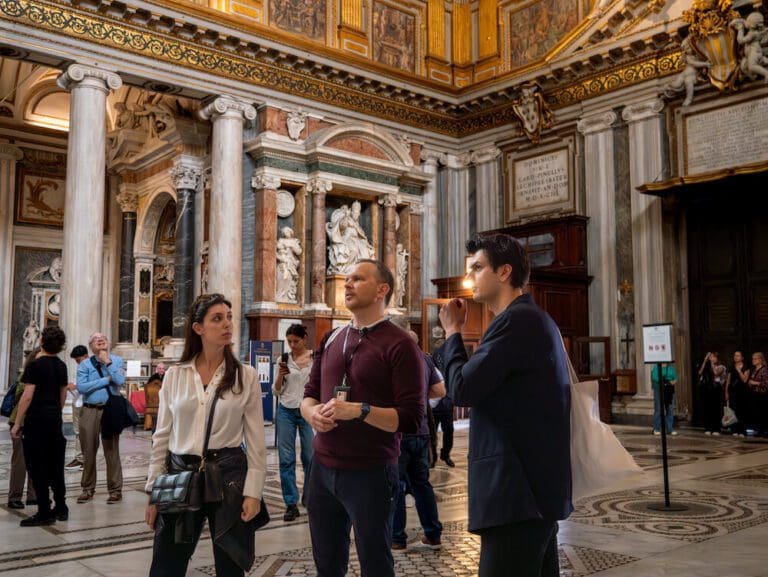
Rome’s churches are at their best at Easter.
Is Easter a good time to visit Rome?
Yes — emphatically, though it requires more planning than most other times of year. The crowds are real, but so are the rewards: the Via Crucis by torchlight, the Easter Sunday Mass in St Peter’s Square, the azaleas on the Spanish Steps, and the particular quality of Roman spring light make this one of the most memorable times of year to be in the city. Come prepared, book early, and you definitely won’t regret it.
How crowded is Rome at Easter?
Busier than most of the year, but more manageable than the reputation sometimes suggests. Crowds concentrate around the Vatican, the Colosseum and the main tourist axis between them. Away from these focal points, much of Rome remains surprisingly accessible. The most effective crowd-management strategy is to visit major monuments at opening time and to plan Vatican visits for the days before or after Easter weekend itself, when the Museums are open and crowds slightly thinner.
How do I get tickets for the Easter Papal Mass?
This year the Papal Mass in St. Peter’s Square doesn’t require a ticket, but you’ll need to arrive early to get a decent vantage point. The Urbi et Orbi at noon likewise requires no ticket, but again you’ll need to get there early.
What is open and closed at Easter in Rome?
The Vatican Museums are closed on Easter Sunday and Monday. The Colosseum closes early on Good Friday. Most other major monuments — the Colosseum on other days, Capitoline Museums, Galleria Borghese, the Pantheon, Palazzo Barberini and Rome’s main archaeological sites — are open throughout, including on Easter Monday when many museums are normally closed. Book timed-entry sites well in advance.
What is Pasquetta?
Pasquetta is the Italian name for Easter Monday — a national holiday with the firm tradition of spending the day outdoors. Romans traditionally make a trip to the surrounding hills, lakes and countryside for a day of eating, walking and fresh air. For visitors it is an excellent day to explore Rome’s nearby destinations or to enjoy a noticeably quieter city for morning sightseeing.
What is the weather like in Rome at Easter?
Easter 2026 falls on 5 April, when Rome’s climate is mild and predominantly pleasant. Daytime temperatures are typically 15–20°C with long hours of good light. Early April weather is variable, however, and showers can be heavy and sudden. Pack layers and a waterproof jacket.
Do I need to dress a particular way for Easter in Rome?
The dress code requirements at the Vatican and all Roman churches – covered shoulders and knees – are strictly enforced during Holy Week when these spaces are operating as active places of worship. Ensure you have appropriate clothing for all church visits regardless of the weather. For outdoor ceremonies like the Via Crucis, respectful dress is appropriate even though there is no formal enforcement.
For over 25 years, Through Eternity have been organizing itineraries showcasing the best of Rome, from the Vatican to the Ancient City and beyond, led by our resident expert guides. If you’re planning a visit to the Eternal City this Spring, be sure to get in touch to help plan your perfect trip!
Book Your Rome Experience