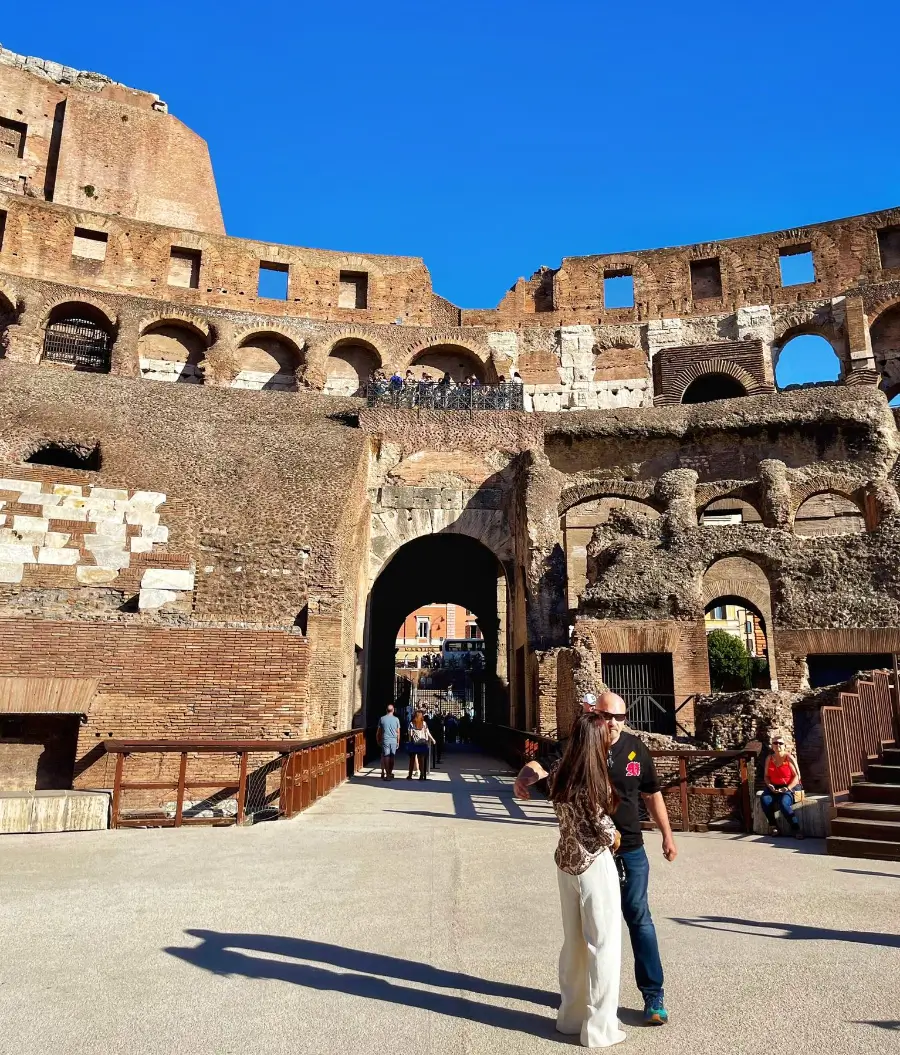
The Colosseum is one of the most photographed landmarks in the world - and for good reason.
The Flavian amphitheater is almost unbelievably photogenic: whether you’re an expert photographer, an Insta obsessive or just looking to future-proof your memories, it’s impossible to resist the urge to whip out the long lens when you visit Rome.
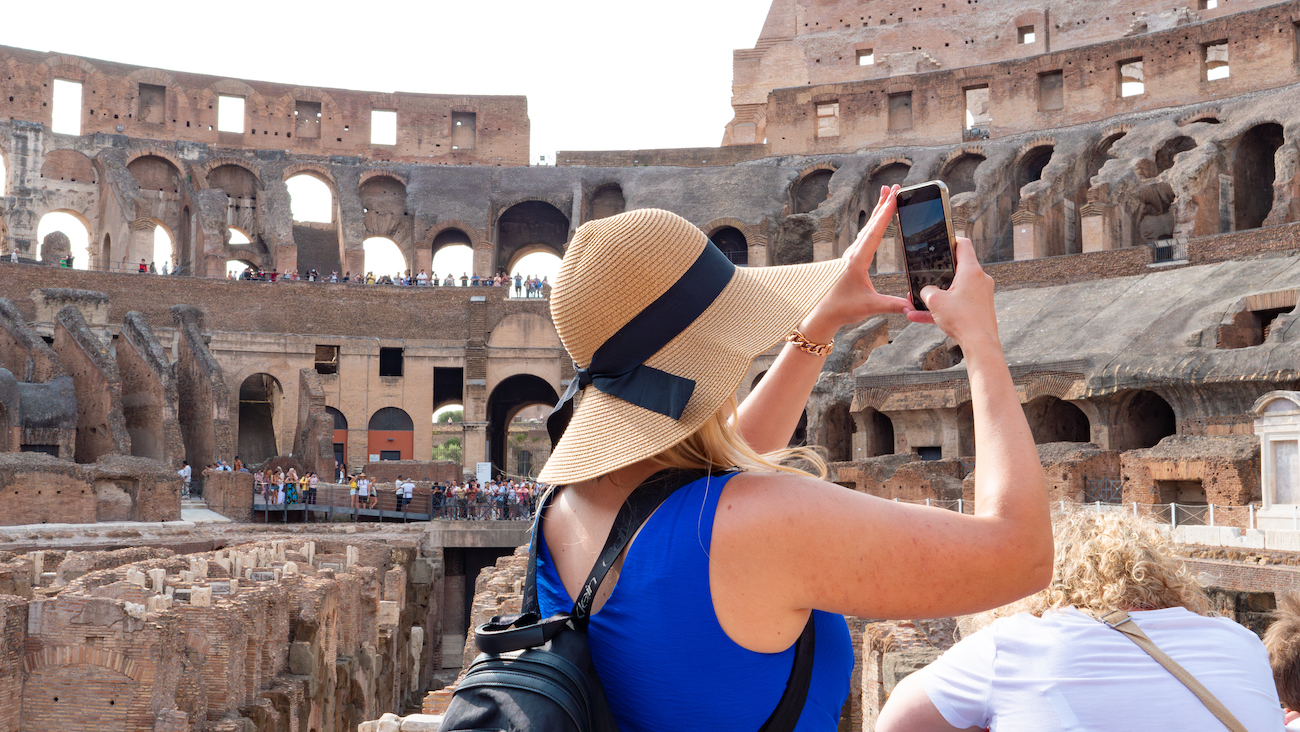
And yet, it has a quality that resists the camera in a particular way. No single image quite captures it. The scale requires a wide lens; the detail rewards a long one. The exterior is magnificent; the interior, with its exposed hypogeum and tiered arches, tells a different story entirely.
The right time of day matters hugely — the building in the flat light of a midday August crowd is simply not the same building as the Colosseum lit amber against a darkening sky, or caught through a frame of spring wisteria in April.
The good news is that the Colosseum’s circular footprint means there are more angles, viewpoints and framings available than at almost any comparable monument. Whether you are shooting on a serious camera or a phone, making a first visit or a fifteenth, these are the best Colosseum viewpoints worth knowing about!
Ancient Rome Tours
Explore the Colosseum

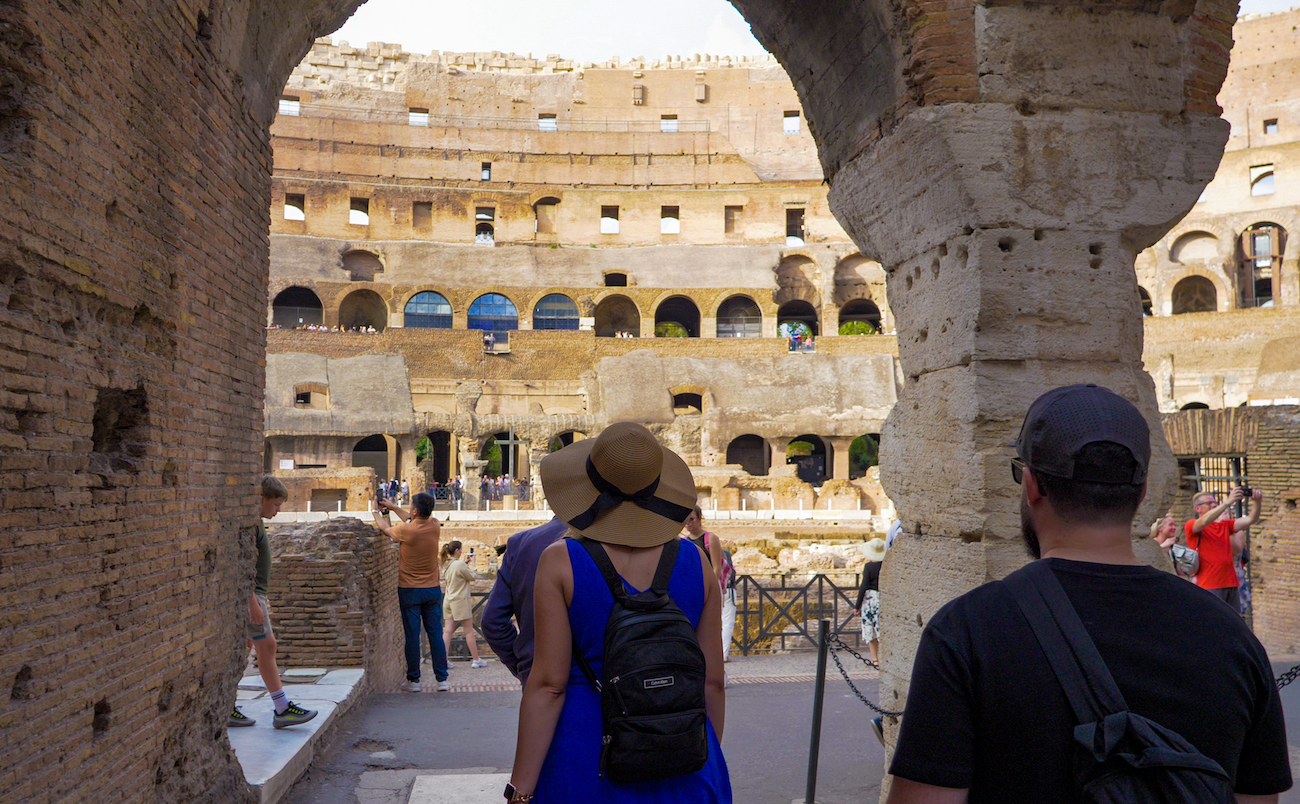
Immediately to the south-west of the Colosseum stands the Arch of Constantine, one of the best-preserved triumphal arches in Rome, built in 315 AD to celebrate Constantine’s victory over Maxentius at the Milvian Bridge.
The arch is itself a beautiful and complex object — its reliefs drawn from several earlier monuments, creating an accidental anthology of Roman imperial imagery across two centuries. It is also one of the finest framing devices in Rome.
Position yourself to include the arch in the left or right of the frame with the Colosseum behind it (and through it), and you have simultaneously two of the great monuments of ancient Rome and a composition that anchors one in the context of the other.

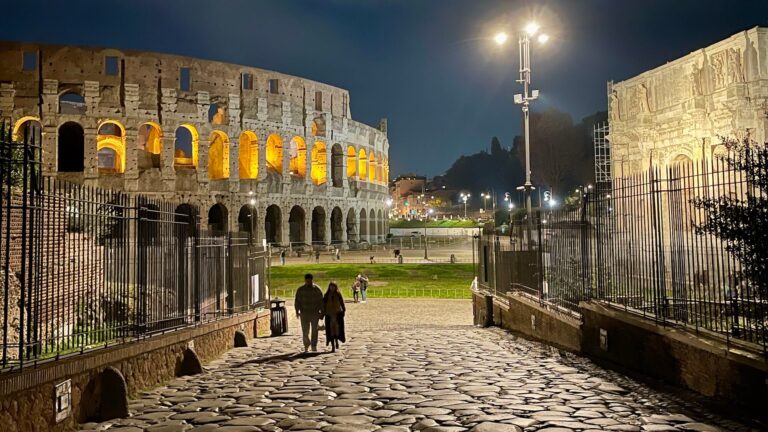
The Via Sacra, or Sacred Road, was arguably the most important street in ancient Rome, and formed the climax of the processional route that once led victorious generals into the Roman Forum after successful military campaigns.
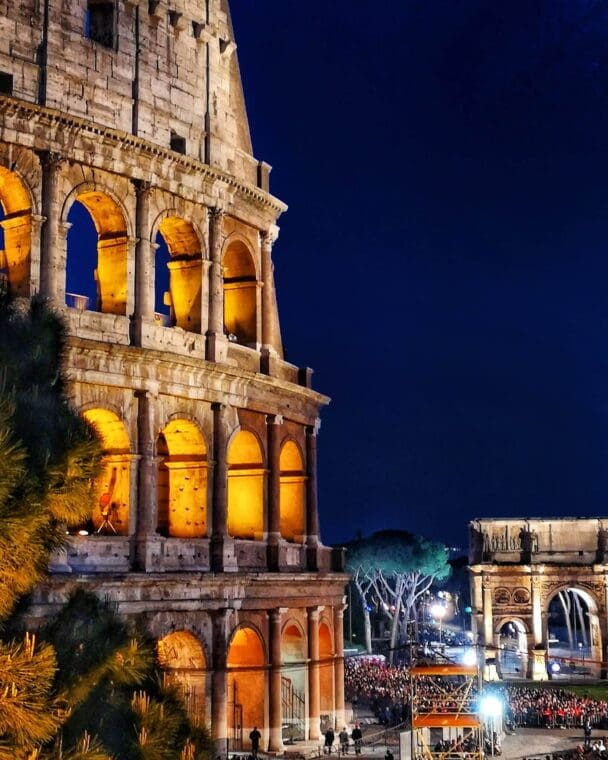
Walk up the Via Sacra for a few meters, turn around and you’ll be rewarded with a great view – it’s particularly magical at night, when the Colosseum is illuminated against the dark sky.
Drop to your knees for a super low angle that will allow you to include the Via Sacra’s ancient flagstones in the shot, too.
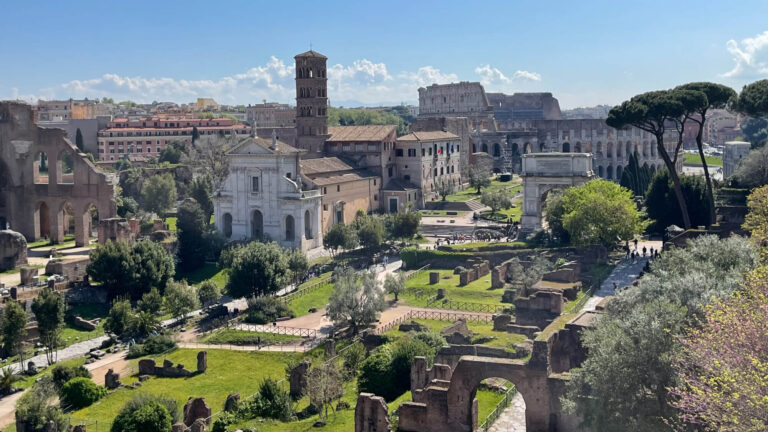
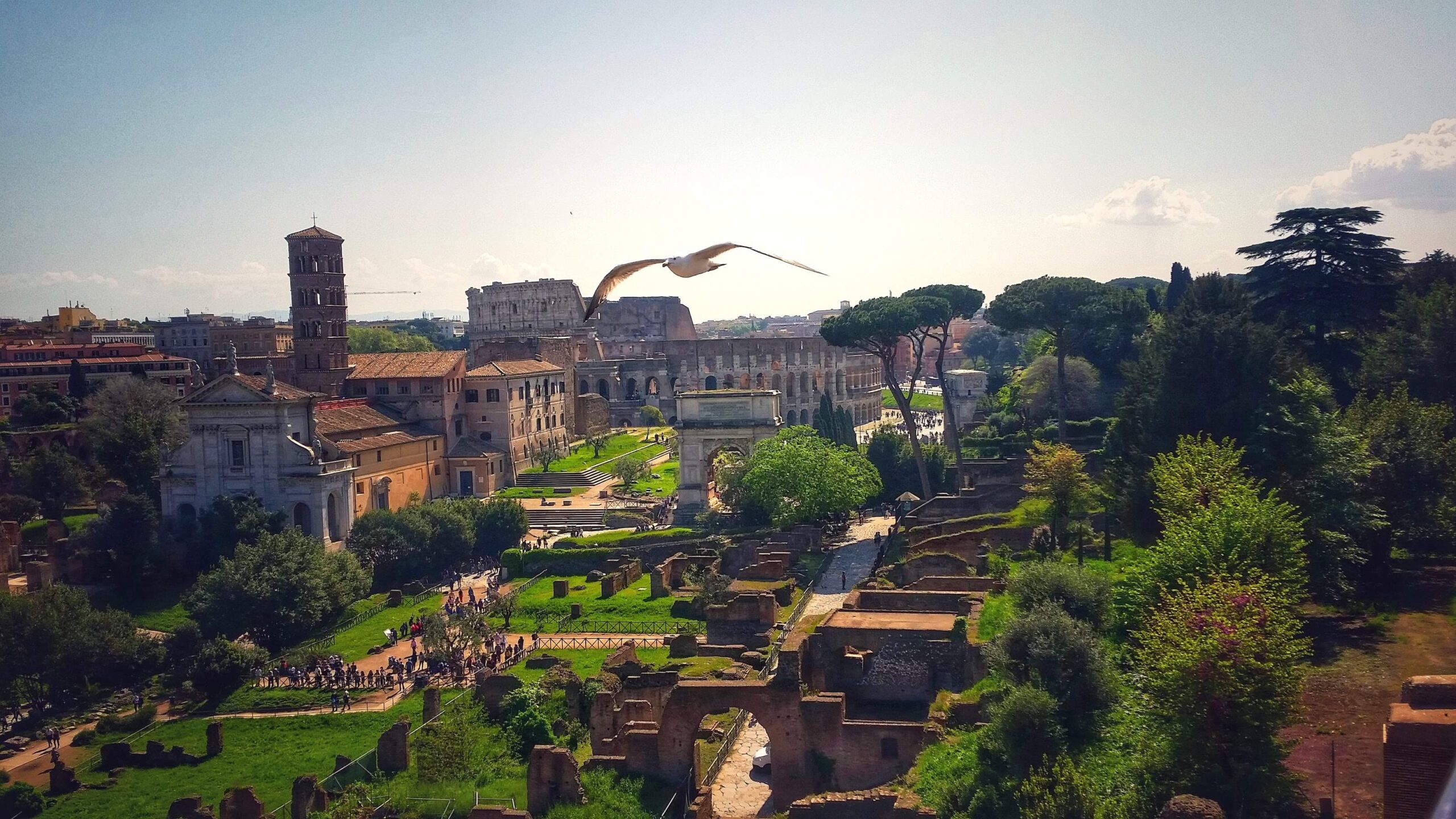
You’ll need an ancient city ticket that includes the Palatine Hill if you want to see this truly awesome overlook, but when you clap eyes on the panorama sweeping out over the Roman Forum and towards the Colosseum beyond you’ll realize it was more than worth it!
The Palatine Hill is where the great Imperial palaces of ancient Rome once stood, and gazing out all across Rome from here today it’s easy to see why the all-powerful emperors chose to make their palatial homes here.
The photographic challenge is the distance; a telephoto lens or the zoom on a modern phone will be needed to bring the Colosseum properly forward in the frame. The shot is best in late afternoon, when the western light falls across the Forum and the Colosseum catches a warm glow from the south.
Via dei Fori Imperiali, the wide boulevard that runs from Piazza Venezia to the Colosseum alongside the Imperial Fora, was built by Mussolini in the 1930s specifically to create a processional approach to the amphitheatre.
While the politics of the decision to blast a road right through a densely-populated part of the fabric of the medieval city were to say the least questionable, it’s undeniable that it created one of the finest photographic approaches to any ancient monument in the world.
Walking from the Piazza Venezia end, with the Colosseum visible at the far end of the avenue and the Forum ruins opening to the right, the building gradually grows as you approach, revealing itself in stages, the arches multiplying as you close the distance.
The view at any point along the avenue has the quality of a historical painting: the ancient monuments framing the road, the Colosseum pulling you forward.
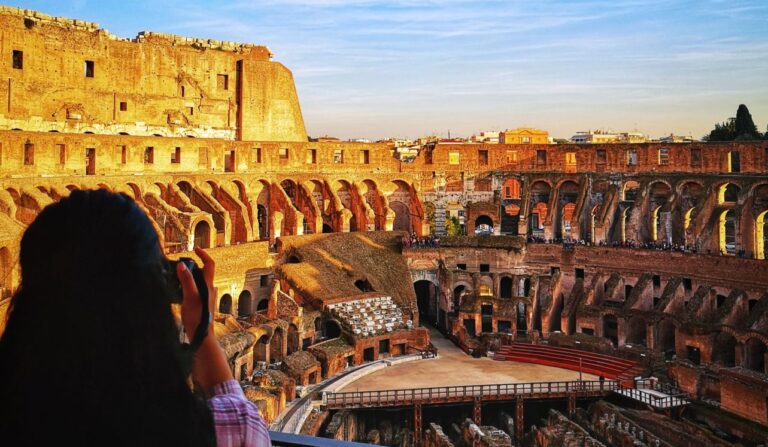
After a long restoration, the upper tiers of the Colosseum were reopened to the public in May 2024, following years of work to consolidate the ancient structures. Access to these exclusive areas is restricted to visitors with specific tickets accompanied by a licensed guide, and numbers are limited each day.
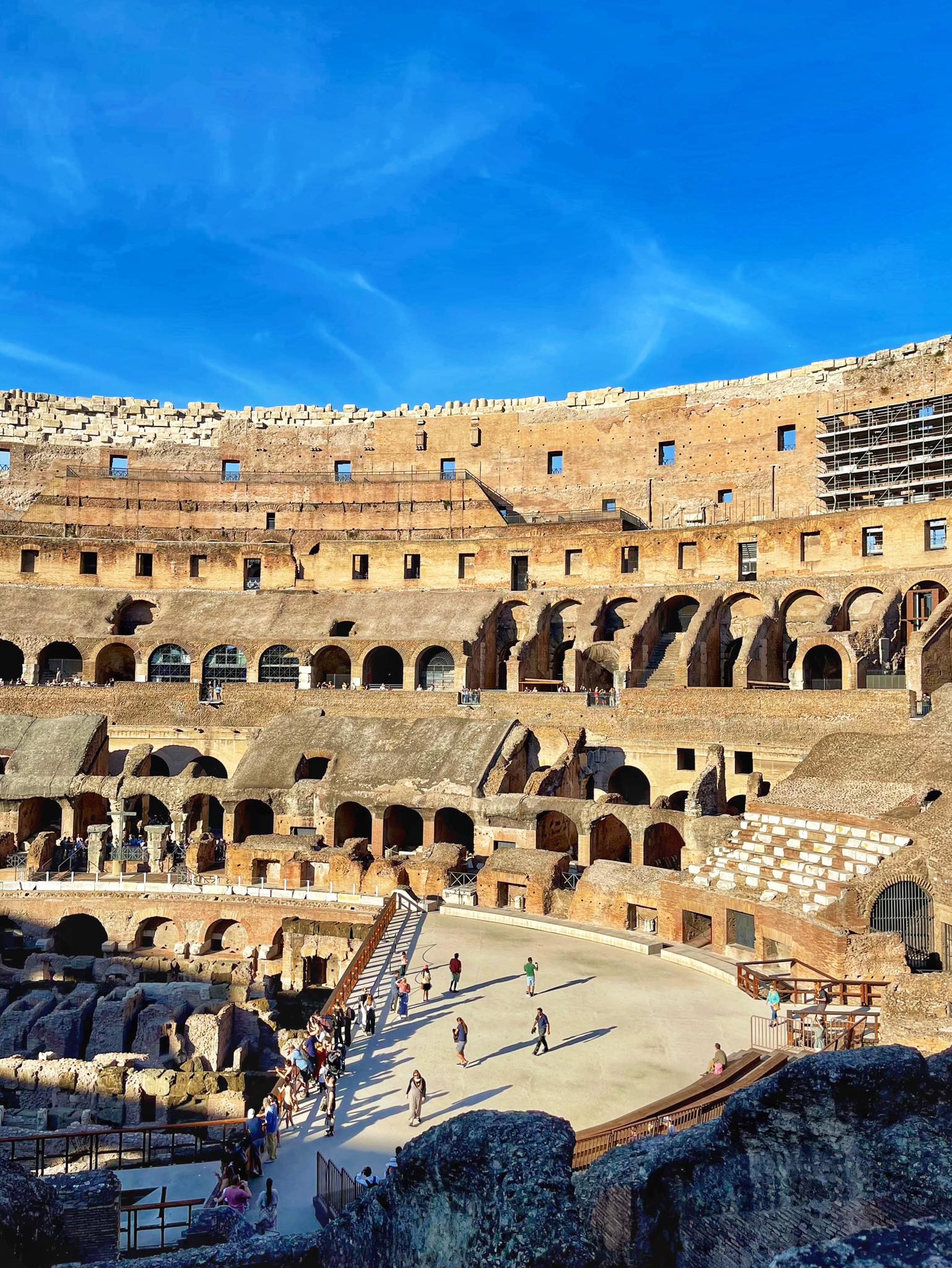
If you can get in, do: the Belvedere, as it is known, offers the finest bird’s-eye view down into the amphitheatre that exists.
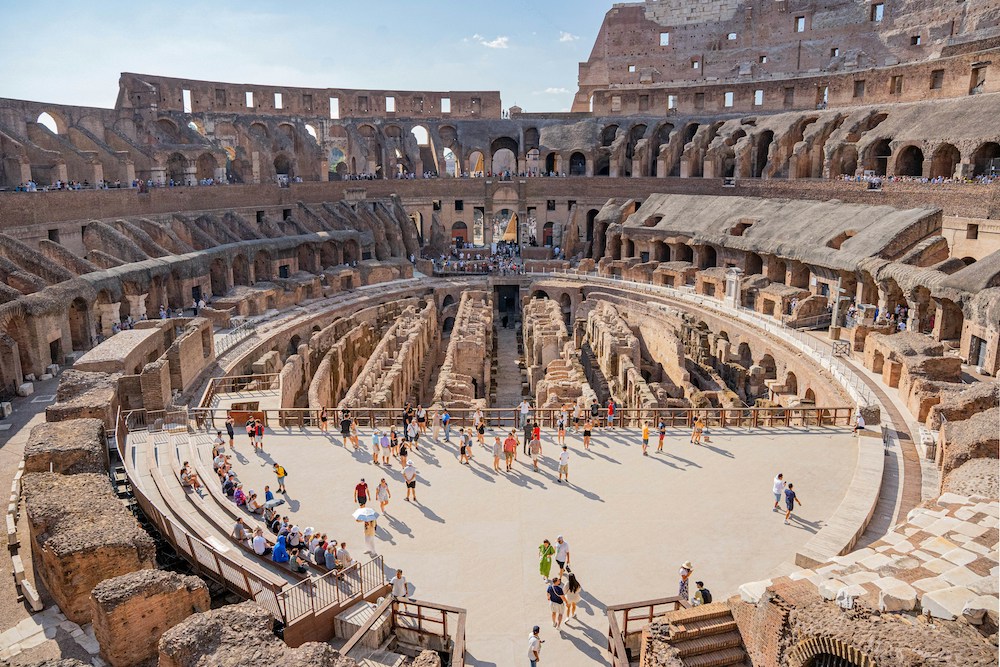
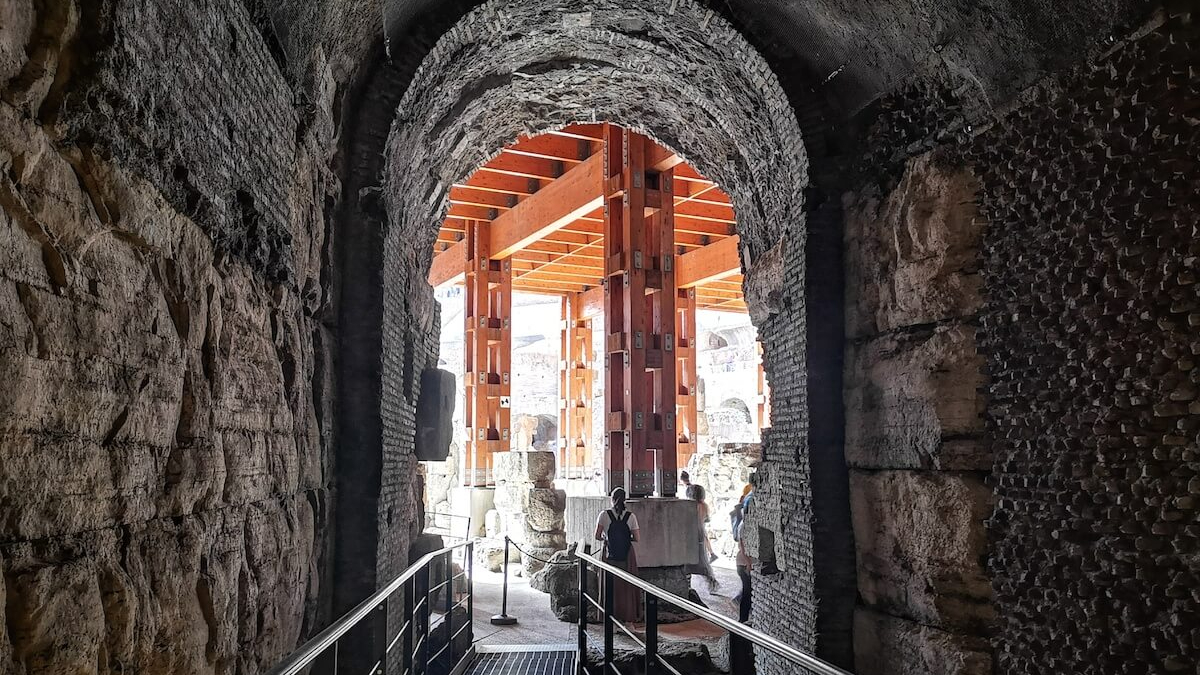
From the highest accessible point inside the building, you look down across all four visible tiers of the cavea and into the exposed hypogeum — the underground complex that once held animals and gladiators — with the reconstructed arena floor visible below.
It is the perspective that the lowest-status spectators of ancient Rome would have had of the games – up here was the standing-room-only crowd in the gods, and today it reveals much about the building’s scale and social organisation.
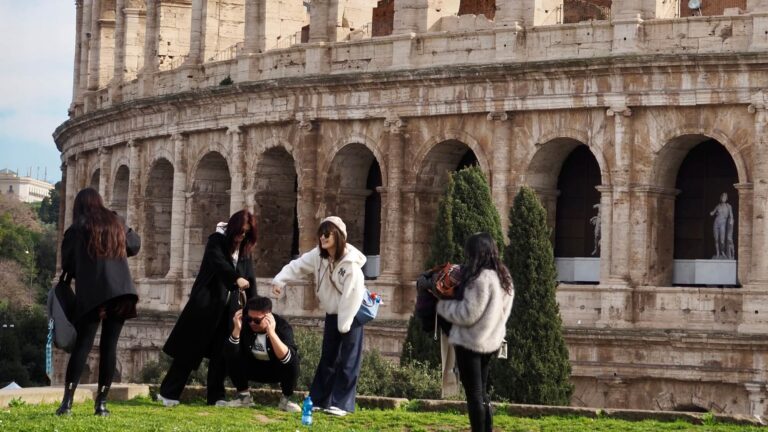
This secret viewing platform might just be our favorite place to gaze on the Colosseum in all its glory. Perched on the eastern edge of the Forum, the Temple of Venus and Roma was the largest religious building in the area.
Make your way to the temple, and then turn around: a superb unobstructed view of the Colosseum’s facade rears up before you in all its ancient glory.
To visit the temple of Venus and Roma and enjoy this panorama, you’ll need to pay for an entrance ticket to the Roman Forum.
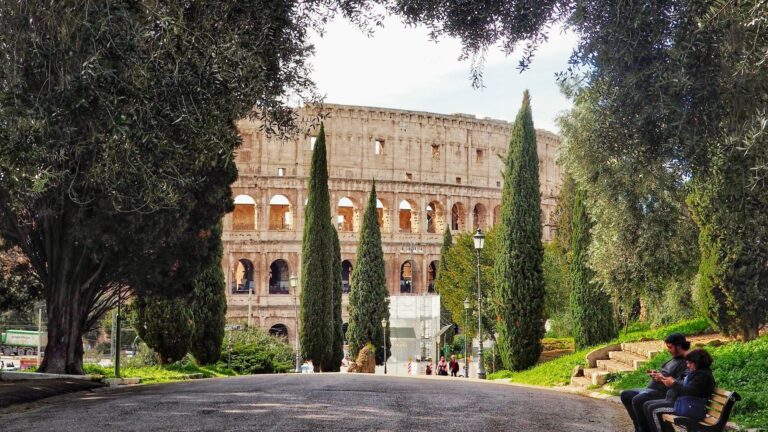
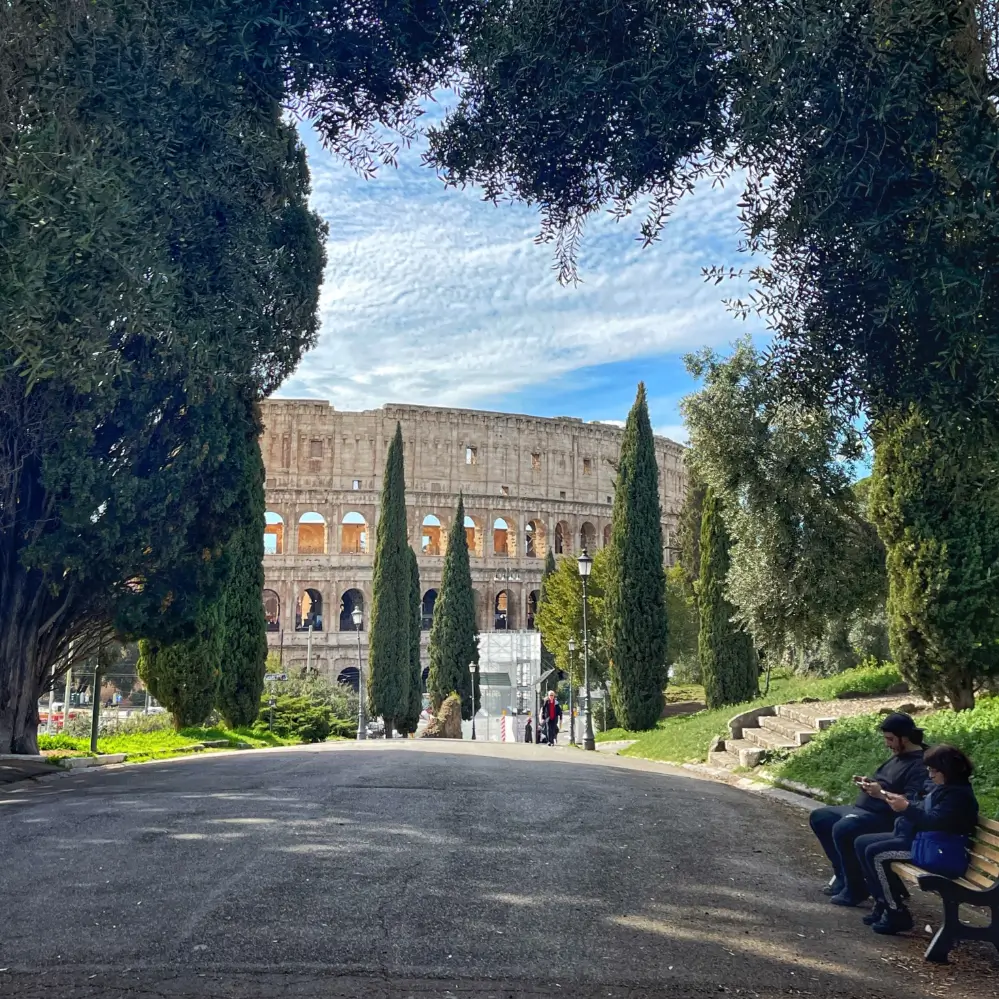
This is the viewpoint most visitors never find, and it is in many respects the best of all. The Colle Oppio — the Oppian Hill — is a small public park that rises above and behind the Colosseum, reached by a short walk up the steps near the Colosseo Metro station.
It is never as crowded as the areas immediately surrounding the monument, and from its elevated position you look down on the Colosseum rather than up at it, taking in the full elliptical sweep of the building in a way that the ground-level perspectives cannot achieve.
Make your way along the bench-lined boulevard that runs along the south side of the park, and the ancient amphitheater gradually reveals itself framed by the gently swaying Roman pines. It’s particularly picturesque in the golden light of the late afternoon.
The leafy park also conceals various ancient ruins are dotted amongst the lawns and trees, including the Domus Aurea (Nero’s Golden House) and the remains of the Baths of Trajan.
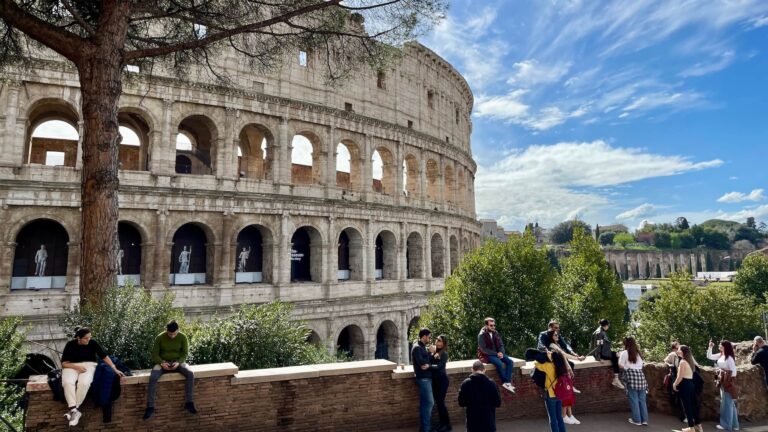
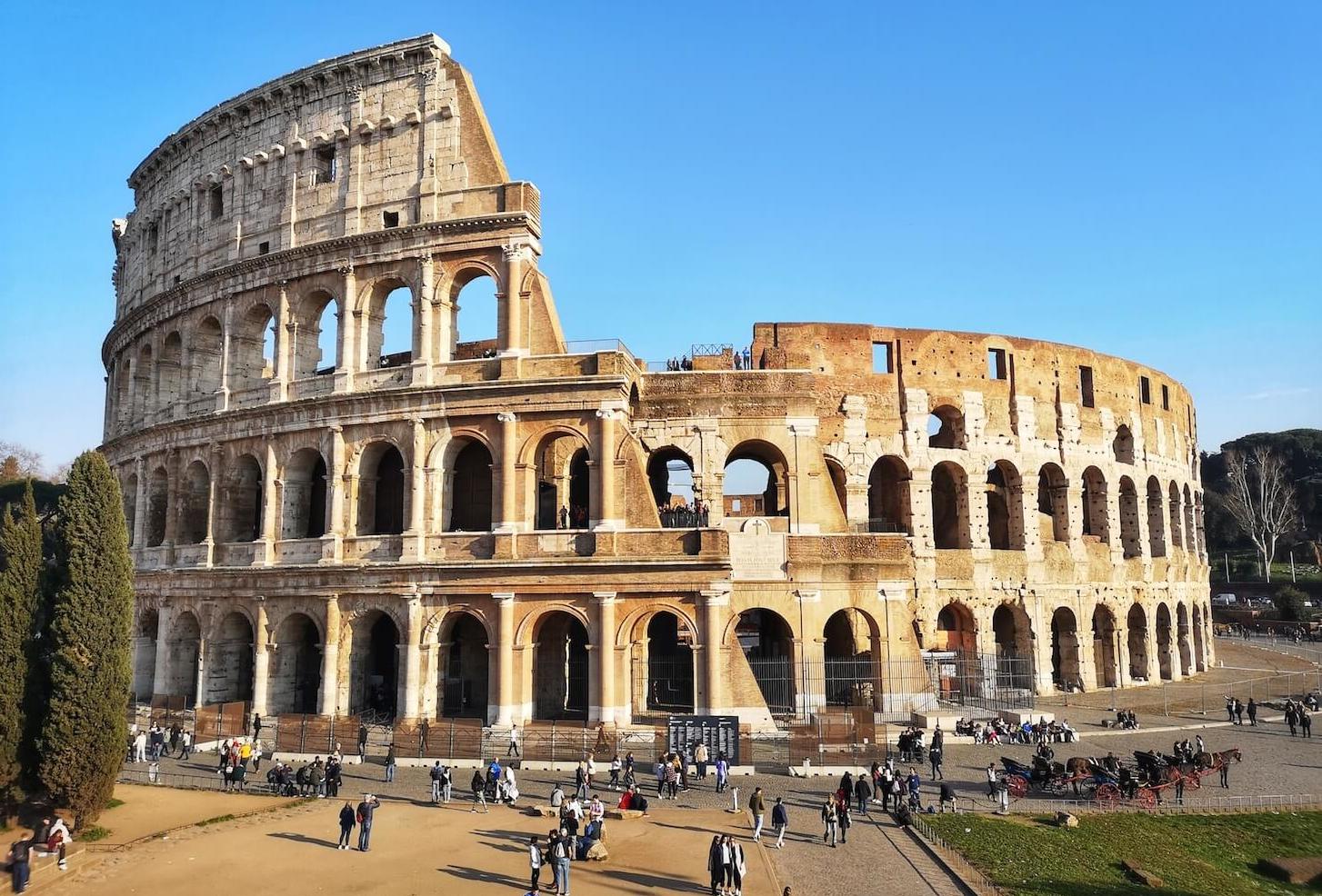
This classic vantage point provides one of the most postcard-perfect views of the Colosseum. Here, the structure looms overwhelmingly large, filling your frame with its iconic arches.
Perch on the little wall that guards the slope leading down to the Colosseum and you’ll be in the perfect spot for a quintessential Colosseum selfie. To get here, climb the flight of steps that are located right behind the entrance to the Colosseum metro spot.
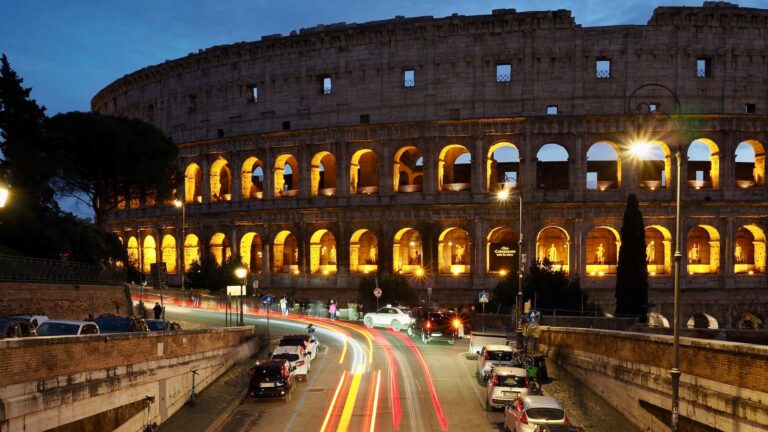
This pedestrian footbridge over the road that runs to the north of the Colosseum might not seem the most promising location, but at night it transforms.
The bridge sits at exactly the right height to frame the illuminated northern facade of the Colosseum, the surviving arches lit amber against the dark sky and the road below providing a ready subject for long-exposure photography.
Car light trails in a long exposure, with the Colosseum as the static subject and the streaking headlights providing movement, produce one of those compositions that capture the compression of ancient and modern that makes Rome so unique.

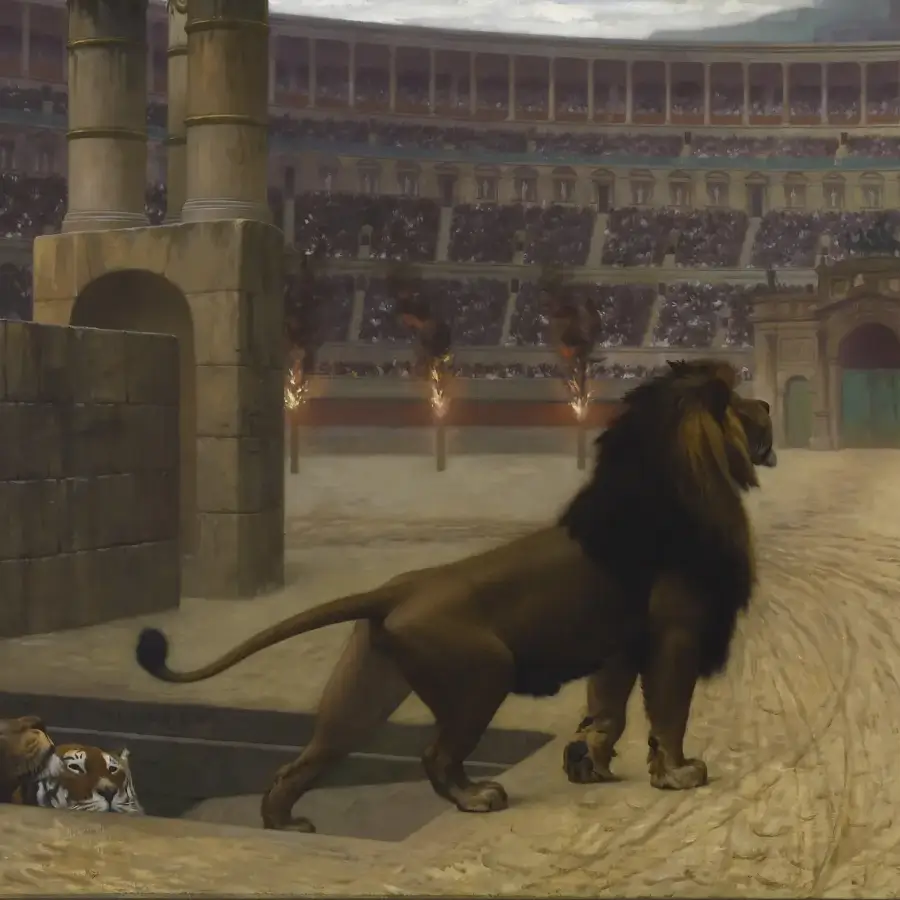
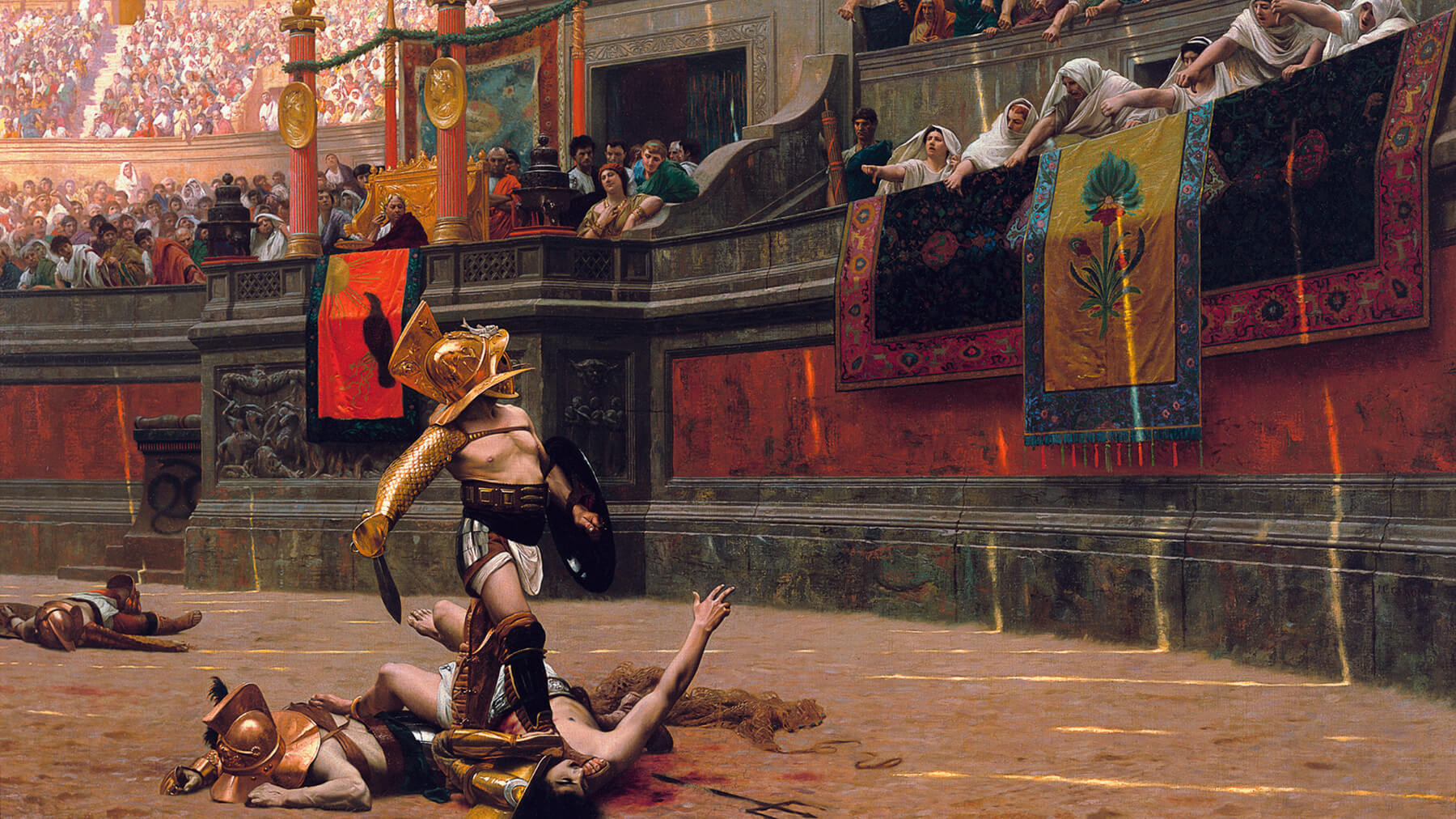
The view that most Colosseum visitors never experience is the one that would have been the most intimidating in antiquity: looking up from the sands of the arena.
From the reconstructed arena floor – accessible on specific guided tours – you see the building as a gladiator saw it: the tiered cavea rising in every direction, the sky above, the scale of the amphitheatre suddenly, vertiginously comprehensible.
The photographic challenge from the arena is the sky: a wide-angle lens pointed upward with the tiers framing the ellipse of open sky produces a composition of beautiful geometry — the ancient engineering and the space it contains in a single frame.
This is also the only viewpoint from which you can look down into the exposed hypogeum and photograph the elevator shafts and passageways from above.
Access to the arena floor is strictly limited and must be booked in advance as part of a guided tour:
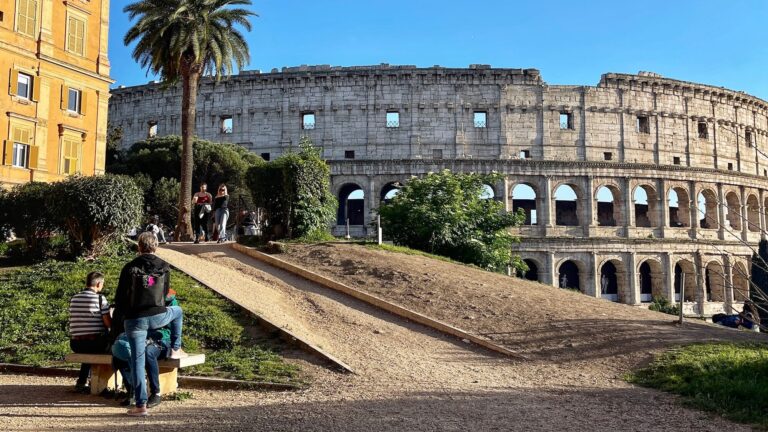
You’ll be glad you continued reading this far when you discover this dreamy hidden panorama overlooking the Colosseum.
Obviously you can’t come to Rome and leave without a selfie at the Colosseum, but it can be tricky to find a spot away from the crowds to get your perfect snap.
That’s why you need to head up the hill just behind the Colosseum to the little park called the Giardinetto del Monte Oppio – it’s never too busy, and from this higher vantage point you’ll have an unrivalled view of the ancient amphitheater!
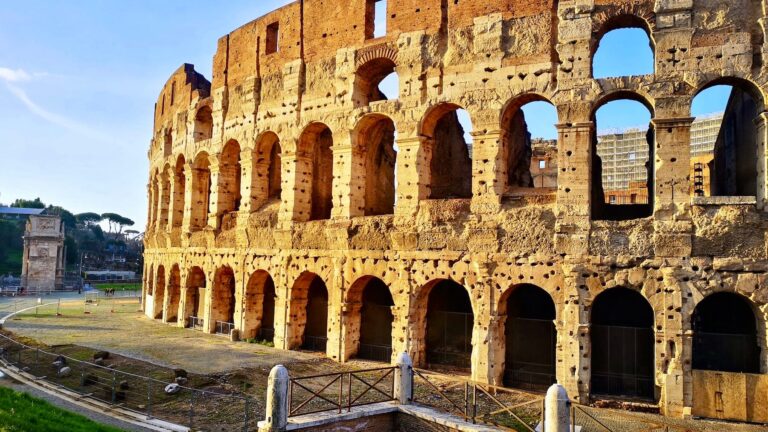
This angle offers a fascinating look at the Colosseum’s rugged, timeworn surface, with its pockmarked arches fully visible.
The holes in the stonework? After the fall of the Roman empire looters hovered up all the precious materials in the amphitheatre’s fabric, including the massive metal clamps that fixed the marble veneer in place – most of which were melted down and turned into weapons during the Middle Ages.
As an added bonus, the sun sets behind the monument from this vantage point, casting a warm glow over the weathered stones.
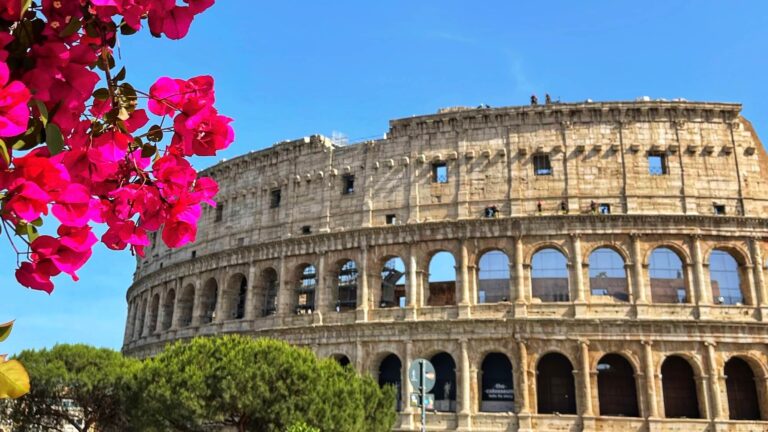
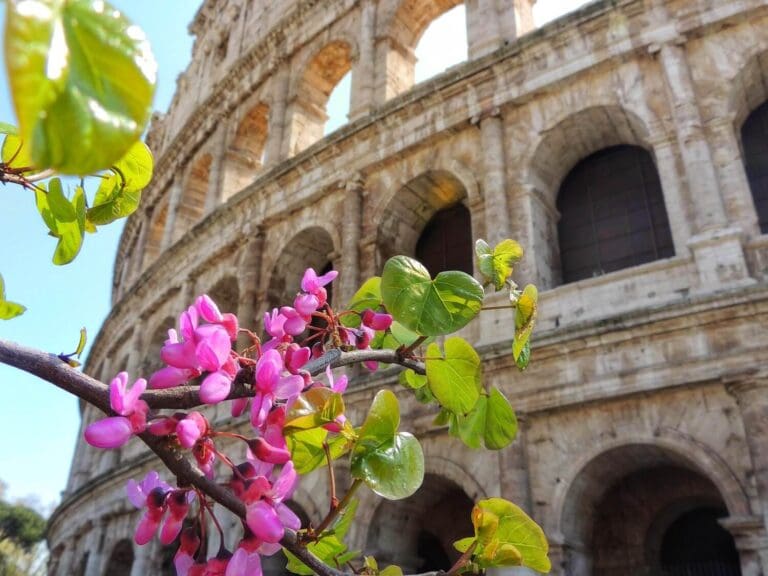
In springtime, this street corner becomes one of the most romantic viewpoints for perfect Colosseum views, as wisteria and other flowers bloom in fragrant clusters, perfectly framing the ancient monument.
The combination of flowering spring wisteria and the ancient arches is, in our view, one of the two or three finest photographic compositions available at the Colosseum —a and it is available for only a few weeks a year.
If you are visiting Rome in April or early May, this is the shot to make time for.
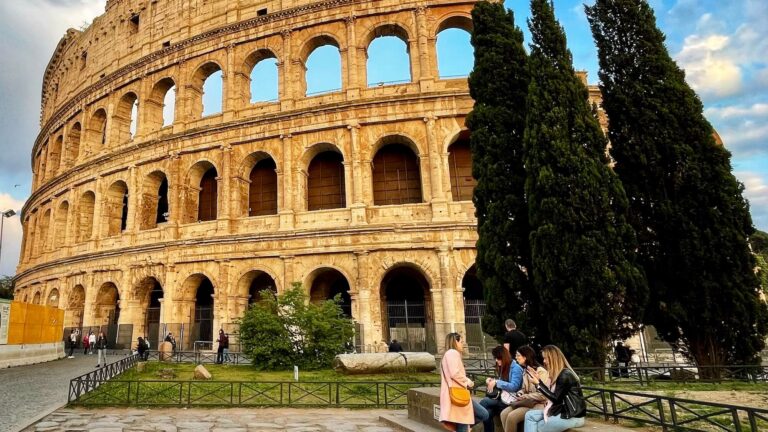
Sometimes, the most obvious spot can also be the most awe-inspiring of all!
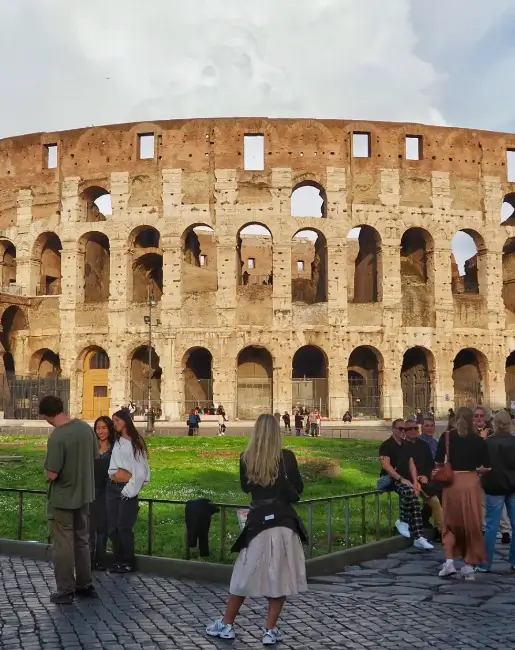
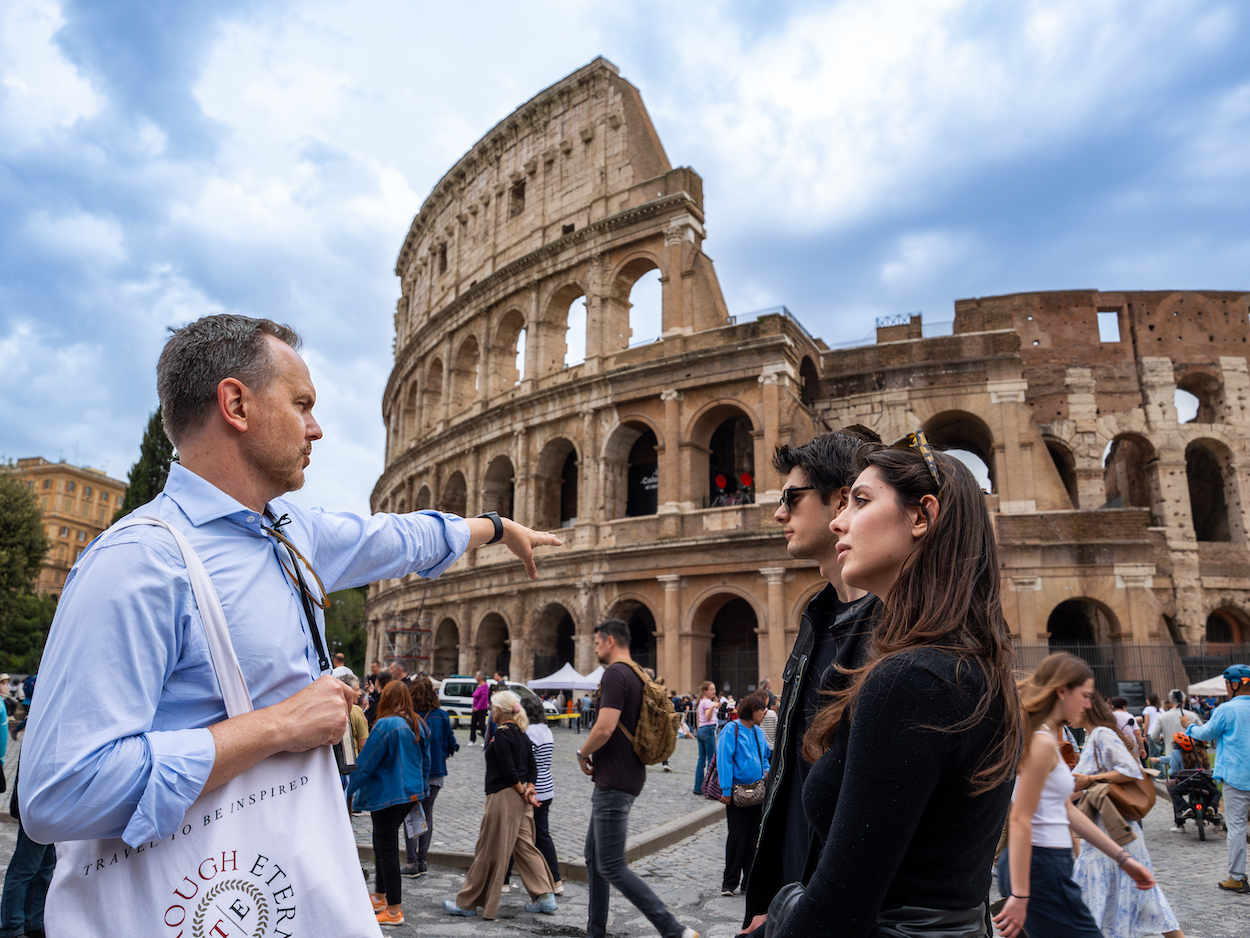
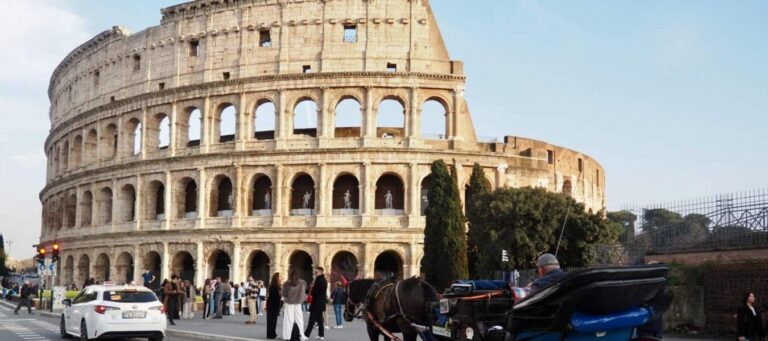
Standing right in front of the Colosseum allows you to truly grasp its immense scale. Sure it’s crowded in the piazza out in front, but then again it was crowded here during the heyday of the ancient games too!
Looking up at its towering arches, you can almost hear the roar of the crowd and visualise the spectacle that once took place inside.
What is the best viewpoint for photographing the Colosseum?
It depends what you are after. For the classic exterior shot, the main piazza at opening time or the Colle Oppio hilltop park are hard to beat. For the panoramic view from above, the Palatine Hill Belvedere is exceptional. For the dramatic night shot, the pedestrian bridge on Via degli Annibald is excellent. For the experience of shooting from inside, the arena floor tour is unforgettable.
Is photography allowed inside the Colosseum?
Yes — photography is permitted throughout the Colosseum including the underground hypogeum and the arena floor. Flash photography may be restricted in certain areas. Tripods are not permitted.
What is the best time of day to photograph the Colosseum?
The hour after sunrise and the hour before and after sunset consistently produce the best light. The low-angle light rakes across the travertine facades and creates a warmth that the flat overhead light of midday cannot match. After dark, the illuminated building offers one of the most dramatic views in Rome.
Is the Colosseum Belvedere (upper tiers) open to visitors?
Yes — the upper tiers were reopened to the public in May 2024 after a long restoration programme. Access is restricted to visitors with specific tickets accompanied by a licensed guide, and numbers are limited each day. Booking in advance is essential.
Where is the best place to view the Colosseum for free without entering?
The main piazza on the north-western side, the Via Sacra approach, the Colle Oppio park above the Metro station, and the Via del Colosseo are all free external viewpoints. The pedestrian bridge on Via degli Annibaldi is excellent for night photography at no cost.
Rome is a city that rewards the adventurous of spirit, revealing its secrets only to those willing to explore. These amazing viewpoints are proof – each tells a different story of the magnificent Colosseum, offering up new perspectives on its majesty. Now, only one question remains – how many angles can you squeeze into your camera roll before running out of storage?! If you want to explore the Colosseum in the flesh, be sure to check out our Colosseum tours!
Ancient CityTours
Explore the Colosseum!