The Vatican Museums boast some of the most spectacular collections of art in the world.
Snaking through countless halls and galleries stuffed full of priceless art treasures and antiquities, a visit to the Vatican Museums is a whirlwind journey through thousands of years of history and culture. Where else can you witness Michelangelo and Raphael’s crowning achievements, the greatest sculptures of the ancient world, priceless tapestries, Egyptian artifacts, jaw-dropping Renaissance architecture, and even retired Pope mobiles all under the same roof?
But with so many things to see, it can be as challenging a place to visit as it is rewarding. Each year, the Vatican Museums welcome more than 5 million people through its gates, and the resulting jam-packed experience can be overwhelming. So, if you want to get the best out of your experience, you had better come up with a plan!
We offer a range of award-winning Vatican Museums tours that take all the stress out of visiting for you, but if you want to go alone, we have you covered as well. Discover exactly how to visit the Museums with our comprehensive guide, newly updated for 2026, and find out all the practical information you need to know to plan your visit – from how to get there to when to visit, from ticket prices to how to skip the lines, the best tours and where to have lunch.
Vatican Tours
Explore the Sistine Chapel
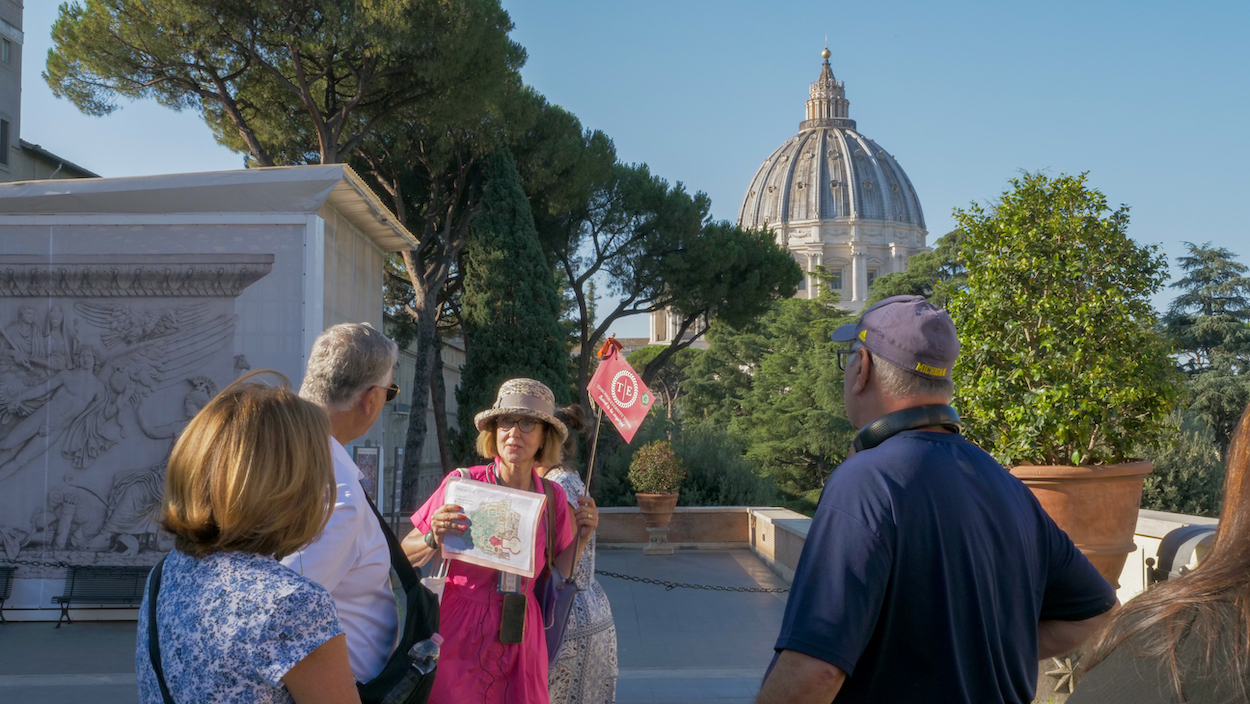
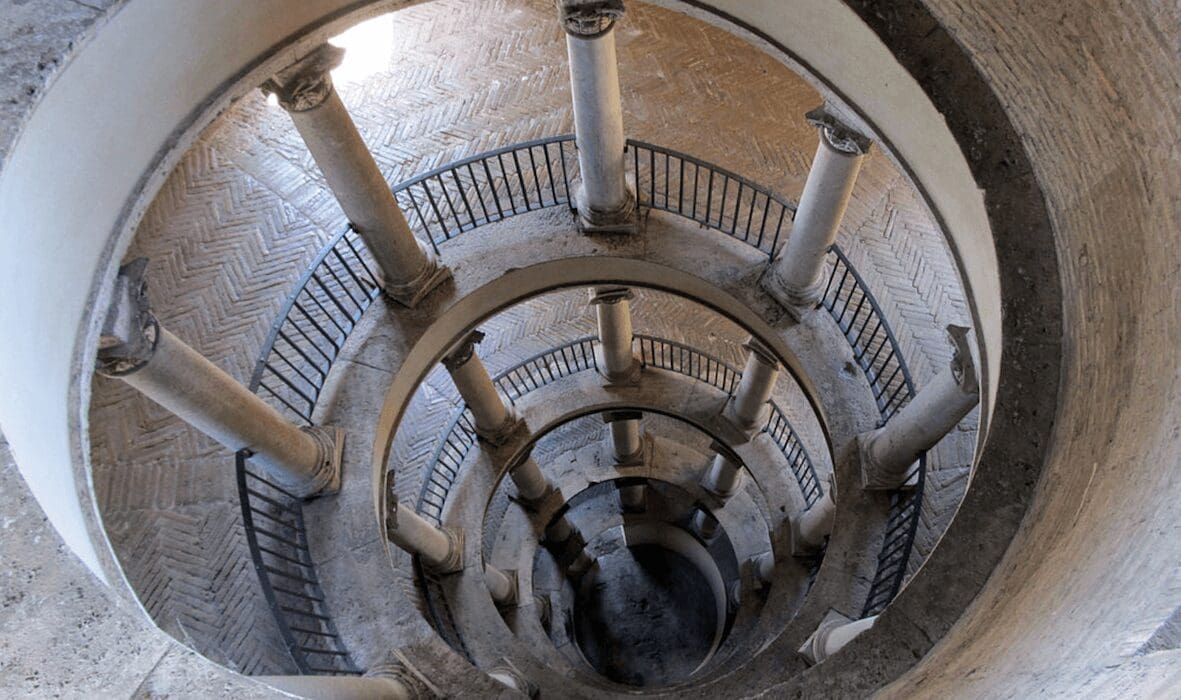
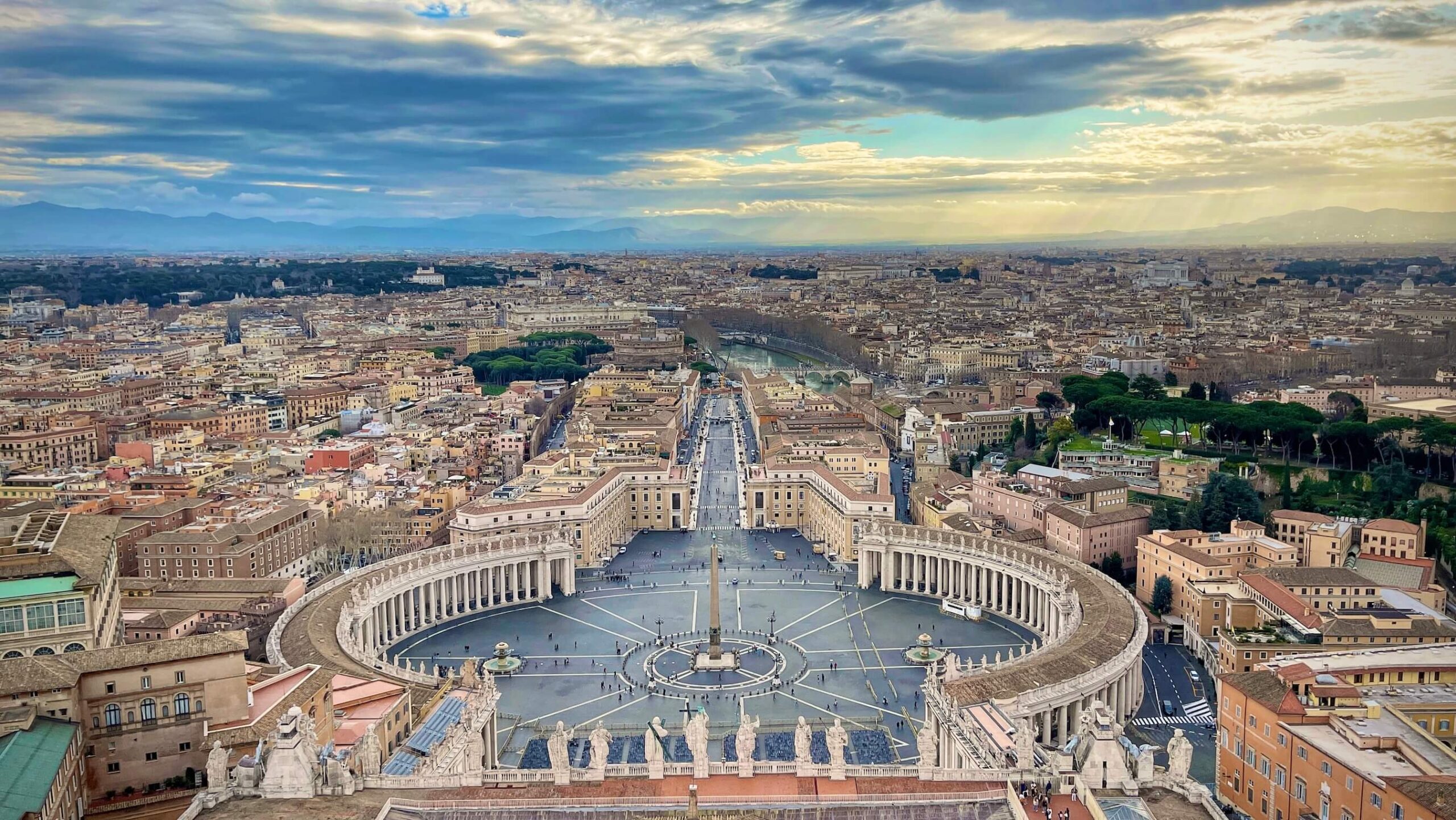
First things first: strictly speaking, the Vatican City isn’t part of Rome, or even Italy, at all. Instead, it’s the smallest independent nation-state in the world, an enclave on the western banks of the Tiber river officially founded in its current incarnation via a deal made between Mussolini and Pope Pius IX in 1929. The Vatican Palace is the permanent residence of the Pope, who in his role as Bishop of Rome is the head of the Catholic faith and spiritual leader to billions of people around the world.
The Vatican City operates like a fully-fledged country in miniature: it boasts its own telephone system, internet domain and postal service; it has an official pharmacy, an independent radio station, daily newspaper and publishing press, and even a banking system and its own mint. The Vatican also has its own equivalent of a standing army – the gaudily dressed Swiss Guards are sworn to protect the person of the Pope, and have been putting their bodies on the line in his name since the start of the 1500s.
But although the Vatican does have clearly defined borders marked by its imposing fortified medieval walls, fear not: you don’t need to dust off your passport when you get off the metro on your way to the Museums or St. Peter’s basilica. Just don’t try to sneak past the halberd-wielding Swiss Guards into the private parts of the palaces and gardens that are the preserve of popes and cardinals!

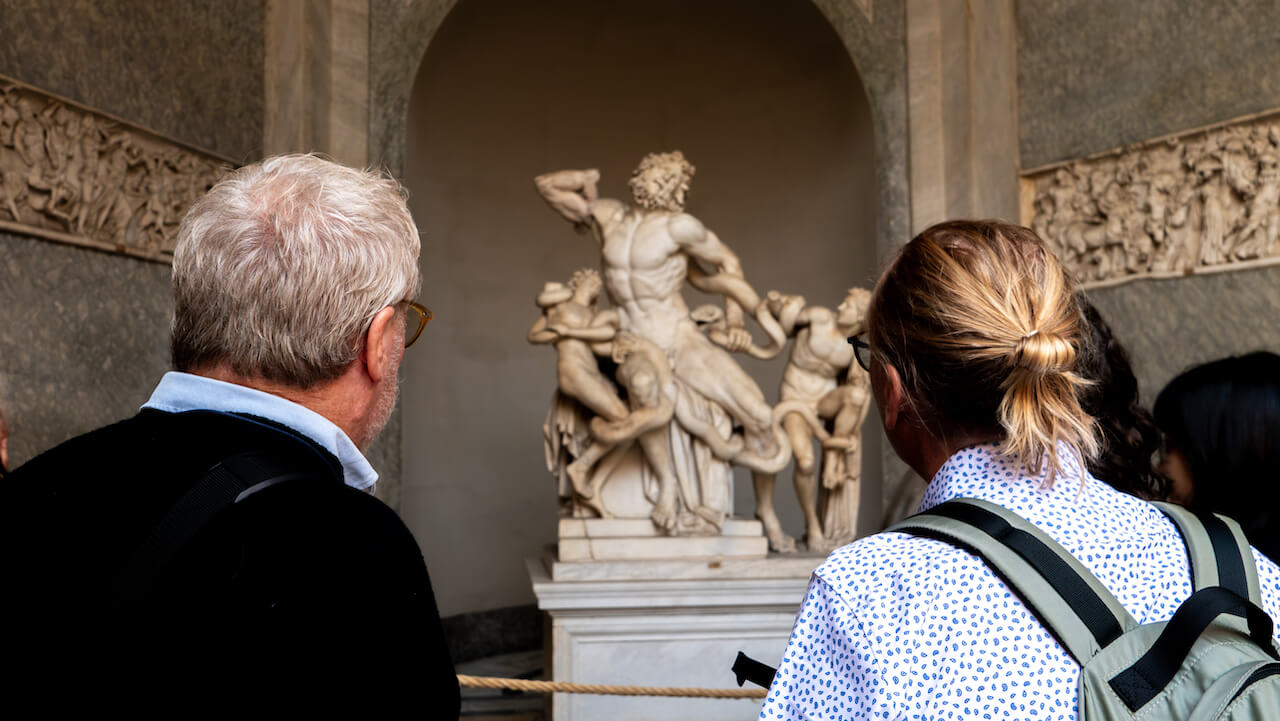
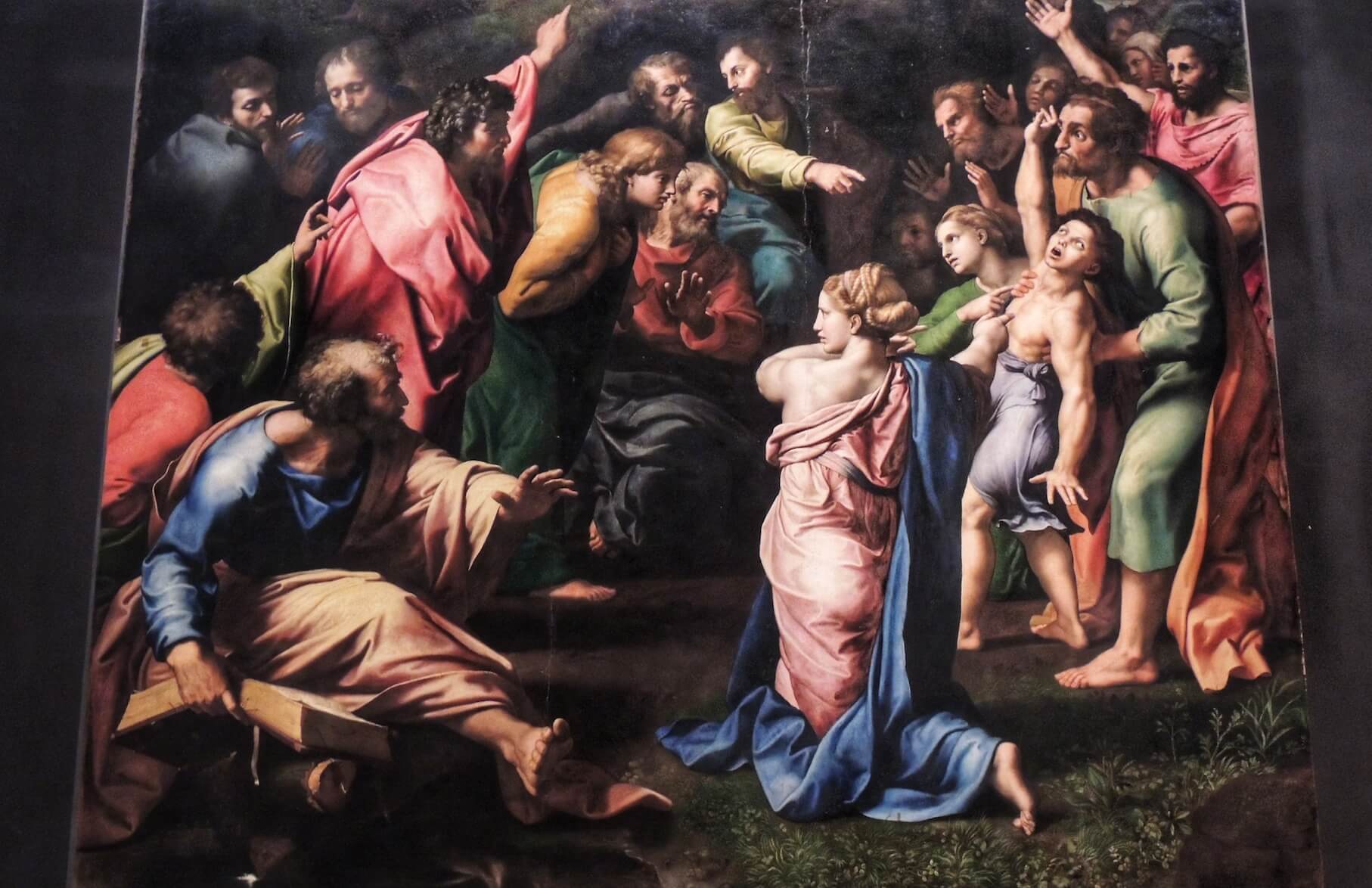
The Vatican Museums contain one of the greatest art collections ever assembled, and with miles of galleries to navigate, a little forward planning goes a long way. A few anchoring highlights to keep in mind:
The Sistine Chapel
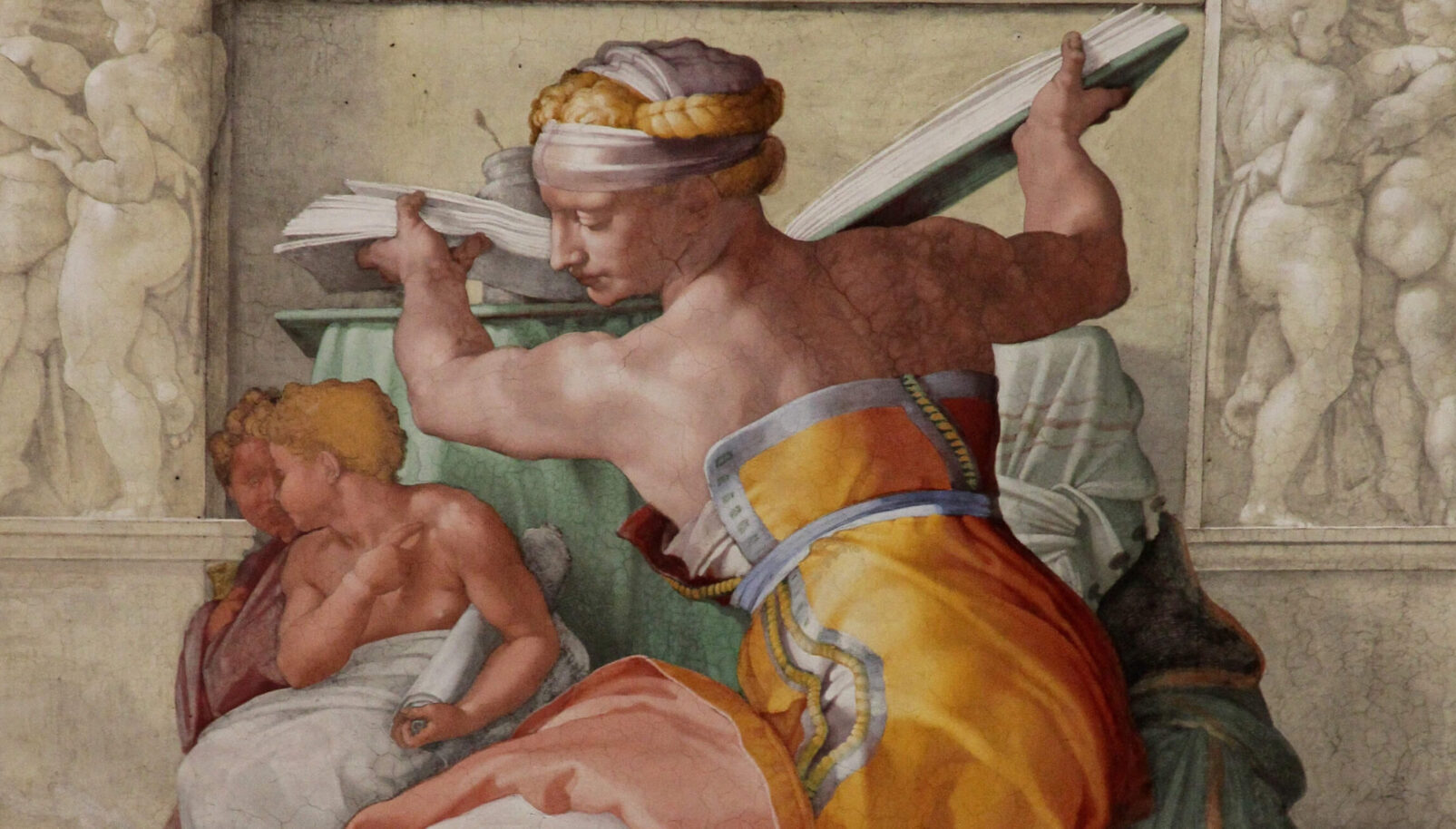
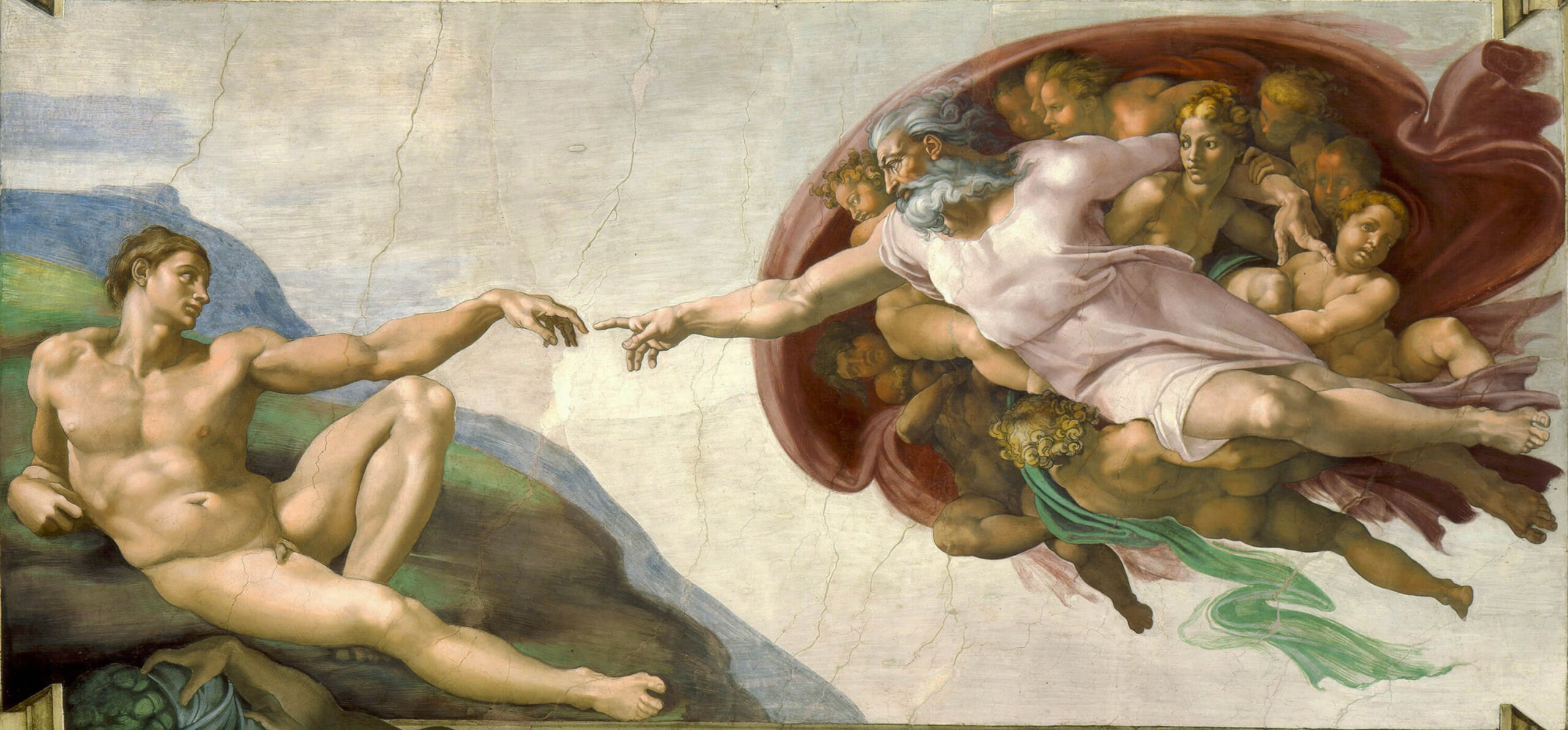
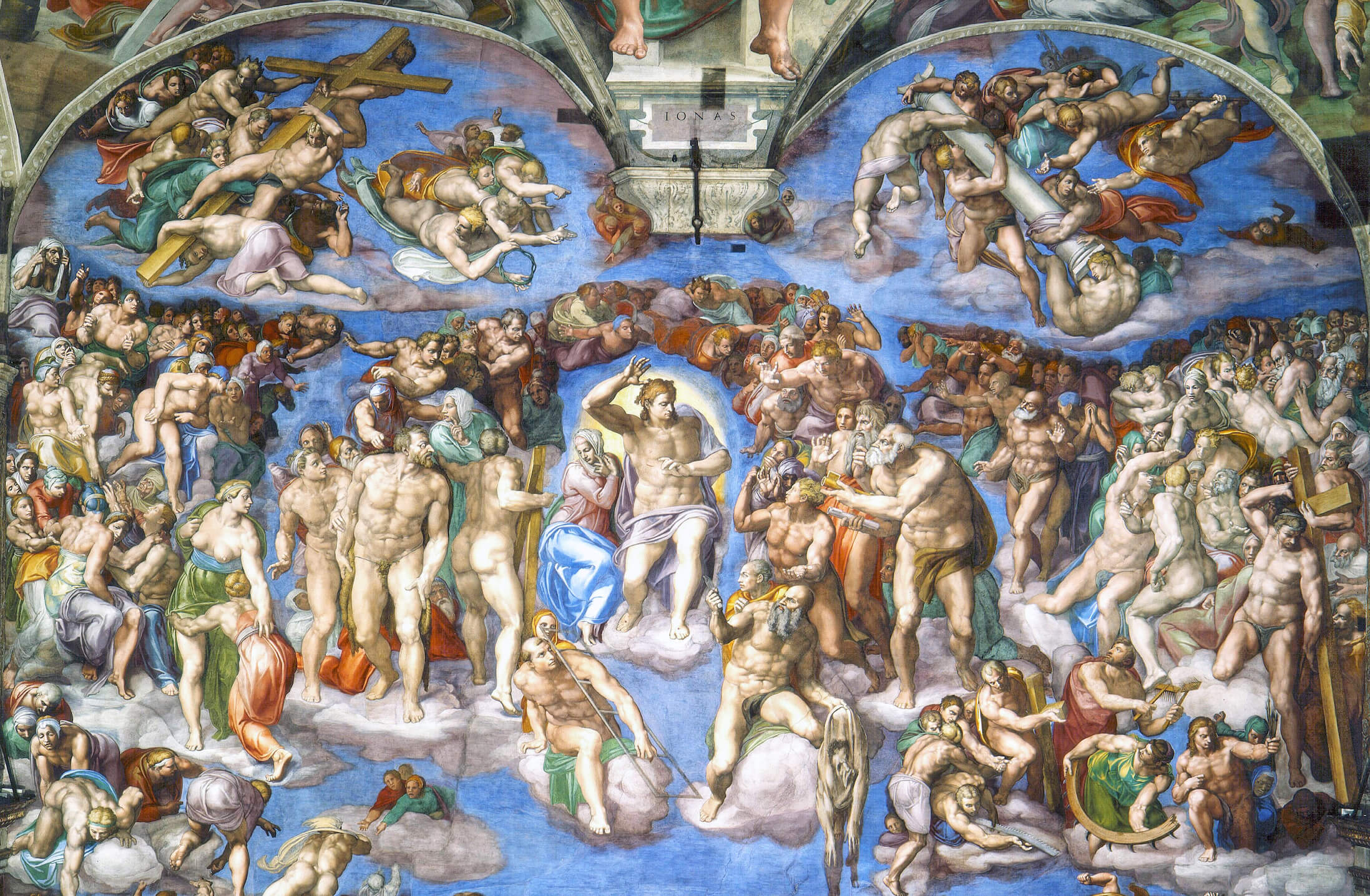
The Sistine Chapel is the undisputed centrepiece — Michelangelo’s ceiling, painted between 1508 and 1512, and his later Last Judgement on the altar wall together represent perhaps the single greatest concentration of genius in Western art. Arrive knowing what you’re looking at and the experience is transformed.
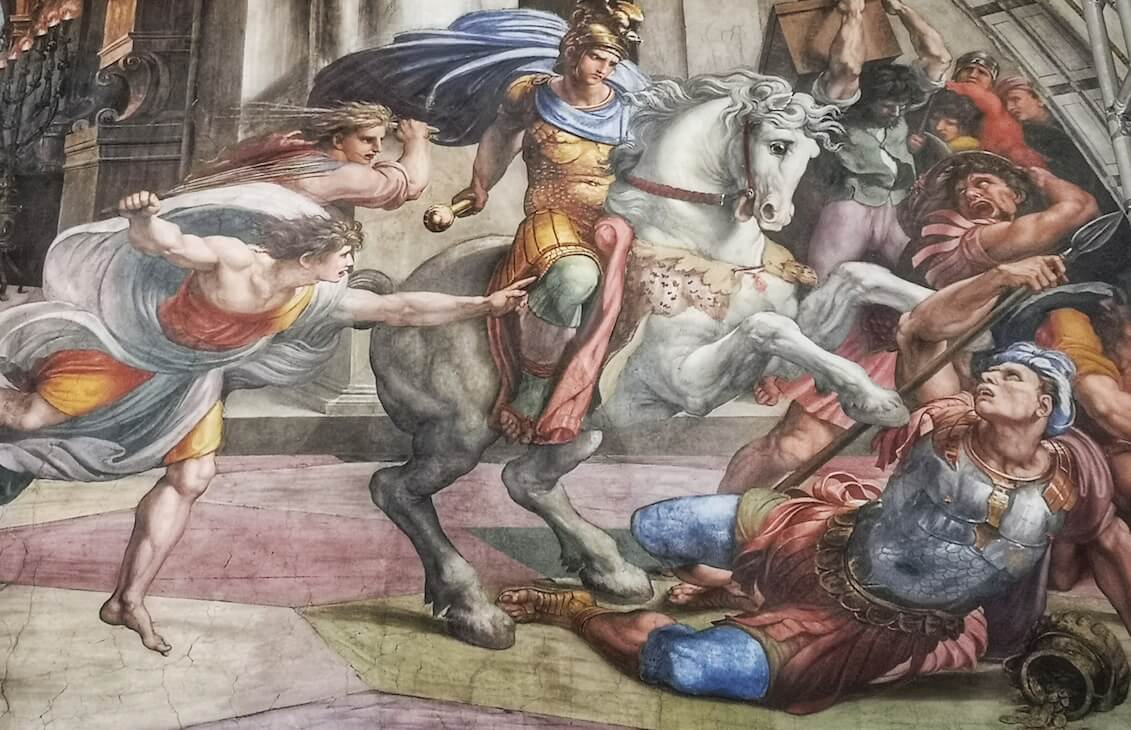
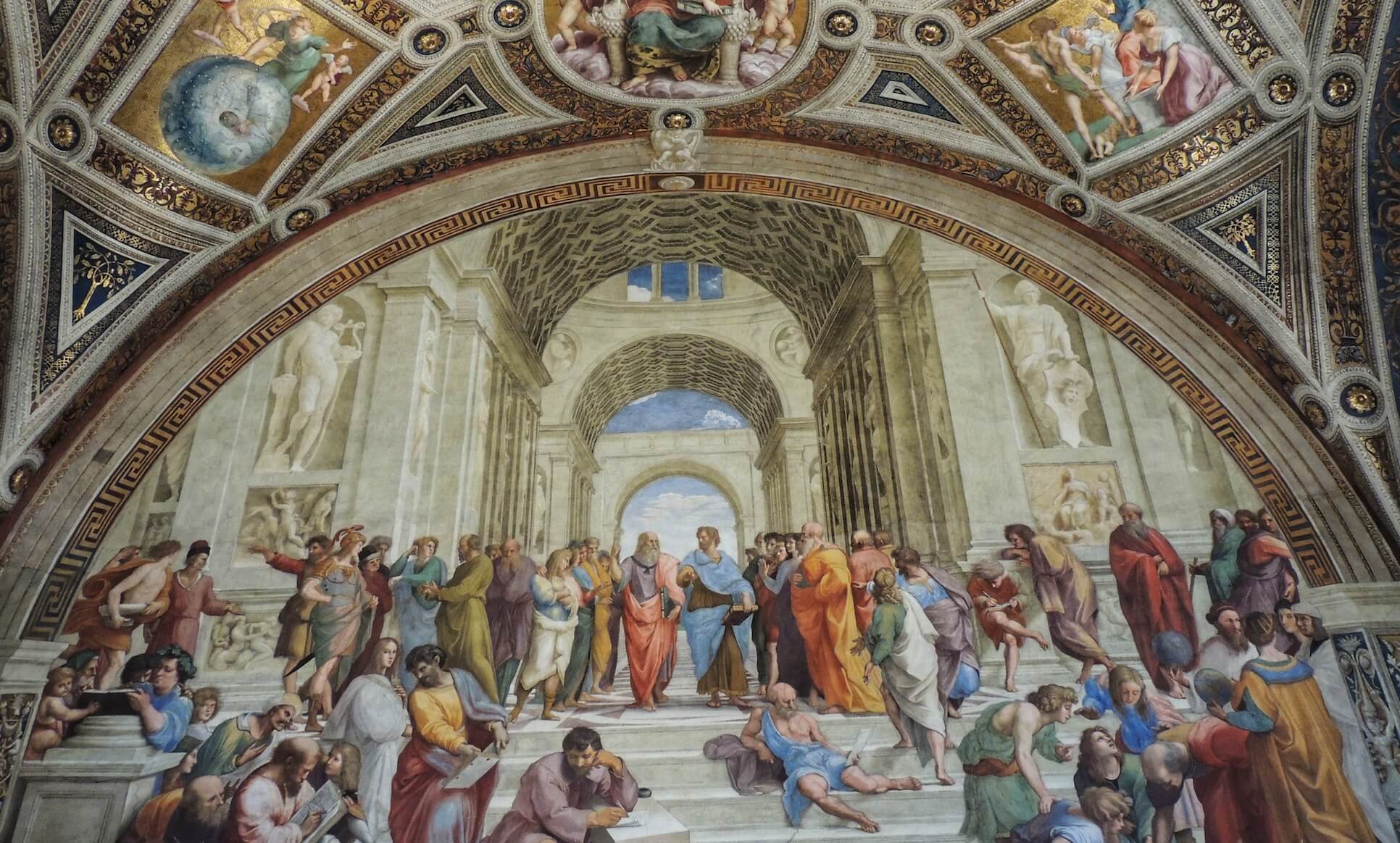
The Raphael Rooms
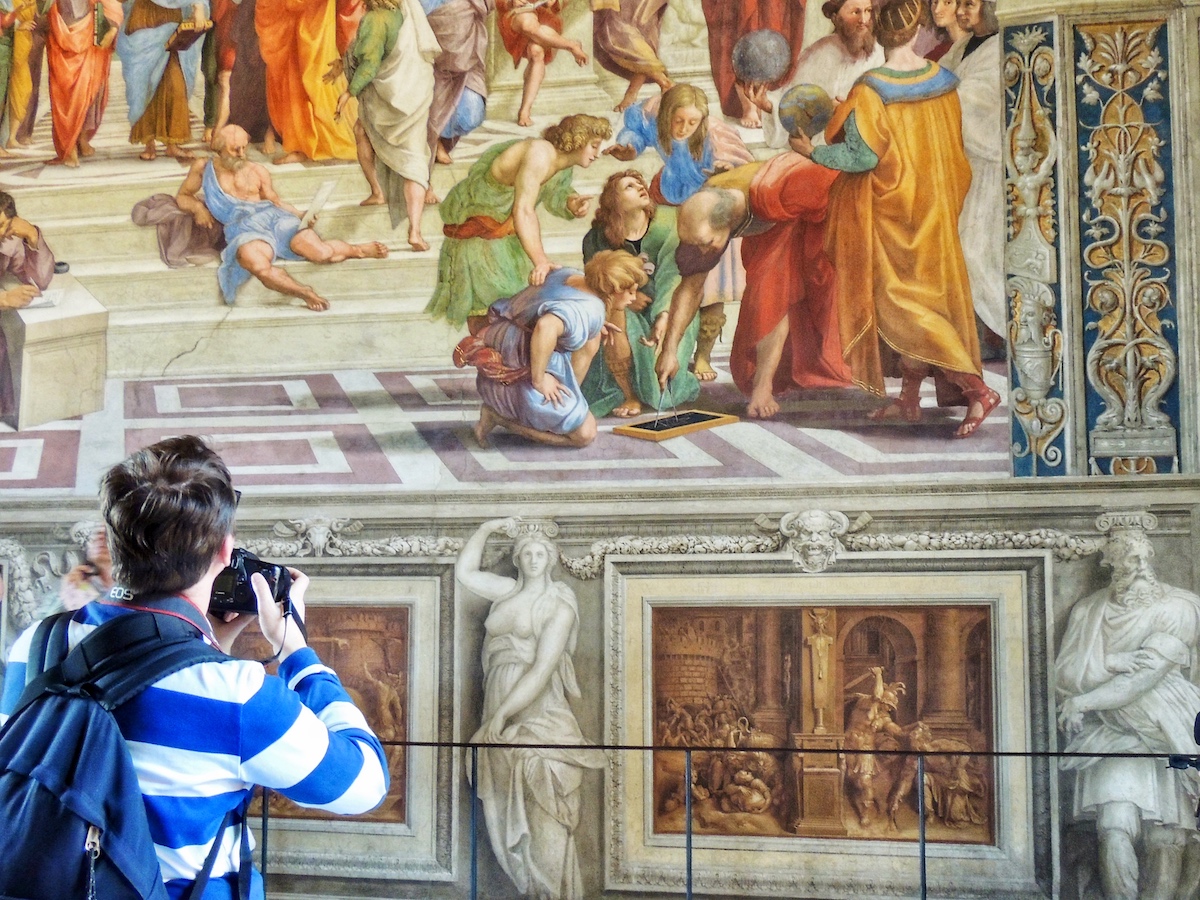
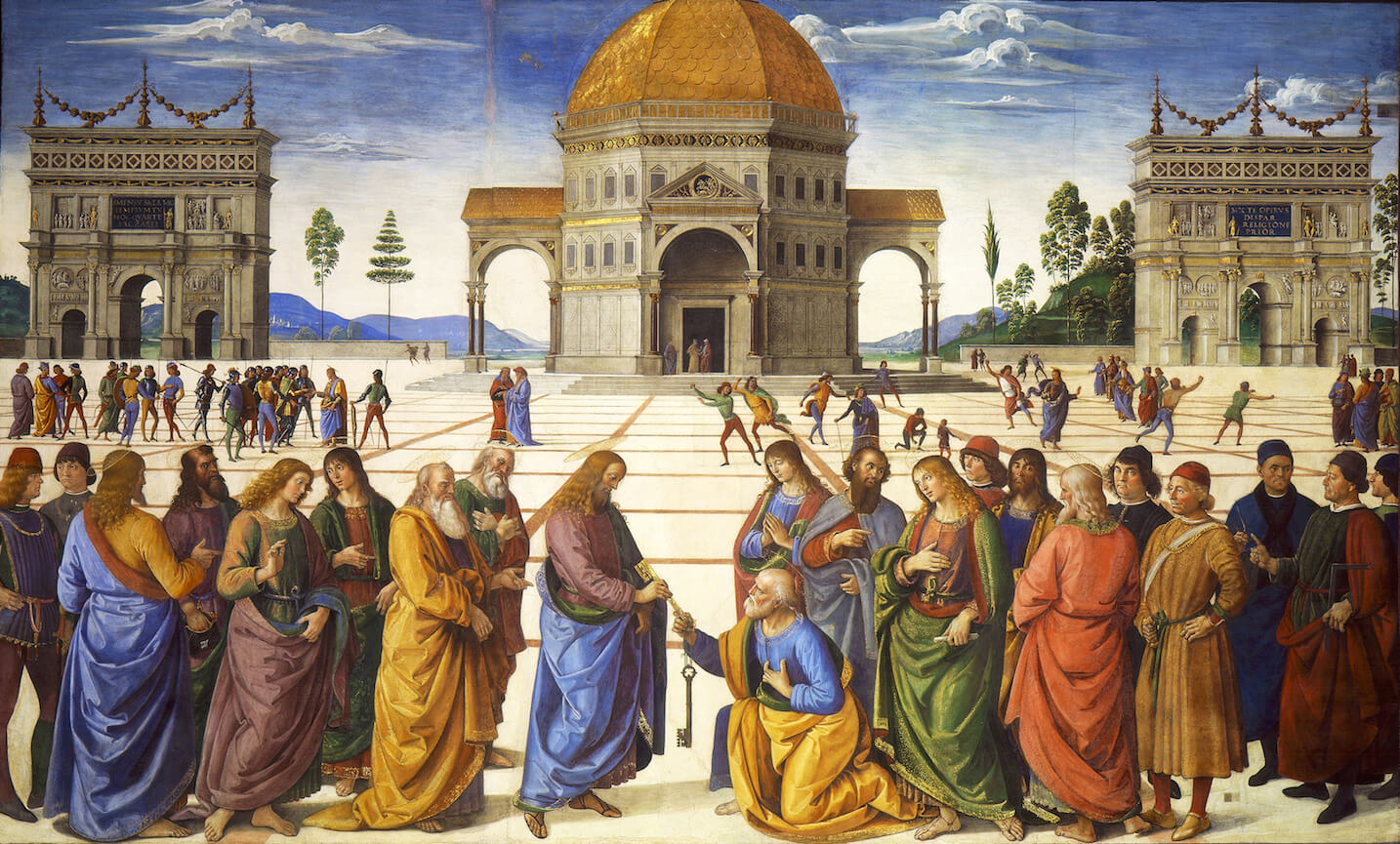
Four chambers painted by Raphael and his workshop for Pope Julius II — are often overshadowed by the Sistine Chapel but are extraordinary in their own right. The School of Athens alone is worth the entrance fee.
The Gallery of Maps
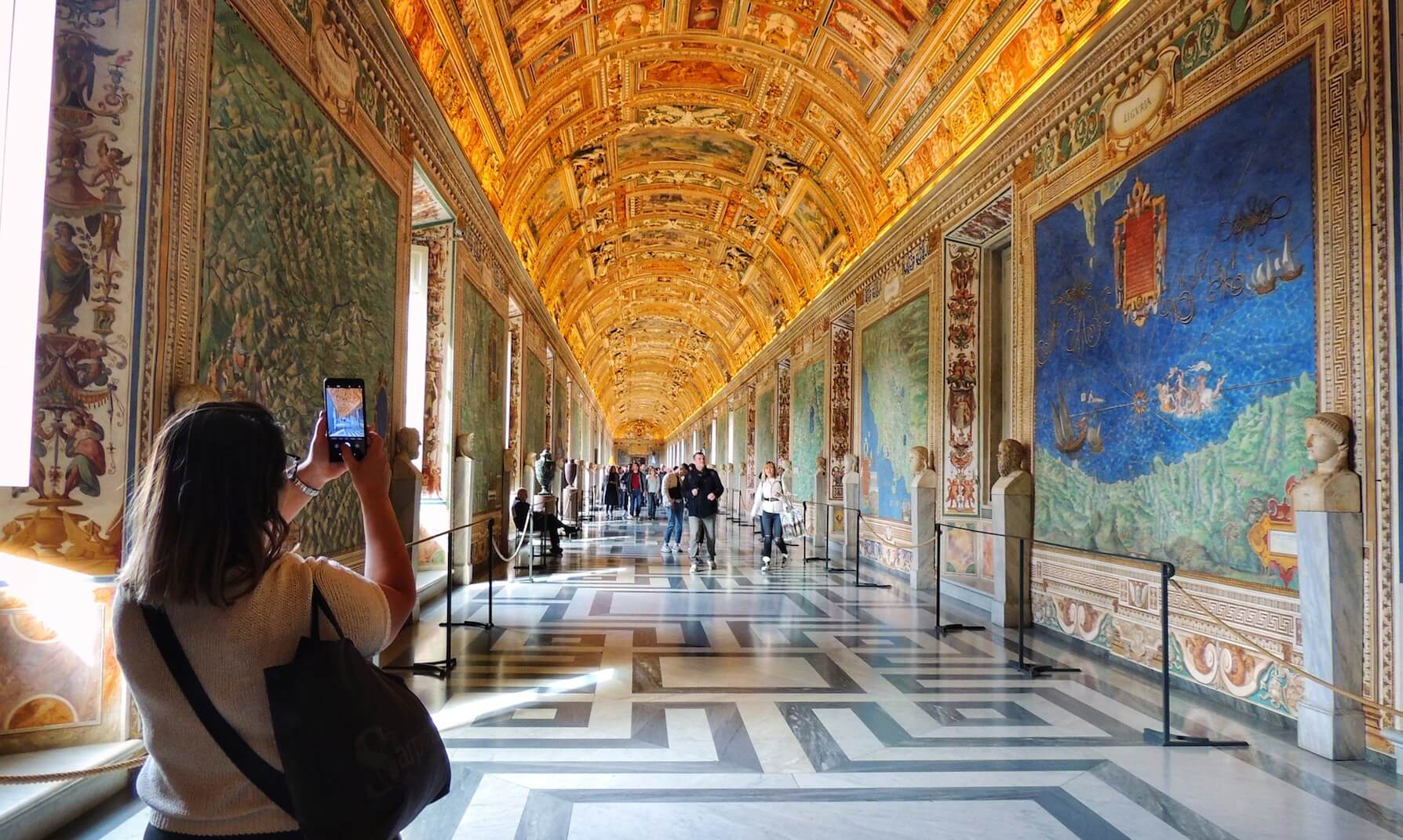
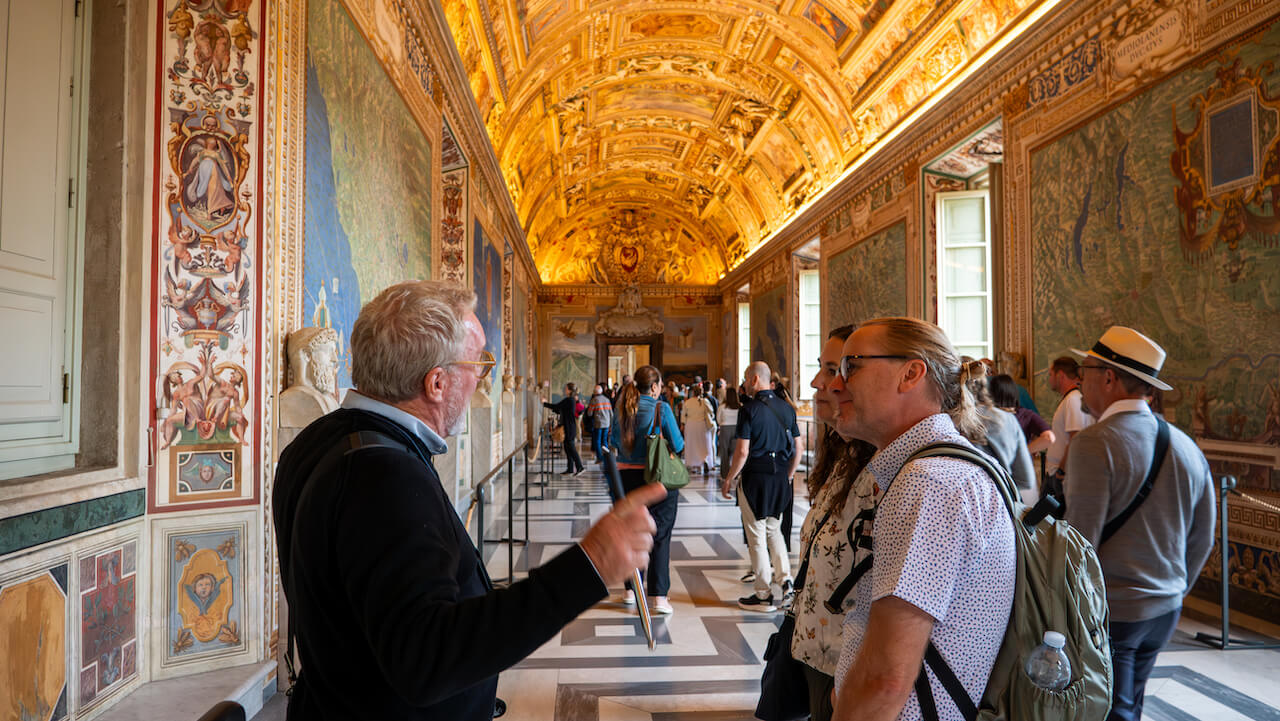
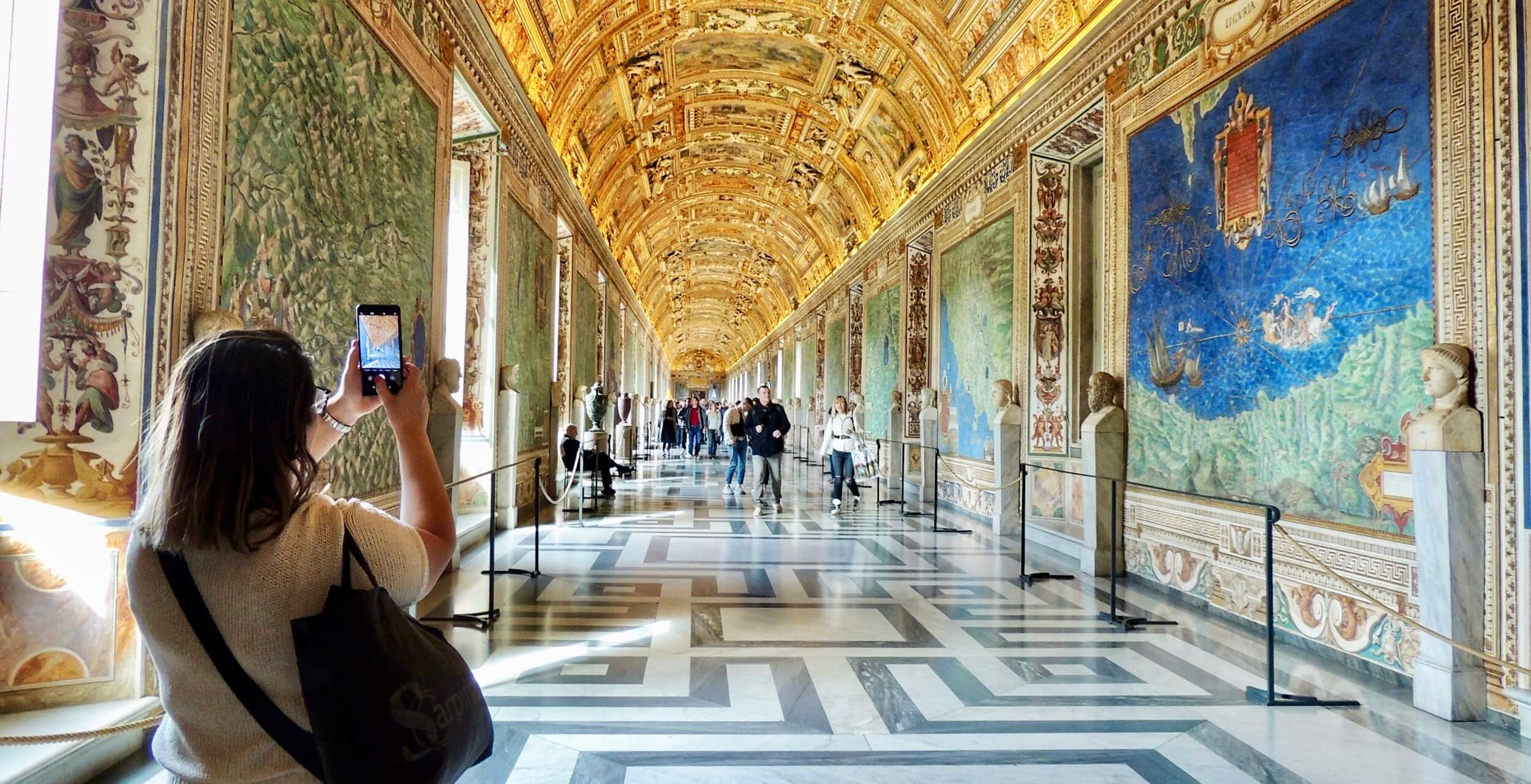
The Gallery of Maps is one of those rooms that stops visitors in their tracks: a 120-metre corridor lined with 40 extraordinarily detailed topographical maps of the Italian peninsula, painted between 1580 and 1585. Visually stunning and strangely moving.
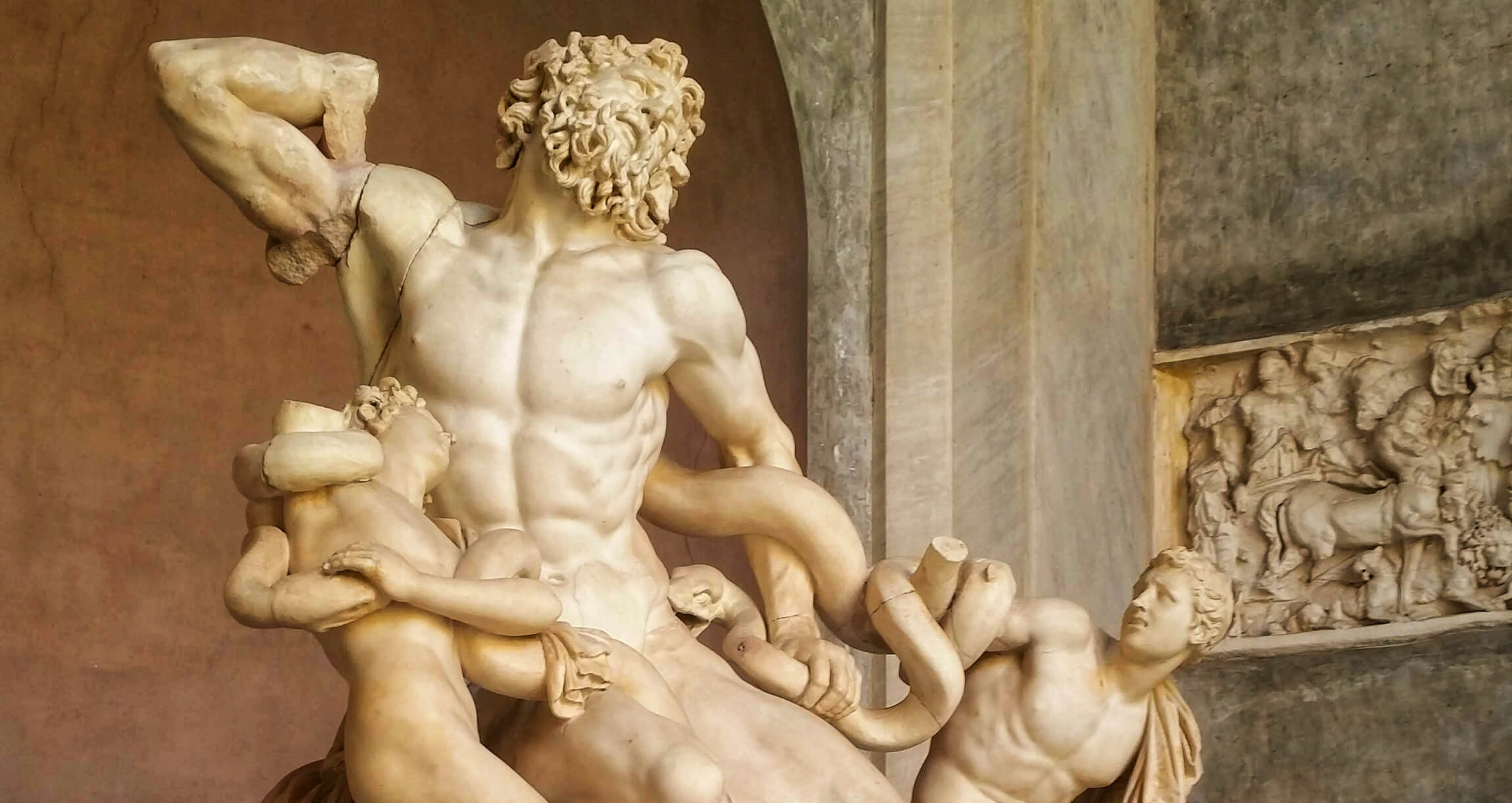
The Octagonal Courtyard
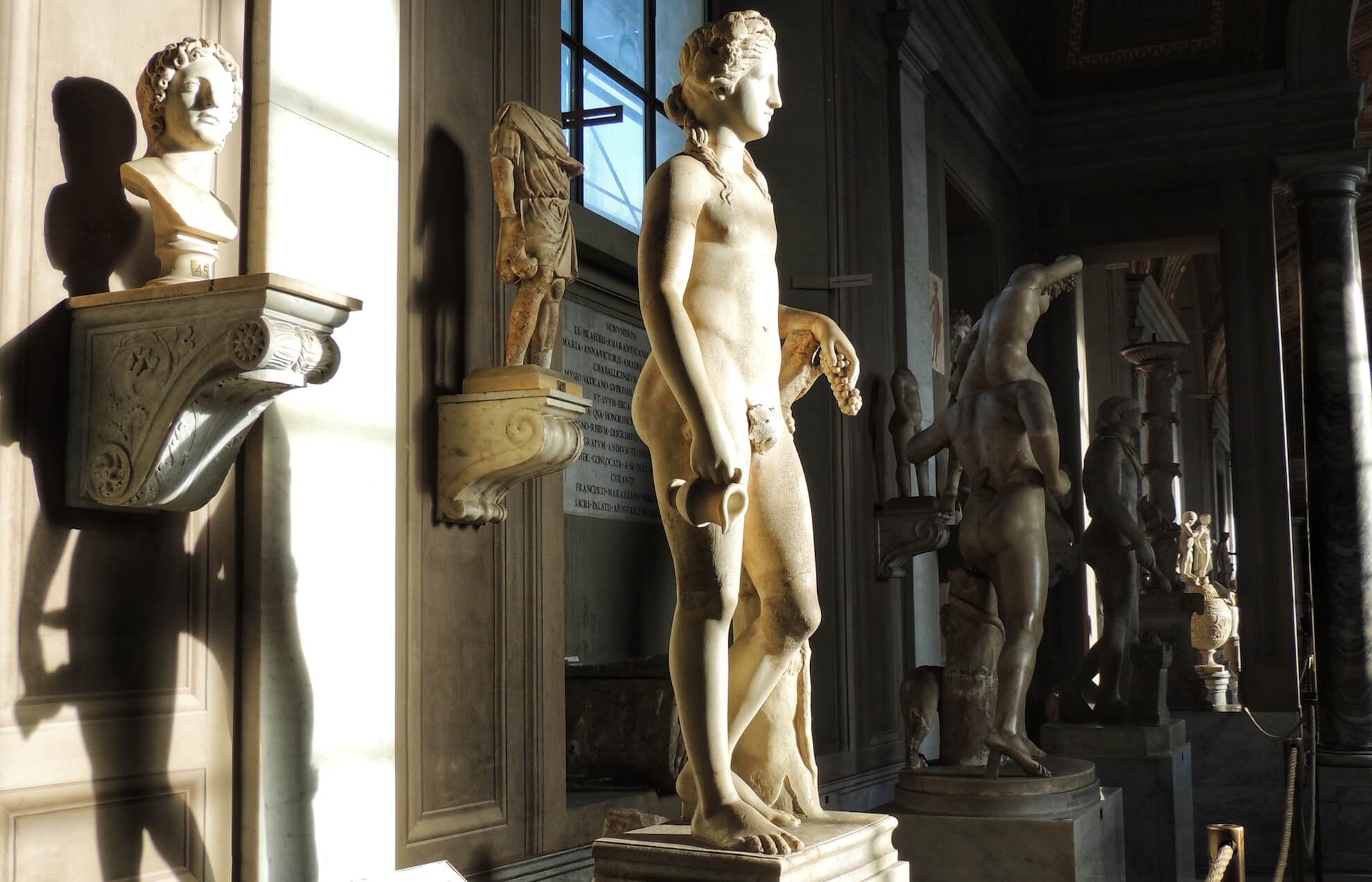
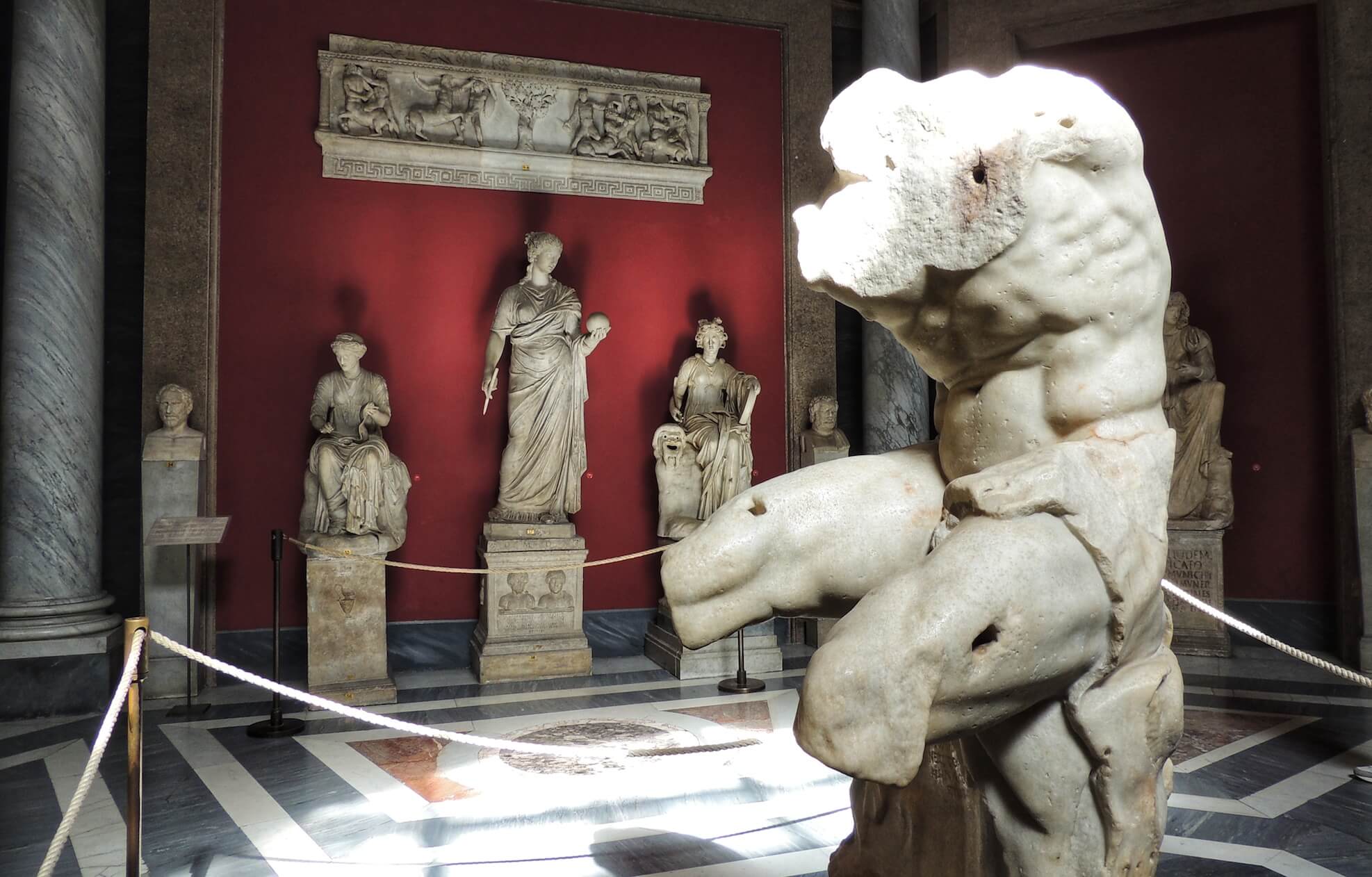
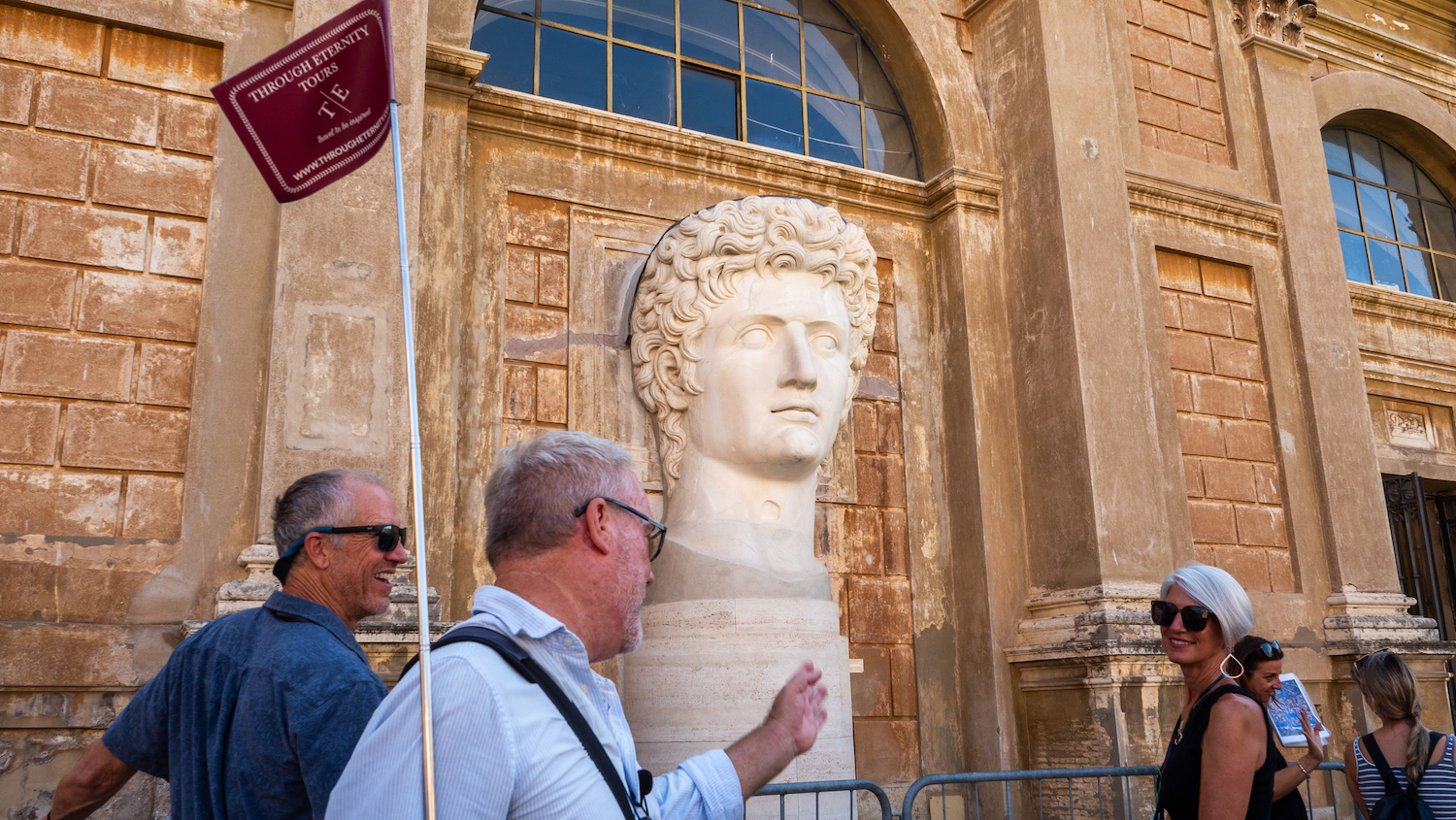
This outdoor court houses some of the most important ancient sculptures in existence, including the Laocoön — the writhing, anguished marble group that haunted Michelangelo and shaped the entire course of Renaissance art — and the serene Apollo Belvedere.
This is barely scratching the surface. For a full guide to the must-see works and how to find them, read our detailed article on the top highlights of the Vatican Museums:


Tickets
Standard tickets cost €20 for adults if purchased at the door — but given the queues this can entail, booking in advance online is strongly recommended. Online reservations cost €25 per adult (the additional €5 covers the booking fee) and allow you to choose a specific date and entry time slot, saving you from what can be hours of waiting in line. An audio guide can be added for an extra €8, either when booking online or at the entrance.
Reduced tickets at €8 are available for the following categories of visitor (the €5 online booking fee still applies if reserving in advance):
- Children aged 6 to 18
- University students up to and including the age of 25, with proof of current enrollment
- Members of the clergy, including priests, seminarians and novices
Please note that proof of eligibility must be presented at the entrance. If Vatican staff determine that a visitor is not entitled to a reduced ticket, full price will be charged on the day in addition to the discounted ticket already purchased — so make sure you qualify before booking.
Senior citizens are not entitled to any discount and must purchase full-price tickets.
The Vatican Museums also offer free entry for everyone on the last Sunday of each month and on World Tourism Day (September 27th). A word of caution, however: these dates are extremely popular and the resulting queues can be longer than on a normal paid-entry day. Hours are also reduced, with last admission at 12.30 PM. Unless you are very committed to the saving and very patient with crowds, a regular ticketed visit is likely to be the more enjoyable option.
All tickets must be issued in the purchaser’s name. The names of all participants will be required, and a government-issued ID must be shown when entering the museums. This is to help stop ticket touts and price gouging.
Alternatively, you might want to consider booking a spot on a special guided Vatican tour that will take care of all the practicalities for you, including skip-the-line tickets.

Opening Hours
This year, the Vatican Museums are open for longer hours than ever before:
- Monday to Saturday from 8 AM to 8 PM, with the last entry at 6 PM.
- The Museums are closed to the public on Sundays and on certain public holidays – check here for the full list of dates when the Vatican Museums are closed.

Absolutely — in fact, we’d say it’s the single best way to experience them. The Vatican Museums are a wonder, but they can also be overwhelming. With miles of corridors, thousands of artworks, and crowds from every corner of the globe, it’s easy to miss the magic if you try to go it alone. A good guide brings order to the chaos — pointing out details you’d never notice, unlocking stories behind the art, and helping you make sense of the incredible journey from the ancient world to the Sistine Chapel ceiling.
A tour also helps you make the most of your time. You’ll skip the long entrance lines, navigate directly to the highlights, and gain insider insights that transform what could feel like an endurance test into a truly unforgettable experience. Whether you’re a first-time visitor or a returning art lover, a guided tour turns a once-daunting visit into something richly rewarding, personal, and fun.
The Vatican Museums have made significant efforts to improve accessibility in recent years, and the main museum itinerary is largely navigable for visitors with mobility impairments. Lifts and ramps provide access to the principal galleries, including the Raphael Rooms and the Sistine Chapel, and wheelchairs are available to borrow free of charge from the main entrance on request, subject to availability.
Visitors with certified disabilities of more than 74% are entitled to free entry, and this extends to one accompanying companion — see the ticketing section above for details. When booking online, there is an option to indicate accessibility requirements, which helps the staff direct you to the most suitable entrance points and routes on arrival.
It is worth noting that some of the older and more peripheral sections of the museums involve stairs with no lift alternative, and the sheer distances involved — the full route covers over 7 kilometres — can be demanding even for visitors without mobility considerations. For detailed and up-to-date accessibility information, the Vatican Museums’ official website publishes a dedicated accessibility guide.


Directions
The Vatican Museums are located in the northwest of the city, and are easily reachable via various forms of public transport:
Metro: The quickest way to get to the Vatican is by taking the A (red) line of the Metro heading towards the terminus Battistini. Get off at Ottaviano station and from there it’s a short walk to the entrance of the Museums on Viale Vaticano (you can also get off at the next stop, Cipro, which is also near the entrance).
Tram: If you aren’t staying near a metro stop you can take tram number 19 to Piazza del Risorgimento, a 5-minute walk from the entrance. This is a great option if you are staying near Villa Borghese, as the tram snakes past the north side of the park (with a stop outside GNAM, or the National Gallery of Modern Art) on its way towards the Vatican.
Bus: Numerous city buses will also take you near to the Vatican Museums entrance. We’ve listed the most useful below:
- The Express 40 route zooms through the city from Termini station, passing through central Rome before arriving at Borgo Sant’Angelo, just off Via della Concillazione and a 10-minute walk from the Vatican Museums entrance. This is the terminus, so you won’t have to worry about getting off at the wrong stop.
- The 62 route passes through Piazza Barberini, down Via del Corso and the historic centre before terminating at Borgo Sant’Angelo (Traspontina), a 10-minute walk from the Vatican Museums entrance.
The 81 route passes right by the Colosseum, the Circus Maximus, Piazza Venezia and through the historic centre before terminating at Piazza del Risorgimento near the Vatican Museums entrance. - The 492 route will take you from Piazza Barberini, Via del Tritone and Via del Corso through the historic centre to Piazza del Risorgimento.
Walk: If you’re in the historic center, maybe the best way to get to the Vatican is just to walk! It’s about a half-hour walk to the Museums entrance from the Pantheon and Piazza Navona. It’s an extremely picturesque route and this way, you won’t have to battle the vagaries of public transport.
Mainline train: There is also a mainline train station just to the south of St. Peter’s Basilica. This can be very useful if you are arriving from the port of Civitavecchia or other towns along the coast north of Rome – all commuter trains on this route stop here.
Taxi: If you’re running late and need to get to the Vatican Museums in double quick time, then a taxi might be your best bet. From most spots in reasonably central areas this should cost no more than €15 – just make sure that the meter is running!

The Vatican is an active place of religious significance, and a dress code is enforced at the entrance — visitors who arrive without meeting the requirements will not be admitted, so it’s worth getting this right before you leave your hotel.
The rules are straightforward: shoulders and knees must be covered for both men and women.
Sleeveless tops, short skirts, and shorts that don’t reach the knee are not permitted. If you arrive underdressed, scarves and wraps are sometimes available for purchase near the entrance, but this is not guaranteed and adds unnecessary stress to what should be a smooth arrival.
Comfortable shoes are equally important — the museum route is long, the floors are largely marble and stone, and you will be on your feet for several hours. This is not the day for new footwear. Beyond that, dressing in light layers is advisable, as temperatures inside the galleries can vary considerably from the warmth outside.

Like the Louvre in Paris, the Vatican Museums often open late on Fridays during the Spring and Summer months. At time of writing, we haven’t had confirmation whether the Friday late night openings will be operational in 2026, so check this space regularly for updates. If the Vatican does make these time slots available, you’ll be able to book a dedicated Vatican Night Tour with us to ensure you don’t miss out. The Museums are markedly less busy during these times, so this can be a really fun and atmospheric way to avoid the crowds!

Given the Museum route extends over 7 kilometers, you should really plan to spend most of the day here, and we do not recommend that you to try to pair visiting the Vatican with other sites on the same day. Even so you won’t be able to see everything the Museums have to offer in a single visit, although you will be able to catch the main attractions with a little forward planning and judicious use of your museum map.
If you are running a really tight schedule, then you can just about see the absolute highlights in 3 hours, but in this case, you might be best off taking a guided tour specifically designed for visitors short on time – like Through Eternity’s Essential Sistine Chapel and Vatican tours.

Ok, so you’ve made it into the Museums without queuing for too long thanks to your forward-thinking, but how do you escape the hordes once you’re inside? There are some things you can do to give yourself the best chance.
- Avoid planning your trip for a Monday if possible – as most museums in Rome are closed on this day, the Vatican is even busier than usual.
- Another trick to avoid the worst of the throng is to go early on a Wednesday morning, when the Pope conducts his Papal audience in St. Peter’s square. This attracts large crowds, and can temporarily take some of the squeeze off the Sistine Chapel and other Museum highlights.
- Apart from Wednesdays, in our experience, the early bird doesn’t always catch the worm at the Vatican. Most of the large mass-tourism groups break for lunch in the mid-afternoon, so this can be a strategic time to make sure you are heading to the Sistine Chapel. Or if you can stick around until closing time, you’ll very possibly find that the crowds dissipate dramatically in the early evening – the Sistine Chapel and Raphael Rooms can be surprisingly peaceful in the half an hour before the guards start shooing visitors out.
- If you are really committed to avoiding the crowds then you might want to consider an exclusive Early Vatican tour that enters the museums before they open to the general public, giving you precious time in the Sistine Chapel and other galleries with markedly less competition for prime viewing spots. We think this is a great option.
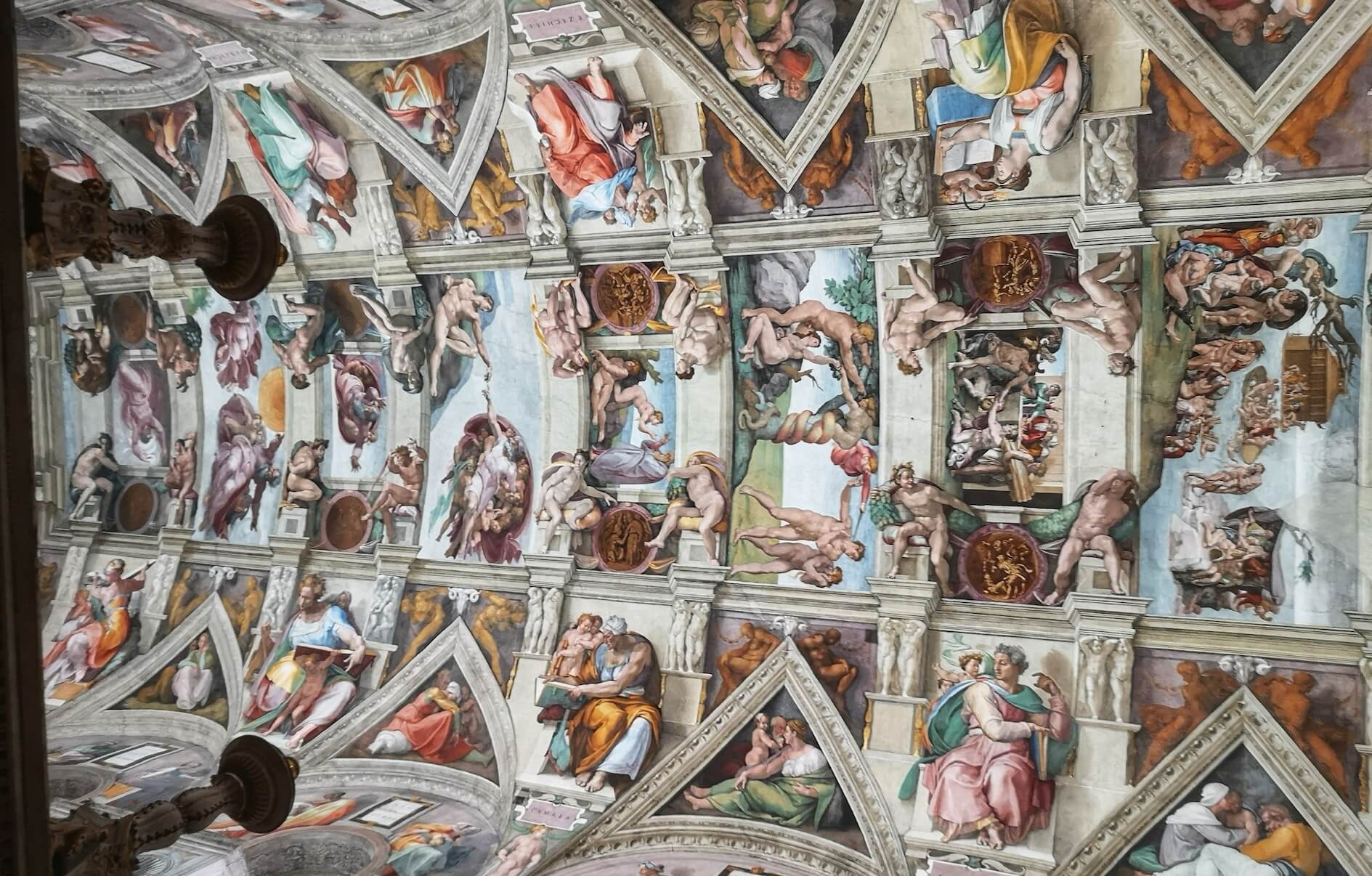
Yes. The Sistine Chapel forms the heart-stopping climax of the Museum itinerary. As the Sistine Chapel is an integral part of the museums, you cannot purchase a separate ticket that takes you just to see Michelangelo’s masterpieces. To get to the Chapel, you will have to follow the itinerary, but trust us – given the amazing array of artistic treasures you’ll encounter on the way, this is no bad thing!
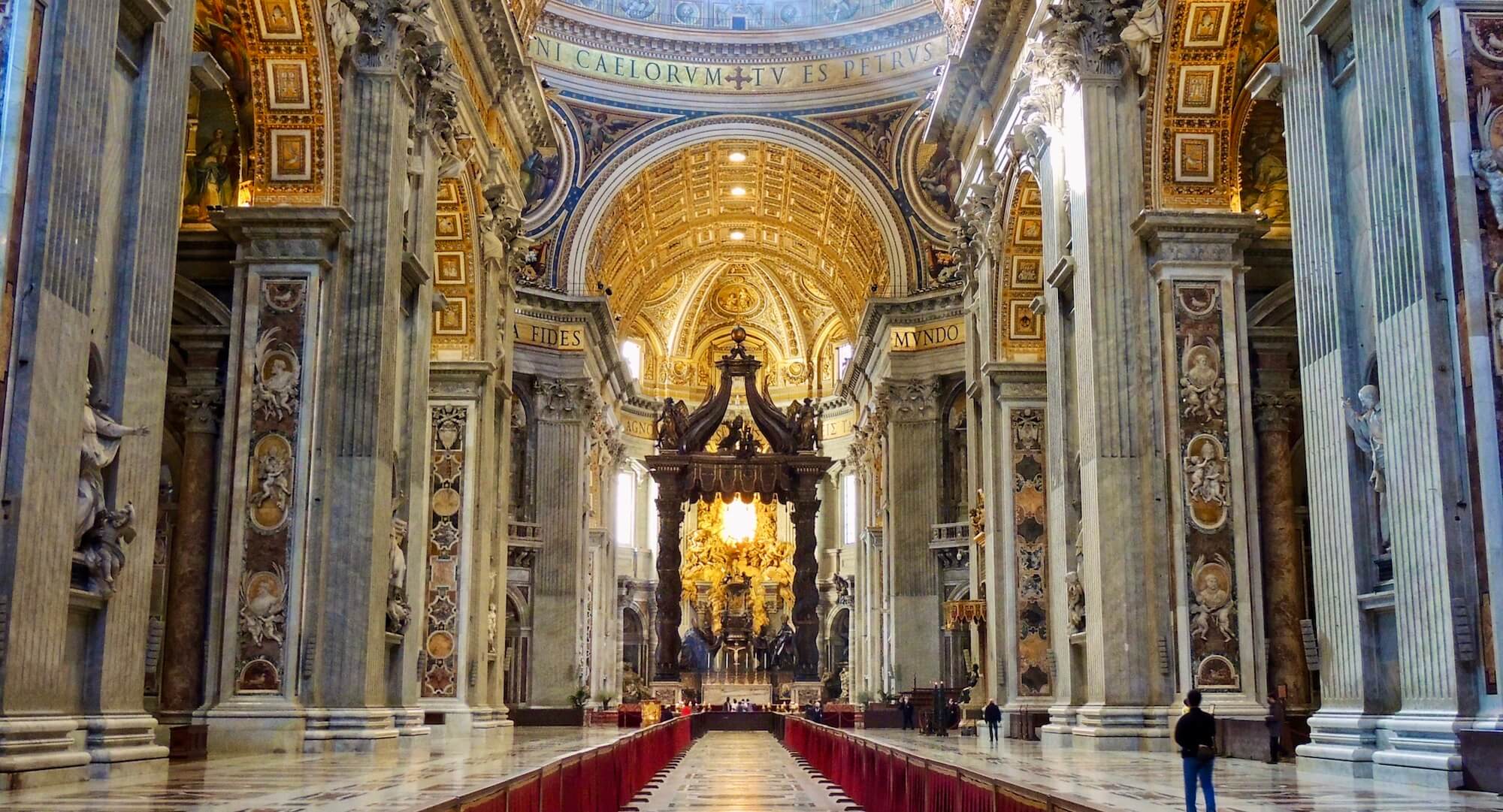
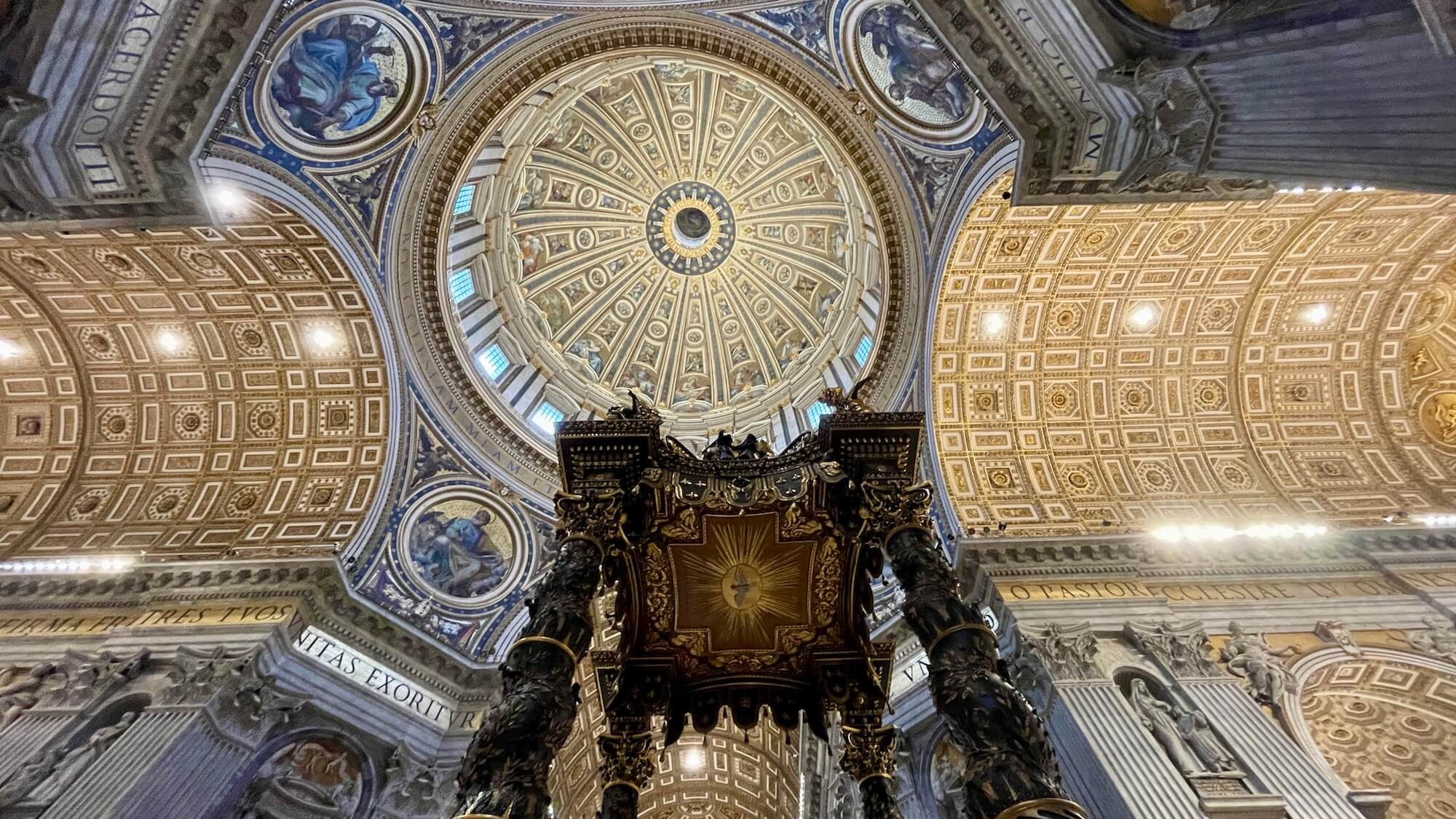
Even though they are both situated in the Vatican City, St. Peter’s basilica does not constitute part of the Vatican Museums. Unlike the Museums, the basilica is free to enter and you don’t require a ticket to get in. That being said, the entrance lines snaking across the square outside can be very long. Luckily, there is a way to enter the basilica directly from the Museums without joining this queue.
As you are leaving the Sistine Chapel, there is a passage leading off to the right that leads straight into St. Peter’s basilica. This fast-track entrance is reserved for tour groups, however – if you join a guided small group tour to the Vatican this is the route you will take, and it’s a real time saver. A regular Vatican Museums ticket won’t allow you to use this shortcut, however.
We have a comprehensive guide to visiting St. Peter’s Basilica, so check that out too:
Opening Hours
St. Peter’s Basilica is open in summer from 7 am to 7 pm and in the winter from 7.am to 6.30 pm The Basilica is closed to visitors on Wednesday mornings during the Papal Audience and during other Papal masses. Remember to cover your shoulders or you won’t be allowed in!

Tickets to the Vatican Museums do not include entry to the Vatican gardens. The gardens can only be visited on a separate official guided tour organized by the Vatican – tickets cost €33 for adults, with discounts of €22 (closed Wednesdays and Sundays). The tour lasts approximately 2 hours, and must be reserved well in advance. The ticket to the gardens does, however, include a skip-the-lines entrance to the Vatican Museums included in the cost, which you can enter directly after the garden tour, so it is actually great value.
For more information on what to see in the Vatican Gardens as well as detailed practical information, see our dedicated Vatican Gardens guide.

The Vatican Museums hosts a café and a restaurant where you can get coffee and pastries, sandwiches and pizza by the slice. Although you shouldn’t expect gourmet cuisine or particularly low prices, they do the job if all you are looking to do is refuel, and the tables beneath umbrellas on the patio outside the café are a pleasant stop to rest your legs.
Bringing food in from the outside is frowned upon, but in practice you are unlikely to be stopped if you want to discreetly eat a home-made sandwich on the benches in the Square Garden. If you can keep the hunger pangs at bay and want to have lunch in the local area after you finish your visit then be warned – there are a lot of rip-off tourist traps in the vicinity seeking to part unwary visitors from their cash. Luckily there are a few wonderful exceptions to the rule:
- Panino Divino – Just around the corner from the entrance to the museums, this hole in the wall joint more than lives up to its name with on account of its heavenly sandwiches. Try the Brunello , with Parma ham, tangy primosale cheese and chilli jam or the Ciro’ – bacon, caciotta cheese, sun-dried tomatoes and chilli jam. Via dei Gracchi, 11 A, Mon-Sat 10.00 – 21.00
- Borghiciana Pastificio Artigianale – If you’re looking for something more substantial, then this tiny place on one of the Borgo’s most characterful streets is a fantastic option.The casual canteen-like atmosphere belies the quality of their food: all of their pasta is hand-made on the premises, and dishes range from a mere €6.50 to €8.Their carbonara is one of the city’s best, whilst the tagliatelle with citrus is a beautifully light affair.You may have to queue, but the line moves quickly and it’s worth the wait! Borgo Pio 186, Open 7 days: Mon-Wed, Sun, 09.00-18.00, Thu-Sat 09.00-22.30
- 200 Gradi – A great paninoteca just steps from the entrance to the Vatican Museums on Piazza del Risorgimento, this hip spot has one of the most extensive and interesting sandwich selections in Rome. As an added bonus, it’s practically always open, day and night. Piazza del Risorgimento, 3, Open 7 days, 10.30 am- 3.30 am.

How much do Vatican Museums tickets cost?
Standard adult admission costs €20 if purchased at the door, though walking up without a reservation means joining what can be a very long queue. Booking online in advance costs €25 (the extra €5 covers the reservation fee) and is strongly recommended. Reduced tickets at €8 are available for children aged 6–18, students up to 25, and members of the clergy. Children under 6 enter free. Entry is also free for everyone on the last Sunday of each month, though the resulting crowds make this a trade-off only the truly patient should consider.
How long does it take to visit the Vatican Museums?
Plan for most of a day. The museum route covers over 7 kilometres of galleries, and even a focused visit taking in the main highlights — the Raphael Rooms, the Gallery of Maps and the Sistine Chapel — will take a minimum of 3 hours. Trying to pair the Vatican with other major sights on the same day is not advisable. If you’re genuinely short on time, a guided tour specifically designed around the highlights is the most efficient way to make sure you see what matters most without getting lost in the labyrinth.
Can you visit the Sistine Chapel without visiting the Vatican Museums?
No — and this is one of the most common misconceptions about visiting the Vatican. The Sistine Chapel is the culmination of the museum itinerary, not a separate attraction, and there is no ticket that gives you direct access to it independently. The good news is that the journey through the museums to reach it is very much part of the experience. The collection you pass through on the way is extraordinary in its own right.
Do Vatican Museums tickets include entry to St. Peter’s Basilica?
The two are separate. St. Peter’s Basilica is free to enter independently, though the queue in the square can be considerable. The useful shortcut is this: visitors on a guided tour can exit the Sistine Chapel via a direct internal passage straight into the Basilica, bypassing the external queue entirely. This route is not available to standard ticket holders.
Is it worth booking a guided tour of the Vatican Museums?
For most visitors, yes — and particularly for first-timers. The sheer scale of the collection, combined with the crowds, makes the Vatican one of those places where good guidance makes an outsized difference to the experience. A knowledgeable guide not only helps you navigate efficiently and skip the entrance lines, but brings the art and history to life in a way that transforms what can otherwise feel like an overwhelming endurance test into something genuinely memorable. Early morning tours, which access the museums just as they open, are especially worth considering if crowds are a concern.
The Vatican is one of Rome’s great unmissables, but the city has plenty more to offer beyond its walls. We’ve been leading itineraries in Rome for over 25 years, so we know a thing or two about what makes the city tick. If you’re putting together a fuller Rome itinerary, check out our expert-led tours of the Colosseum and the Roman Forum, Nero’s Golden House, Piazza Navona and the Trevi fountain, the best of Caravaggio and much more!
Book Your Vatican Experience