"Ah my Piazza Navona!...This is no square, but the great outdoors, a stage, a festival, purest glee."
- Gioacchino Belli
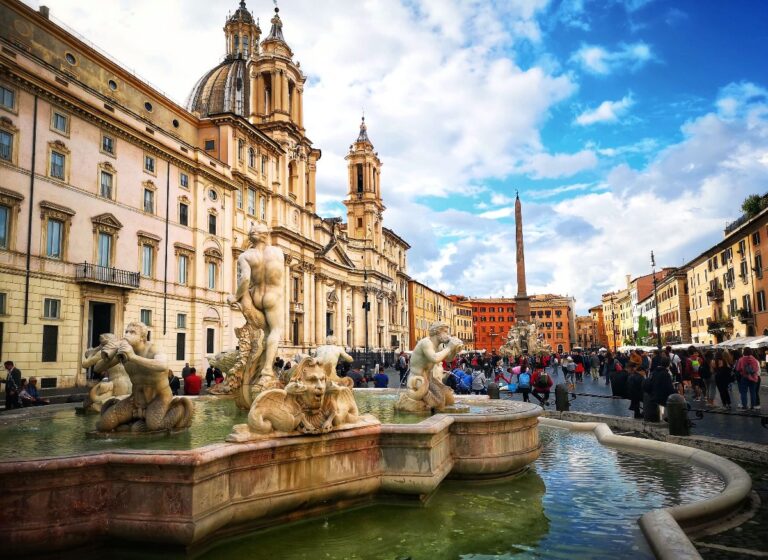
There is nowhere in the world quite like Piazza Navona. Rome’s greatest and most theatrical public space, its story stretches unbroken from antiquity, when the Emperor Domitian’s stadium rose on this very site around 86 AD.
Nearly two thousand years later, that distinctive elliptical footprint still defines the piazza’s shape — a living imprint of the ancient city pressed into the modern one.
But it is the golden age of the Baroque that gave Piazza Navona its true character, and at the glittering heart of that transformation stands one of the most extraordinary works of art in the western world: Gianlorenzo Bernini’s Fountain of the Four Rivers.
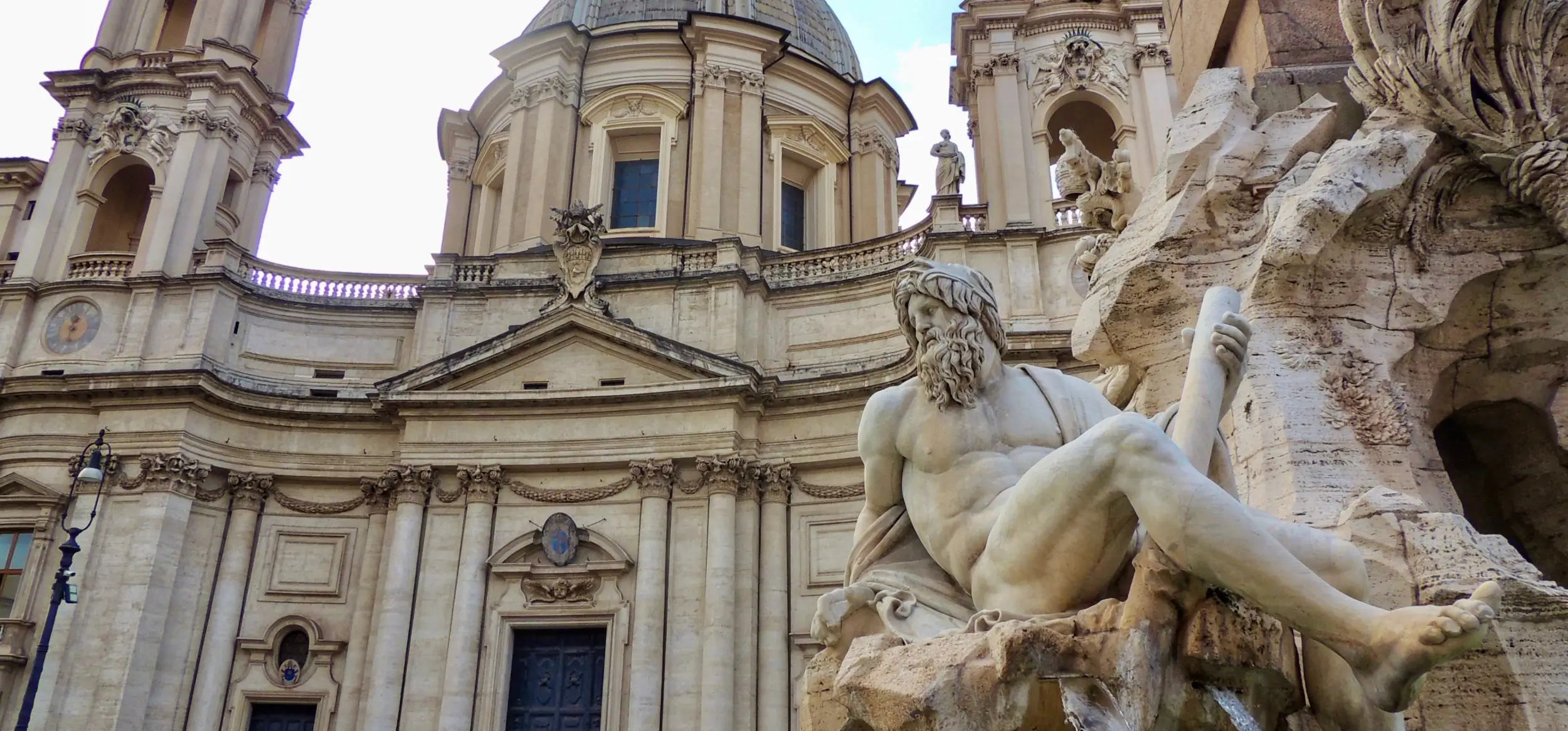
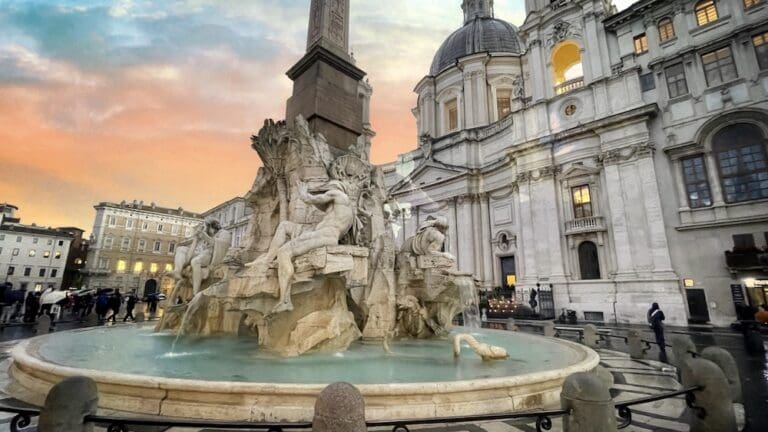
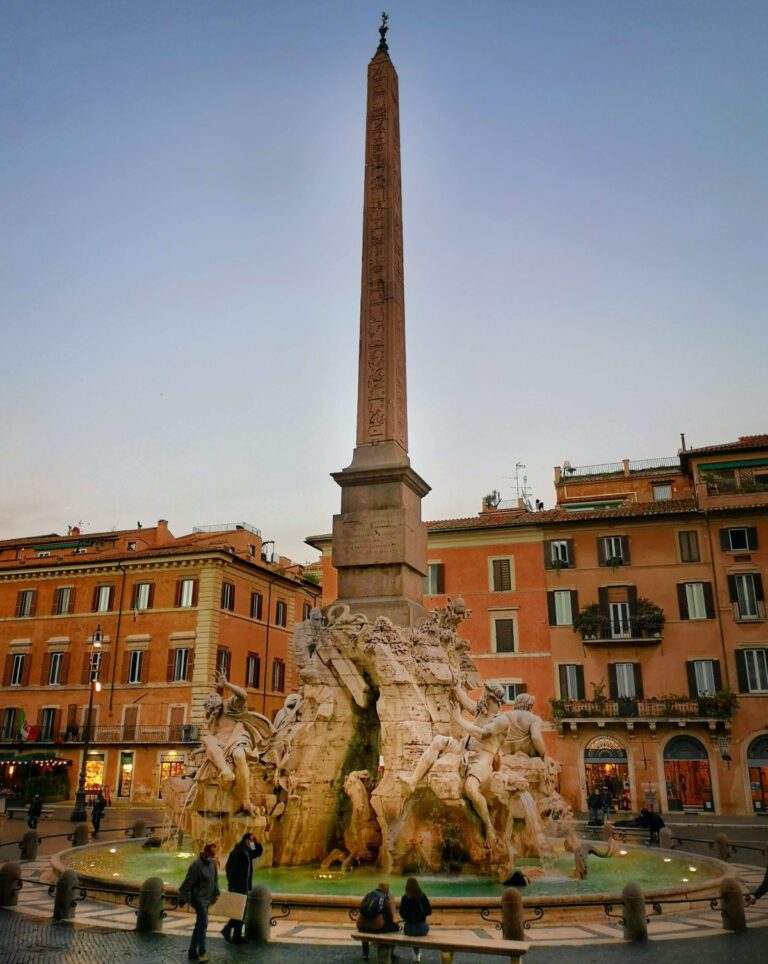
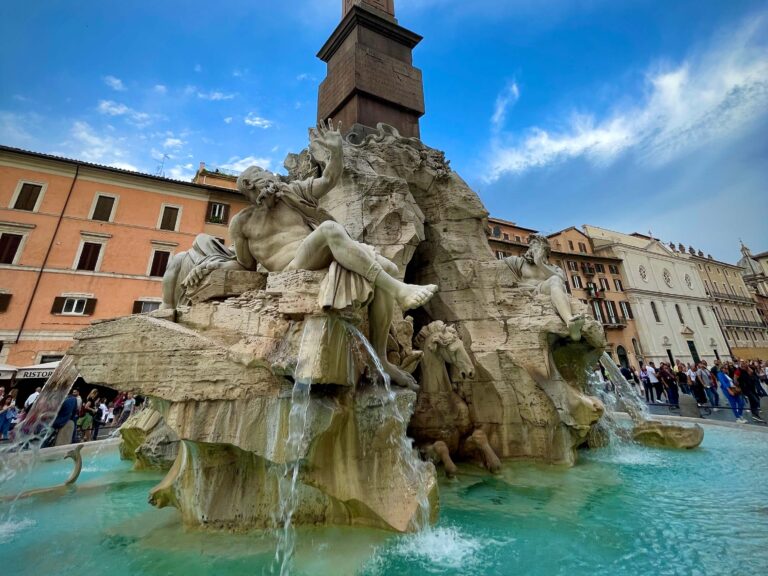
Unveiled in June 1651, the Fontana dei Quattro Fiumi is the Baroque at its most exuberant and most audacious. Personifications of the world’s four great rivers recline on a rocky crag that seems to defy gravity, supporting a towering Egyptian obelisk that soars improbably into the Roman sky above.
It is a fountain, a monument, a political statement, and an act of pure artistic showmanship — and it remains unmissable on any visit to Rome.
Rome Tours
Explore Rome's Iconic Piazzas and Fountains
Constructed between 81 and 86 AD, the elliptical Stadium of Domitian was in all likelihood the site of foot-races and athletic events, and was the first building of its type in the Eternal City. Nearly 2,000 years later, the distinctive oval shape of present-day Piazza Navona is an ever-present reminder of the site’s ancient origins. But it’s the golden age of Baroque Rome that truly shaped the space we see today.
In the opening decades of the 17th century, the piazza was something of a hodge-podge. The all-powerful Pamphilj family had already begun transforming the massive square in their own image, with the massive Palazzo Pamphili on the piazza’s western side developing apace. But the piazza remained a rough and ready affair, still the preserve of street festivals and vegetable stalls unfolding around a large animal drinking trough at its centre.
All that was to change in the 1640s, thanks to two of Italy’s greatest artistic sons: Gianlorenzo Bernini and Francesco Borromini. Standing proudly in the centre of the piazza, Bernini’s jaw-dropping Fountain of the Four Rivers encapsulates the drama of the Baroque like nowhere else, and is a must-visit on any tour of Rome.

Who Commissioned the Fountain of the Four Rivers?
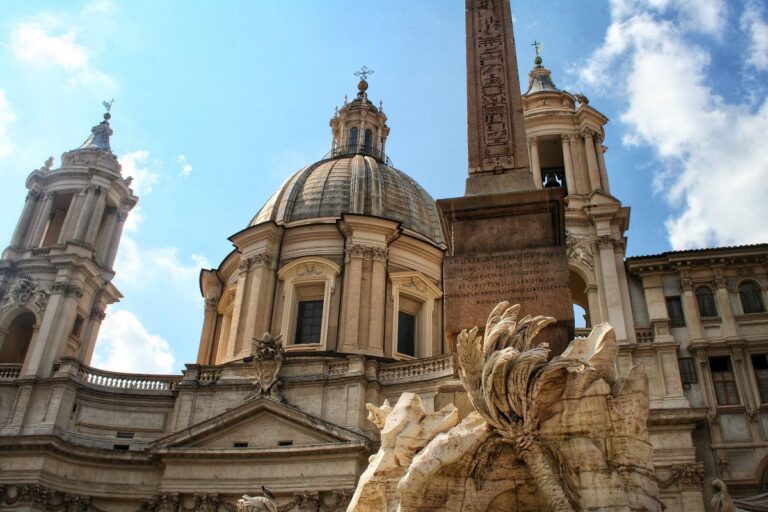
The Fontana dei Quattro Fiumi was commissioned by Pope Innocent X Pamphilj as part of his grandiose plans to redevelop Piazza Navona into an urban centre reflecting the glorious rise of his family.
When Giambattista Pamphilj was elected pope in 1644, he wasted little time in commissioning a massive palace on the piazza from the architect Girolamo Rainaldi, and the Palazzo Pamphilj soon became an important centre of Papal power as residence of the pope’s sister-in-law and closest confidante Olimpia Maidalchini.
After the completion of the grandiose Palazzo, the pope ordered the construction of a sumptuous adjoining church that doubled as the family’s chapel. Begun in 1652 and principally designed by Rainaldi, his son Carlo and subsequently Francesco Borromini, the church’s voluptuously undulating facade and flamboyant marble encrusted-interior make Sant’Agnese in Agone one of the foremost exemplars of Baroque architecture in Rome.
Before work on the church began, the Pope commissioned the third major aspect of his redevelopment of Piazza Navona: an enormous fountain in the centre of the square surmounted by an ancient Egyptian obelisk which was lying in pieces along the Appian Way. It had lain there since the collapse of Emperor Maxentius’s circus in the early 4th century. Innocent X commissioned the Jesuit scholar Athanasius Kircher to oversee its reassembly and reinterpretation.
How Did Bernini Get The Commission?
The entrusting of the fountain to Bernini was far from inevitable, and the story of how he landed the commission is one of Rome’s great artistic intrigues.
Bernini had been the darling of Innocent X’s predecessor, Pope Urban VIII Barberini, and that association proved deeply problematic when the Pamphilj pope took the throne.
Urban and Innocent had been bitter enemies, and Bernini’s intimate links with the Barberini clan made him politically toxic. Four difficult years in the wilderness followed, during which Innocent denied him any papal patronage.
Adding to his woes, Bernini’s reputation had recently been damaged by the disastrous collapse of the bell-towers he had designed for the facade of St. Peter’s Basilica — a public failure that his implacable rival Francesco Borromini had done everything in his power to exploit.
And so when Innocent announced a competition for the new fountain, Bernini was pointedly excluded from the list of invited artists. None of the proposals submitted, however, quite set the pope’s pulse racing.
Sensing an opportunity, Bernini’s well-connected friend and ally Prince Niccolò Ludovisi — who happened to be Innocent’s nephew by marriage — arranged for a scale model of Bernini’s unsolicited design to be installed in the Palazzo Pamphilj where the pope could not fail to see it on his daily walks.
Upon encountering it, Innocent was immediately won over. “Those who do not want to employ Bernini,” the pope reportedly quipped, “should take care not to look at his work.”
Borromini was characteristically furious. But Bernini’s career was emphatically back on track, and in 1647 work on the fountain officially began.
Which Rivers are Represented in Bernini's Fountain?
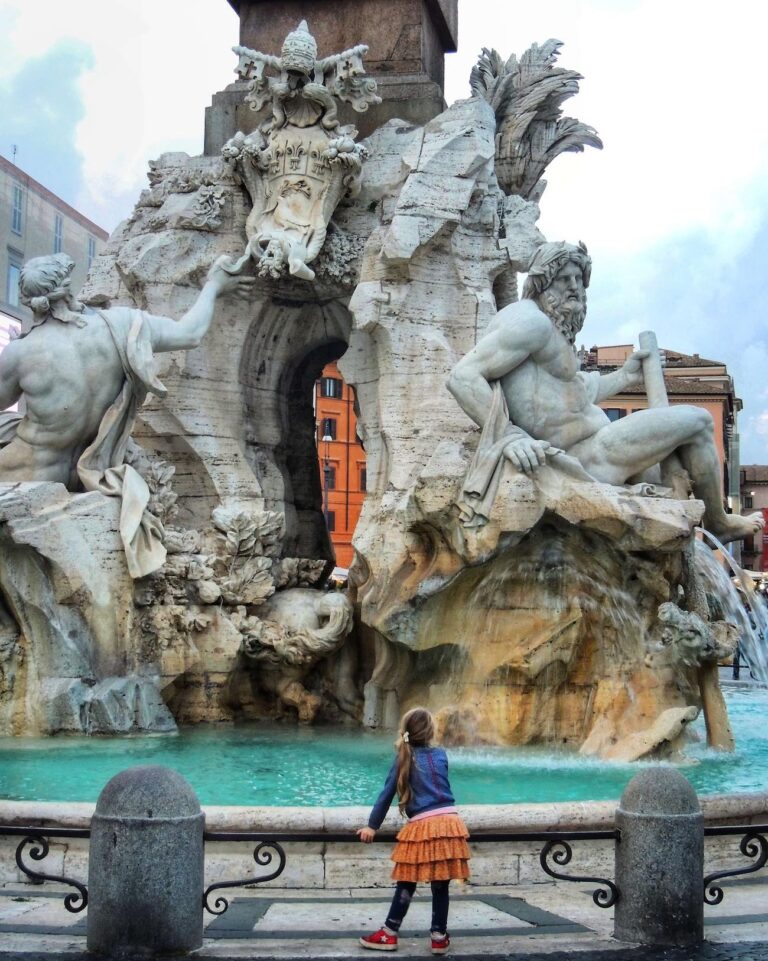
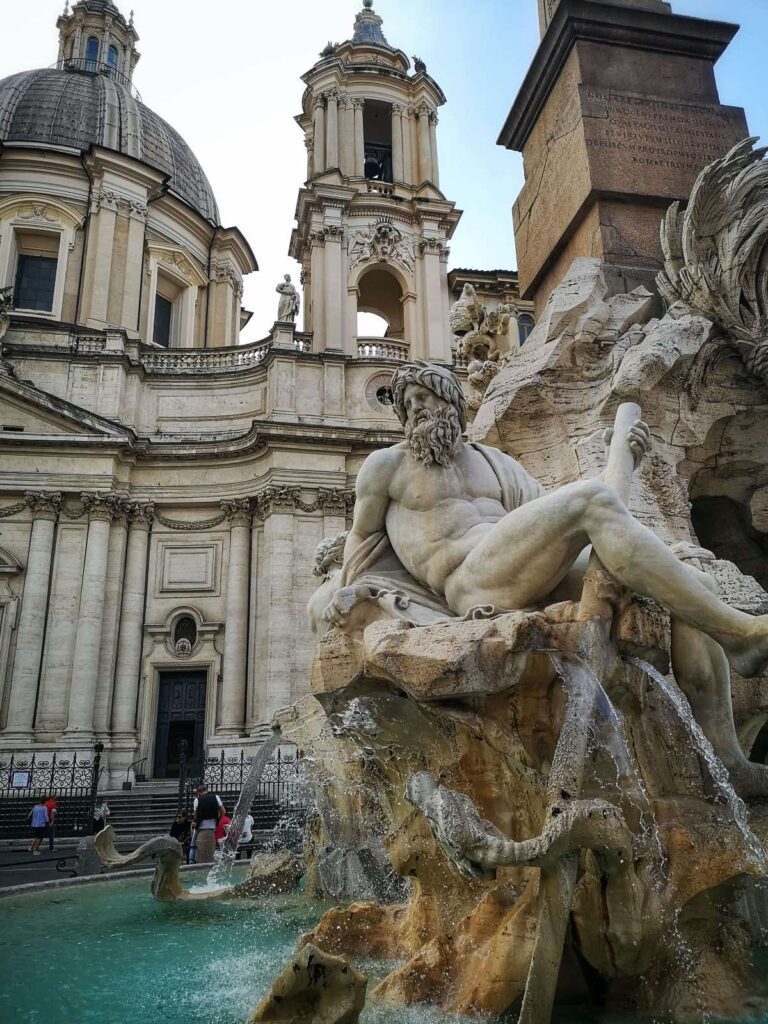
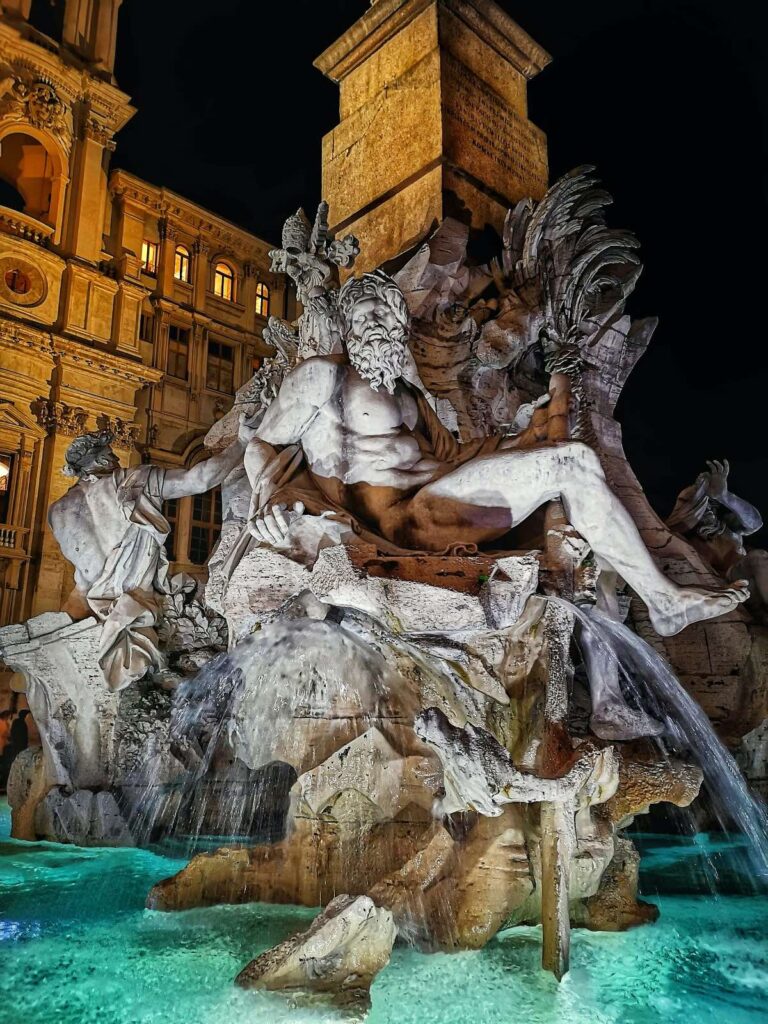
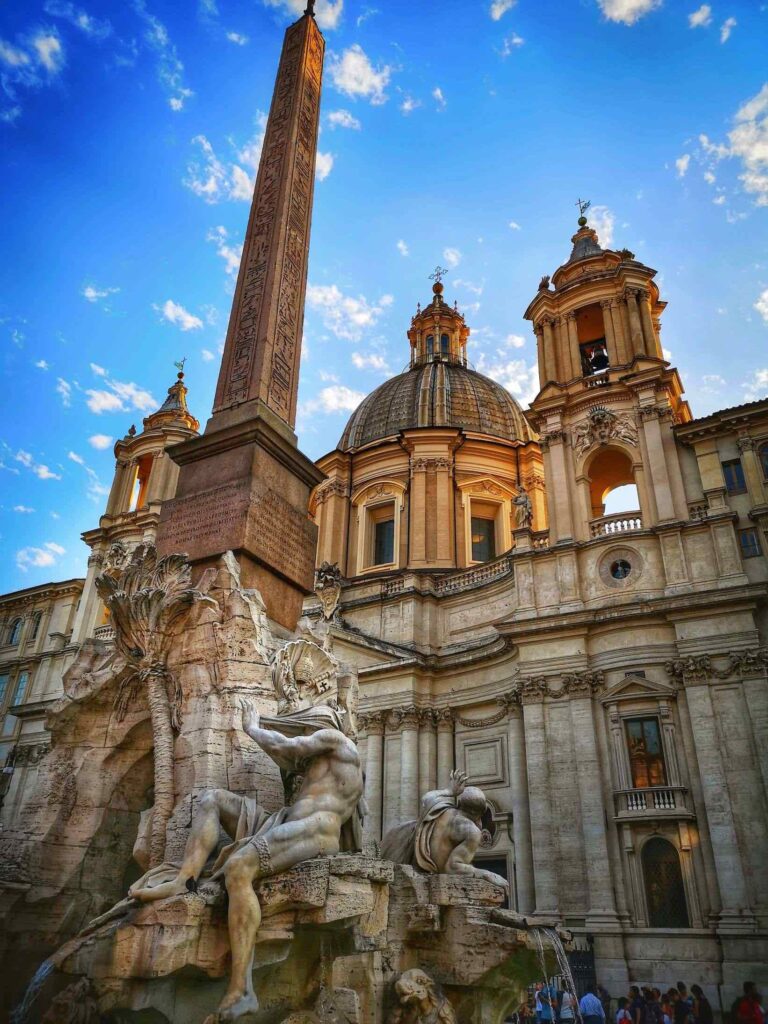
Looking at Bernini’s design for the Four Rivers Fountain today, it’s not difficult to see why the reluctant pope was won over. The four great river gods that recline across the travertine rockscape of the fountain represent the four continents of the known world in the mid-17th century — each one carrying its own rich freight of symbolism and allegory.
The Nile (Africa) is the most intriguing of all four figures. His head is draped with a loose piece of cloth that covers his face entirely — because the source of the Nile was unknown to 17th-century Europeans, a geographic mystery immortalised in stone. Some Romans could not resist a more theatrical interpretation: that the Nile was shielding his eyes from the sight of Borromini’s nearby church, Sant’Agnese in Agone — though this delightful story is almost certainly apocryphal, as the church was barely begun when the fountain was unveiled. The Nile figure was carved by Giacomo Antonio Fancelli.
The Ganges (Asia) reclines lazily on his rocky perch, straddling a long oar that symbolises the river’s legendary navigability — of great importance to European missionaries seeking to penetrate the subcontinent. A serpent writhes at his feet, and a palm tree sways in an invisible breeze nearby. The Ganges was the work of Claude Poussin (no relation to the painter Nicolas Poussin).
The Danube (Europe) reaches upward to touch the papal coat of arms — the Pamphilj family’s dove and olive branch — which surmounts the obelisk above. This gesture acknowledges the Danube as the great river closest to Rome among the four, and celebrates the reach of papal authority across the continent. The Danube was carved by Antonio Raggi.
The Río de la Plata (the Americas) sprawls amidst a scatter of coins — a reference to the legendary silver wealth of the New World (plata means “silver” in Spanish) — and is accompanied by an armadillo, one of the most exotic creatures the Old World had yet encountered from the Americas. The river’s hands are thrown up in apparent surprise: local wags later apocryphally asserted that Bernini made this unusual choice as another subtle dig at his rival Borromini, with Rio being fearful that the architect’s church might at any moment topple over and crush him. The figure was created by Francesco Baratta.
All four statues were designed by Bernini but executed by other sculptors, while the dramatic travertine rockscape base is the work of Giovan Maria Franchi.
What Is The Symbolism of Bernini’s Fountain?
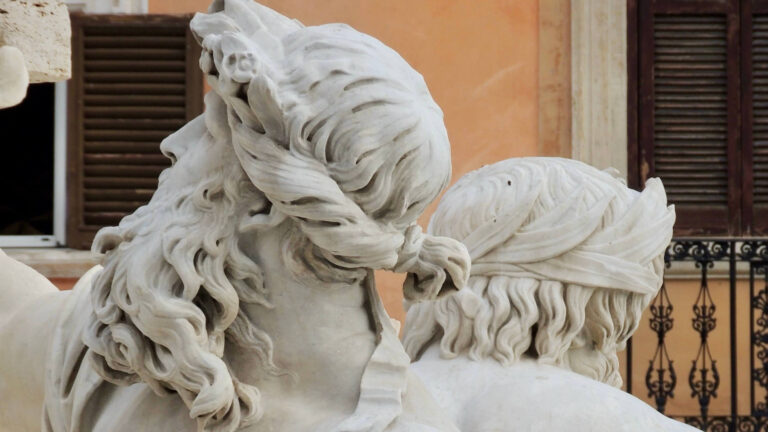
The four rivers represent more than just the rivers themselves: as stand-ins for the four known continents and the four corners of the world, the personifications take on a global significance, the entire world in glorious marble microcosm.
Symbolically speaking, then, the fountain points to the Catholic church’s global mission and its attempts to unify the world under a Christian banner.
And the symbolism runs even deeper: the four earthly rivers depicted by Bernini unmistakably also recall the four rivers of Paradise as described in the book of Genesis, unmistakably linking 17th-century Rome to the Garden of Eden.
Rising above the four river gods to a height of around 17 metres, the ancient Egyptian obelisk at the fountain’s summit is itself an extraordinary object.
Originally erected by Domitian in the 1st century AD in honour of himself and his father Vespasian, it was later moved to the circus of Maxentius on the Appian Way, where it stood until that complex fell into ruin.
When Bernini reassembled its five broken sections for the new fountain, he crowned it with a dove clutching an olive branch — the emblem of the Pamphilj family — its wings spread as though ready to take flight across the city below.
The obelisk’s hollow base is one of the fountain’s most celebrated architectural tricks. The entire weight of this ancient monument appears to be supported by a rocky grotto riddled with voids — seemingly balanced on nothing but air.
Critics at the time feared the whole structure might collapse, and legend has it that Bernini cheekily addressed their anxieties by attaching sculpted ropes to the obelisk’s base, as if to imply it was being held in place by string. It wasn’t — the engineering is immensely sophisticated — but the theatrical gesture was pure Bernini.
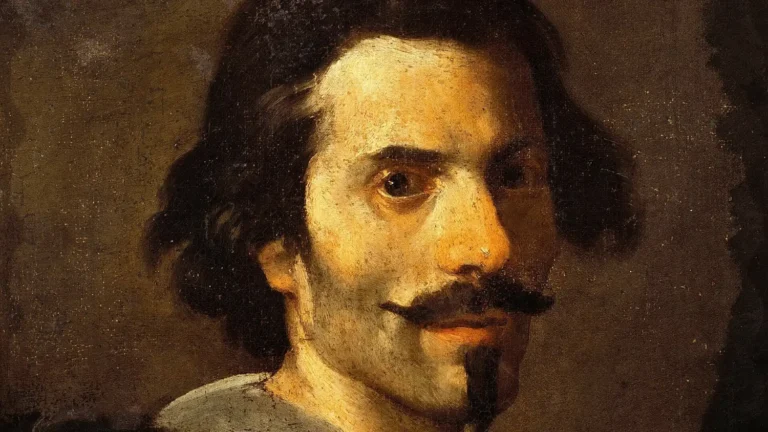
The Fountain of the Four Rivers and the church of Sant’Agnese in Agone face each other across a narrow strip of piazza in what amounts to one of the most extraordinary artistic stand-offs in history.
Here, within metres of each other, are two defining works by the greatest rivals in the history of art: Gianlorenzo Bernini and Francesco Borromini.
The two men had history stretching back decades. Borromini, the reclusive Swiss-born architectural genius, and Bernini, the charming, socially adroit Neapolitan sculptor-architect, embodied two radically different approaches to art and to life. Their rivalry was bitter, personal, and creatively explosive.
The story of the Nile covering his eyes from Borromini’s church — whether invented or not — captures something true about the spirit in which later Romans viewed their relationship: two geniuses perpetually goading one another from opposite sides of the square.
Bernini’s Legacy
Bernini’s Four Rivers Fountain was immediately hailed a triumph by his contemporaries on its unveiling on 12 June 1651, with the seemingly gravity-defying obelisk provoking particular amazement at the sculptor’s preternatural abilities.
The public acclaim that greeted the masterpiece paved the way for a full-scale rapprochement with the Pamphilj pope and opened a new chapter in the artist’s glittering career. The disaster of St. Peter’s bell-towers was well and truly forgotten.
The only murmurings of dissent were voiced by the peasant vendors whose stalls on the piazza were removed to make way for the monument – according to a contemporary account, the Pope placed guards at the fountain around the clock to stop the frustrated ‘matriciani’ from vandalising Bernini’s masterpiece.
The transformation from populist marketplace to Papal showcase was complete.
Fountain of the Four Rivers FAQ
Who created the Fountain of the Four Rivers?
The fountain was designed by Gian Lorenzo Bernini and unveiled in 1651. It was commissioned by Pope Innocent X as part of a broader project to transform Piazza Navona into a monument to Pamphilj family power.
What do the four figures on the fountain represent?
Each figure represents one of the four great rivers of the known world — and by extension, one of the four continents: the Nile (Africa), the Ganges (Asia), the Danube (Europe), and the Río de la Plata (the Americas).
Is the story about Bernini mocking Borromini true?
Almost certainly not. The fountain was completed in 1651, but Borromini’s work on the adjacent Sant’Agnese in Agone did not begin until 1653. The gestures of the river gods have straightforward iconographic explanations that predate any connection to Borromini.
Can you go inside the fountain?
The fountain sits in the open piazza and can be viewed and walked around freely. You cannot enter or touch the fountain itself, but you can get quite close to examine the sculptural details.
What is the obelisk on top of the fountain?
It is the Agonal obelisk, originally created in ancient Egypt and brought to Rome during the imperial period. It was later moved to the Circus of Maxentius on the Appian Way before Bernini incorporated it into this composition.
The Fountain Today: How to Visit
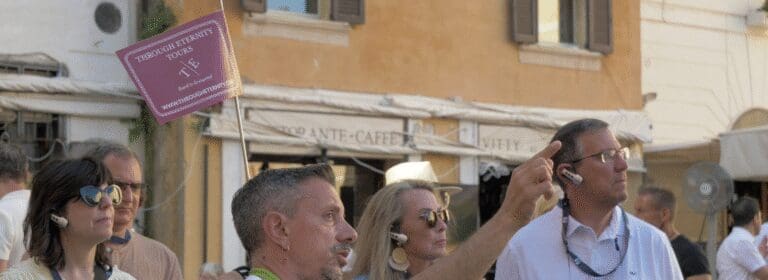
The Fountain of the Four Rivers sits at the centre of Piazza Navona, which is one of Rome’s most visited public spaces and is free to enter at any time. The piazza never fully closes, though the early morning — before the café terraces fill up and the street artists set up their easels — offers the best experience.
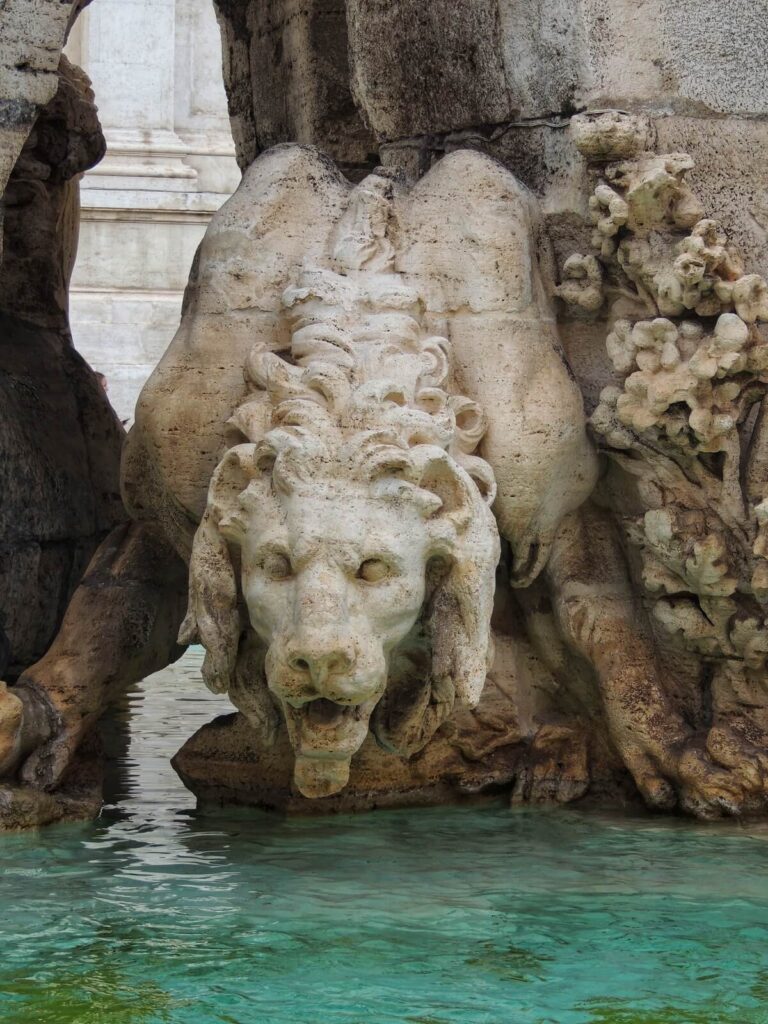
The fountain is best seen by circling it slowly, taking in each river god in turn. The detail rewards close attention: look for the armadillo half-hidden behind the Río de la Plata figure, the lion emerging from the rock near the Nile, and the horse bursting through the travertine above the Danube.
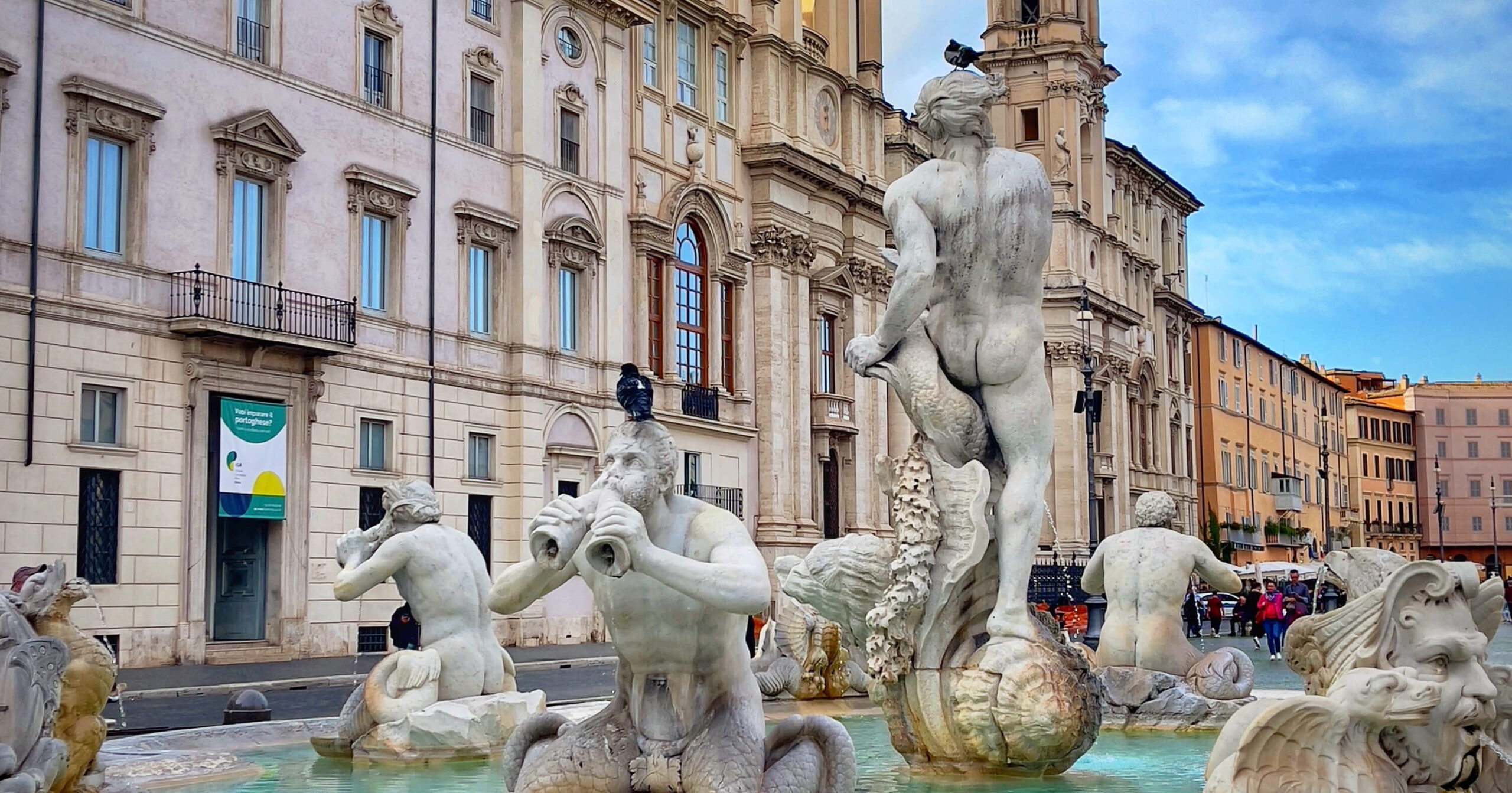
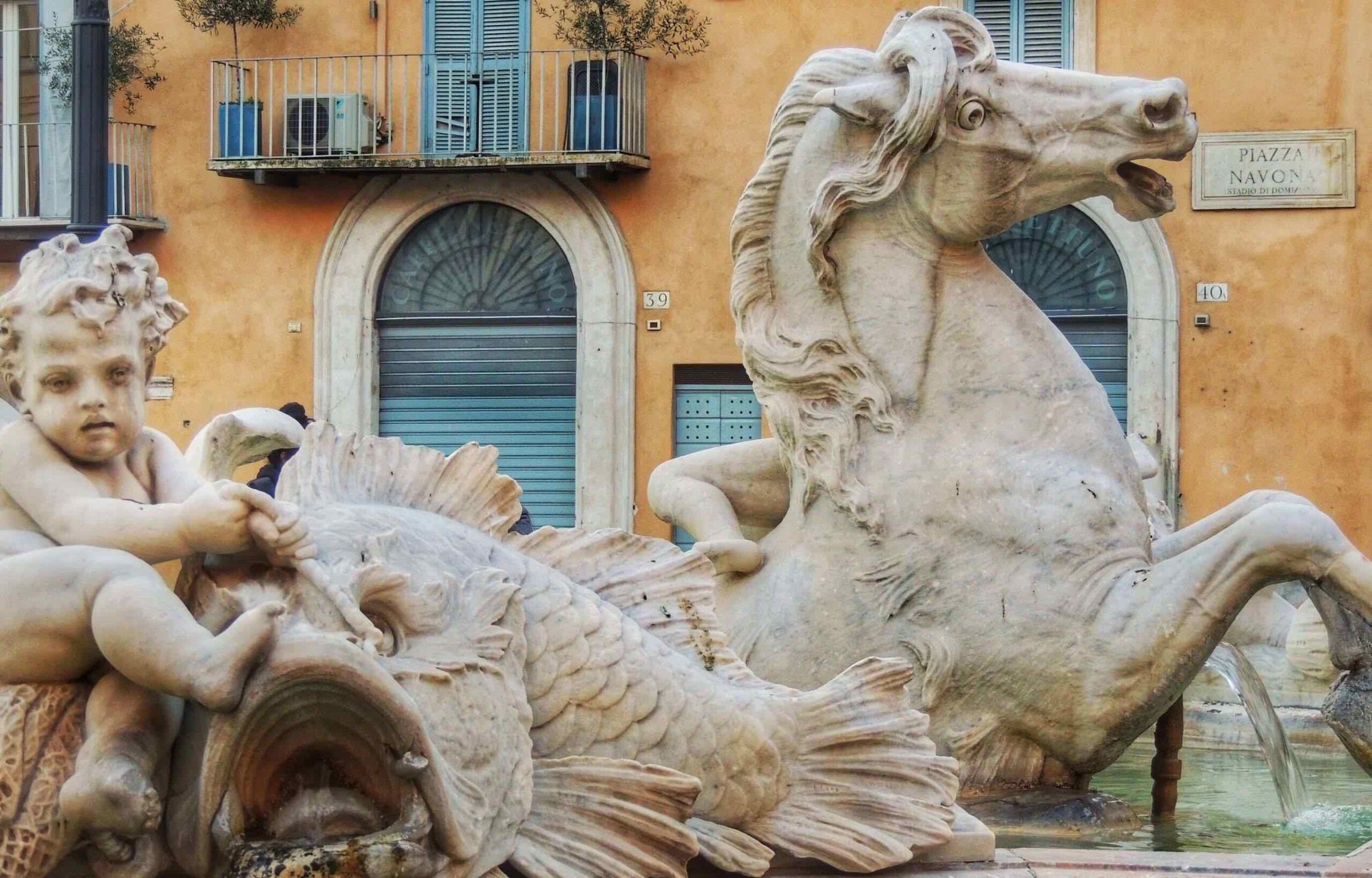
At each end of the piazza stand two smaller fountains — the Fontana del Moro (also by Bernini, at the south end) and the Fontana del Nettuno (at the north end). Neither is quite in the league of the Four Rivers, but both contribute to the ensemble that makes Piazza Navona one of the most satisfying public spaces in Europe.
Dive Deeper into Rome