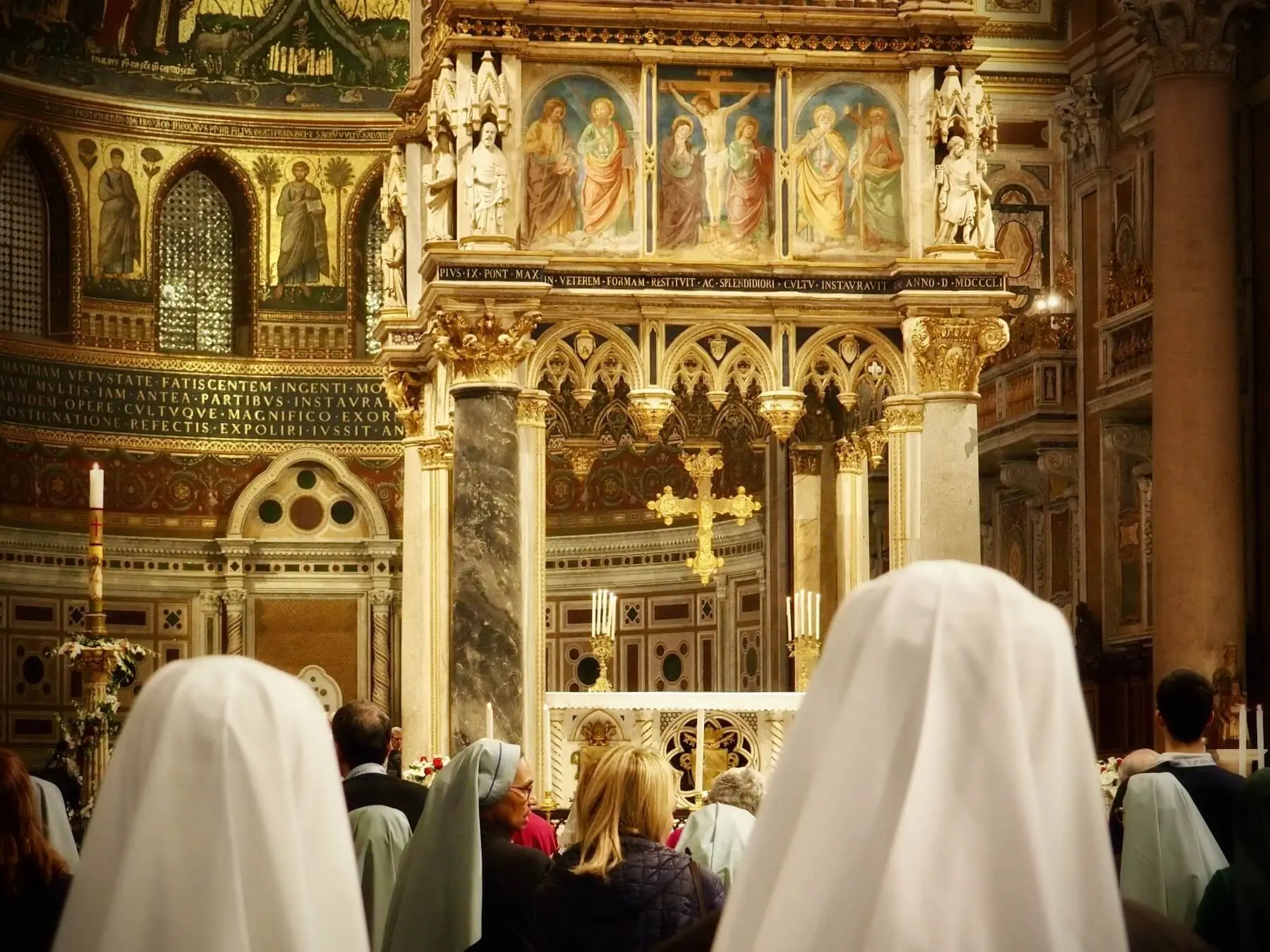
Holy Week is the most sacred and theatrical week in the Roman liturgical calendar.
For seven days during the Easter season, the city that has been the centre of Western Christianity for two millennia becomes something even more than its usual extraordinary self: a stage for beautiful ancient liturgies, for processions that fill the streets with torchlight and song, for ceremonies so laden with two thousand years of accumulated meaning that even the most secular visitor tends to be moved.
Pope Leo XIV – the first American-born pontiff in history, elected in May 2025 – presides over Holy Week 2026 for the first time in his pontificate, bringing his own character to ceremonies that have been performed with few modifications since the earliest centuries of the Church. There is a particular quality of attention around this year’s celebrations as a result: the world will be watching a new pope guiding his first Easter in Rome.
This guide covers every day of Holy Week in detail – what happens, where, at what time, how to attend, and what it means. It is designed to be read alongside our main Easter in Rome guide, which covers the practical information, the Via Crucis in depth, the Easter food culture, Pasquetta and more.
Holy Week 2026 runs from Palm Sunday, 29 March, through Holy Saturday, 4 April. Easter Sunday falls on 5 April. All times and locations are confirmed from the official Vatican programme published by the Office of Pontifical Liturgical Celebrations.
Best Rome Tours
Explore the Eternal City this Easter
Palm Sunday — 29 March
Domenica delle Palme
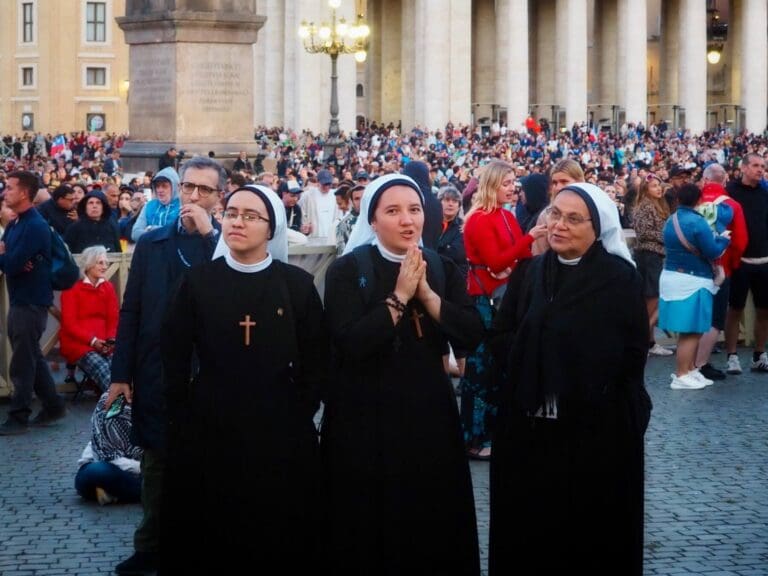
Palm Sunday stands at the threshold of Holy Week, poised between acclaim and foreboding. It carries a restless, anticipatory energy: a day that gathers crowds and colour, yet quietly sets in motion the sequence of events that will unfold over the days to come – an almost imperceptible shift from celebration toward sacrifice.
The Ceremony: Palm Sunday Mass
St Peter's Square, 10am
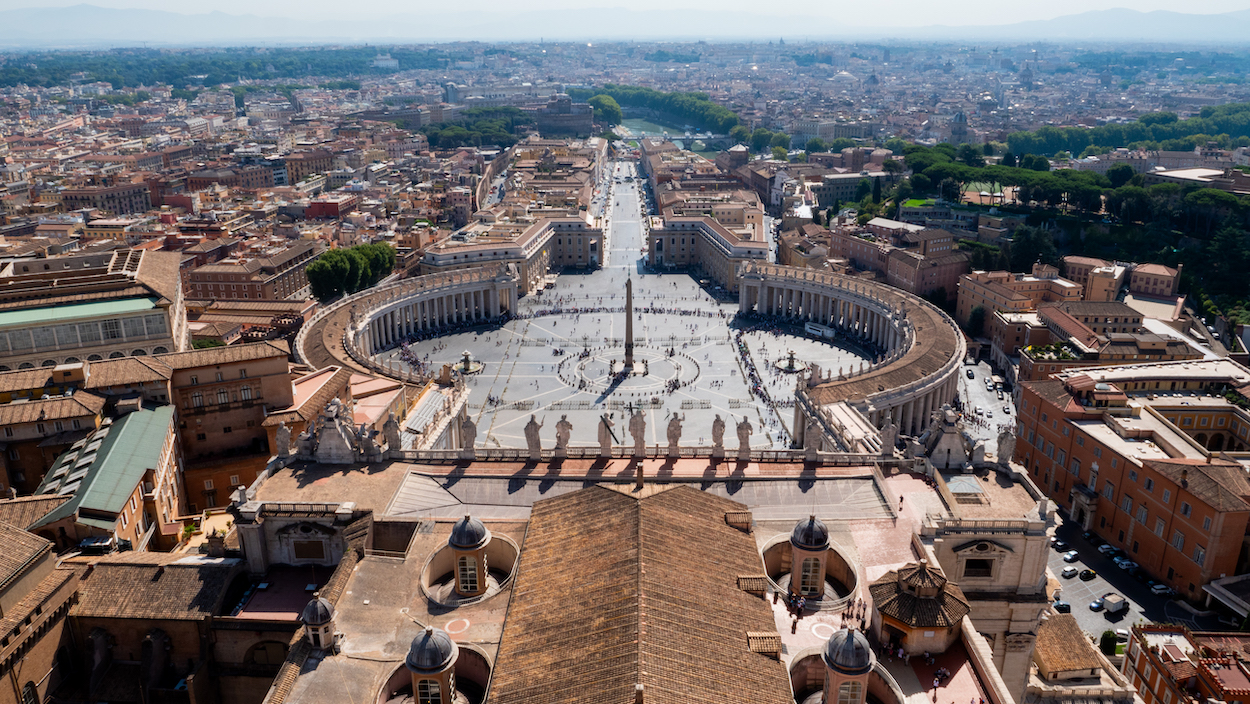
Holy Week begins with one of the most visually arresting ceremonies of the year. The Mass opens with a procession across the square, during which olive branches – and in Rome’s particular tradition, elaborately plaited palm fronds, crafted by skilled artisans in the days beforehand – are blessed and distributed to the assembled congregation. The square at this hour is a forest of waving palms against the backdrop of Bernini’s colonnade, Michelangelo’s dome rising above everything in the clear March light.
The liturgy commemorates Christ’s entry into Jerusalem on a donkey, greeted by crowds spreading branches in the road before him – the triumphal arrival that, within a week, would end in crucifixion. The mass itself includes the reading of the Passion narrative in its entirety: a long, dramatic text that takes the congregation from triumph to desolation in the space of a single liturgy.
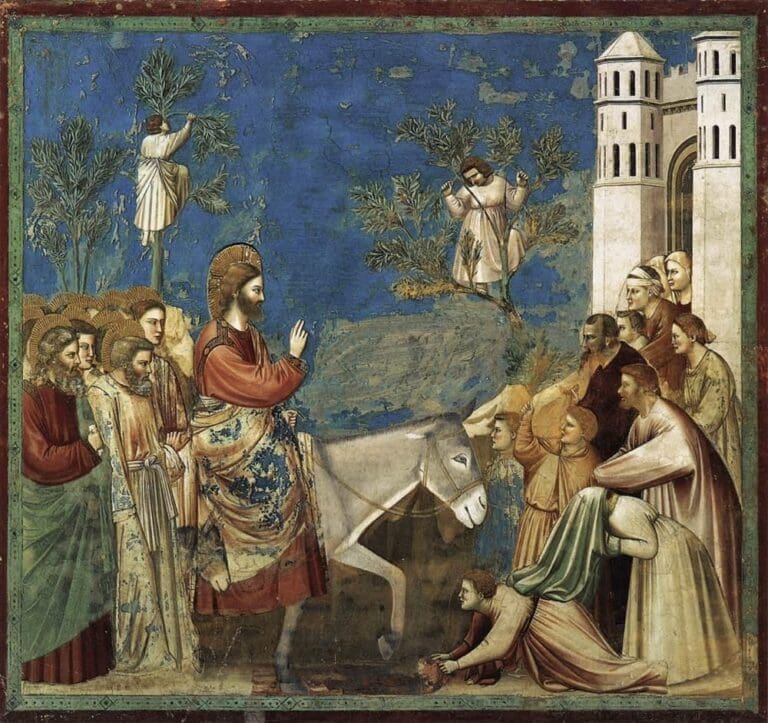
Giotto’s Entry into Jerusalem from the Scrovegni Chapel in Padua.
- For visitors: Palm Sunday is one of the more manageable days of Holy Week. The crowds are significant but not yet at the peak levels of the Triduum. Arrive at least an hour early for a good position in the square. No ticket is required to attend.
- The rest of the day: The square empties relatively quickly after the Mass. Bear in mind that the Vatican Museums are closed, but it’s a good time to explore the Borgo neighbourhood – the ancient pilgrim quarter between the Vatican and the Tiber that’s rich in history but too often skipped by visitors rushing to the nearby museums and basilica.

Monday, Tuesday and Wednesday of Holy Week — 30 March to 1 April
Lunedì, Martedì e Mercoledì Santo
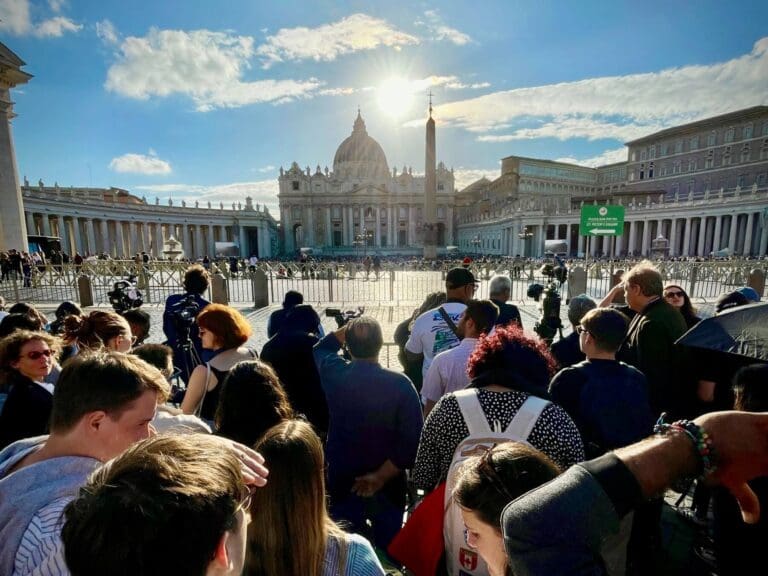
The three middle days of Holy Week have a particular quality in Rome — a gathering tension, the city winding itself toward something. The great ceremonies have not yet begun, so these are the best days of the week for sightseeing as the main monuments including St. Peter’s and the Vatican Museums are open.
The Ceremony: Papal General Audience
St. Peter's Square, 10AM
Wednesday sees the Pope preside over the usual Wednesday morning general audience in St. Peter’s Square, offering pilgrims and visitors the opportunity to see the Pontiff and receive the Papal Blessing.
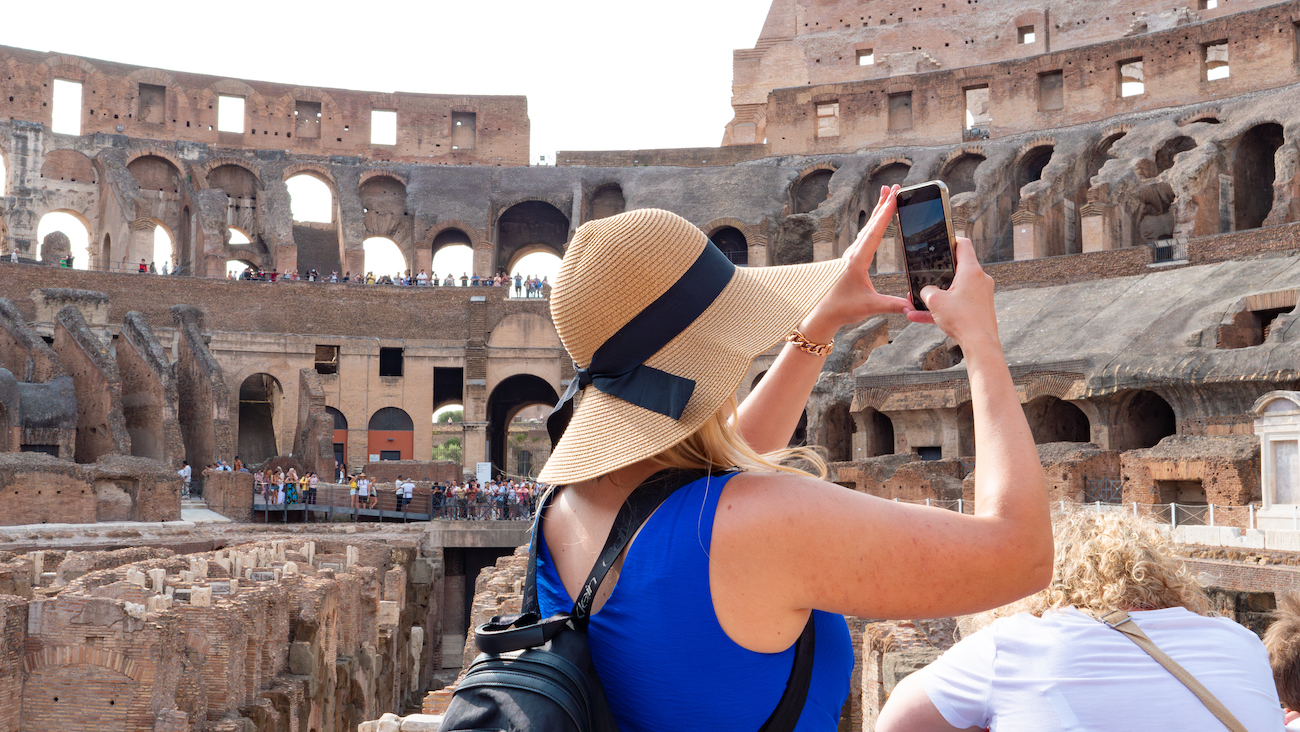
- For visitors on these days: Use Monday, Tuesday and Wednesday strategically. Visiting the Colosseum and Roman Forum at opening time on Holy Monday or Tuesday is a good strategy. The Vatican Museums are open too, so this is the moment to visit before the chaos later in the week. Book well ahead, as the Easter holiday brings a surge of visitors. Better yet, book a guided tour so you don’t need to worry about the planning.
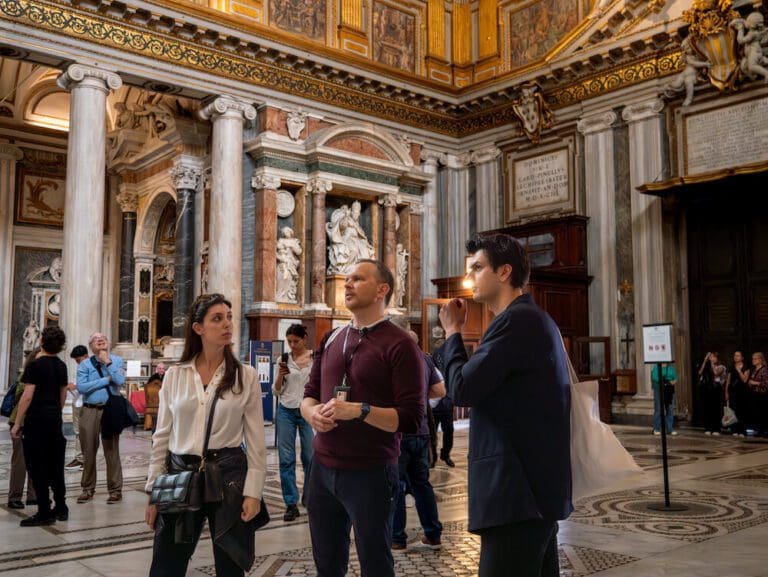
- The major churches of Rome like Santa Maria Maggiore, San Giovanni in Laterano, Sant’Ignazio, Santa Maria in Trastevere and the Gesù are all accessible, and many hold their own special Holy Week liturgies, Vespers and choral offices. Be sure to poke your nose into any basilica you happen to be passing.
Holy Thursday — 2 April
Giovedì Santo
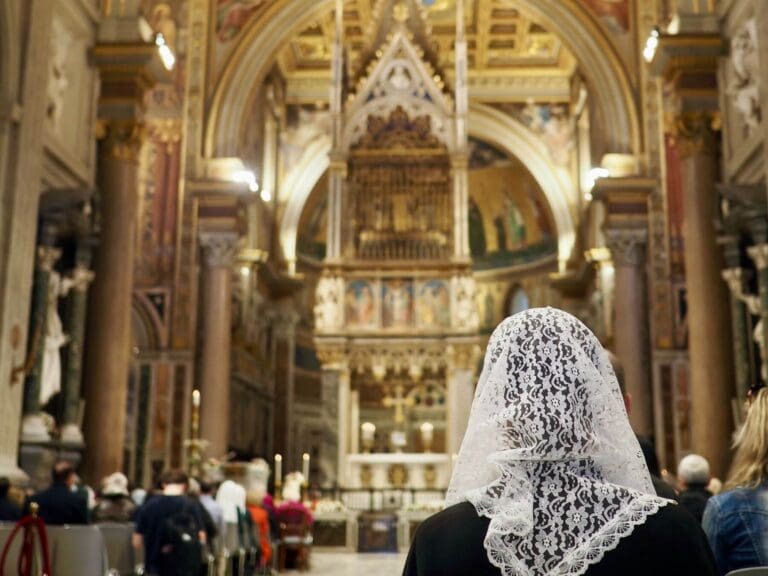
Holy Thursday marks the beginning of the Easter Triduum – the three-day liturgical heart of Holy Week – and is one of the most liturgically complex and theologically rich days of the year. The day begins with the Chrism Mass at St Peter’s at 9:30am. Pope Leo XIV presides over the mass, concelebrated with patriarchs, cardinals, archbishops, bishops and priests present in Rome. This is a major ceremony drawing a large clerical congregation of the worldwide priesthood renewing their vows in the mother church of Catholicism.
The Ceremony: The Mass of the Lord's Supper
Basilica di San Giovanni in Laterano, 5:30pm.
It should come as no surprise that the most important Mass of Holy Thursday is not held at St Peter’s but at San Giovanni in Laterano. This is officially the Pope’s cathedral in his guise as the Bishop of Rome. While St Peter’s is the seat of the papacy, venerable San Giovanni is the Pope’s parish church. What’s more, San Giovanni possesses the most holy relic relating to the Last Supper: a wooden panel said to be the table on which Christ and the Apostles shared the Passover meal.
The Mass of the Lord’s Supper is one of the most powerful liturgies of the year. It includes the Mandatum – the washing of feet, in which the Pope washes the feet of twelve individuals chosen to represent the diversity of the contemporary Church, following Christ’s example at the Last Supper. Under Francis’ papacy this rite was performed with a deliberate political charge, with the chosen group a mix of genders, faiths, and nationalities as well as inmates from Rome’s prisons.
After the Mass, the altars are stripped bare; candles are extinguished, the tabernacle is emptied, and the church is reduced to a state of austerity that will only be reversed during the Easter Vigil on Saturday evening. The Blessed Sacrament, consecrated during the Mass, is carried in procession to the repository altar where it is kept through the night of Holy Thursday while the faithful come to pray in the silent church.
It is this tradition of visiting the altare della reposizione that forms the basis of the ancient pilgrimage known as the Giro delle Sette Chiese: on Holy Thursday evening the churches of Rome are open through much of the night, and Romans have for centuries maintained the tradition of visiting seven neighbourhood churches to pray before there the repository altars.
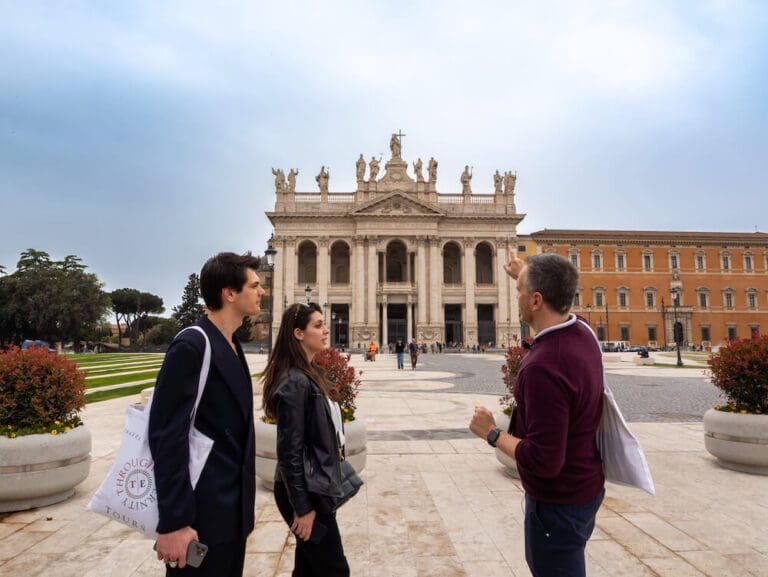
- For visitors: San Giovanni in Laterano is in the south-east of the city, easily reached by Metro Line A to San Giovanni or a pleasant 25-minute walk from the Colosseum through the ancient fabric of the city. The basilica is one of the most historically significant buildings in Rome and deserves a visit in its own right. You will need to book a ticket to attend the mass via the Prefecture of the Papal Household website. Arrive early for the 5:30pm Mass; the basilica is large but the papal ceremony draws a considerable congregation.
- The evening of Holy Thursday is one of the most atmospheric of the entire week for simply walking Rome’s churches. The light from the repository altars, the quiet of the darkened naves, the coming and going of Romans fulfilling their own devotional traditions: it’s a version of Rome that seems immune to the passage of time, just on this single night of the year.
Good Friday — 3 April
Venerdì Santo
Good Friday is the most solemn day of the Christian year, and Rome observes it with fitting gravity. The church bells are silent. There is a different texture to the air in the streets around the historic churches, where small devotional gatherings mark the stations of the cross in neighbourhoods across the city through the morning and early afternoon.
The Ceremony: The Celebration of the Passion
St Peter's Basilica, 5PM
Pope Leo XIV presides over the Celebration of the Passion of the Lord in St Peter’s Basilica at 5pm. The Good Friday liturgy is structurally unlike any other in the Catholic calendar. There is no Mass – the Eucharist is not celebrated on Good Friday, and will not be again until the Easter Vigil on Saturday night.
Instead the liturgy moves through three distinct acts: the Liturgy of the Word, which culminates in the long reading of the Passion according to John; the Veneration of the Cross, during which the faithful come forward individually to touch or kiss the cross while the Improperia – ancient reproaches sung by the Pope’s own Sistine Chapel choir – fill the basilica; and Holy Communion, received from hosts consecrated on Holy Thursday and reserved in the repository.
Free tickets are available from the Prefecture of the Papal Household and should be requested in advance. The basilica fills quickly. Arrive at least an hour before the ceremony begins.
The Ceremony: The Via Crucis
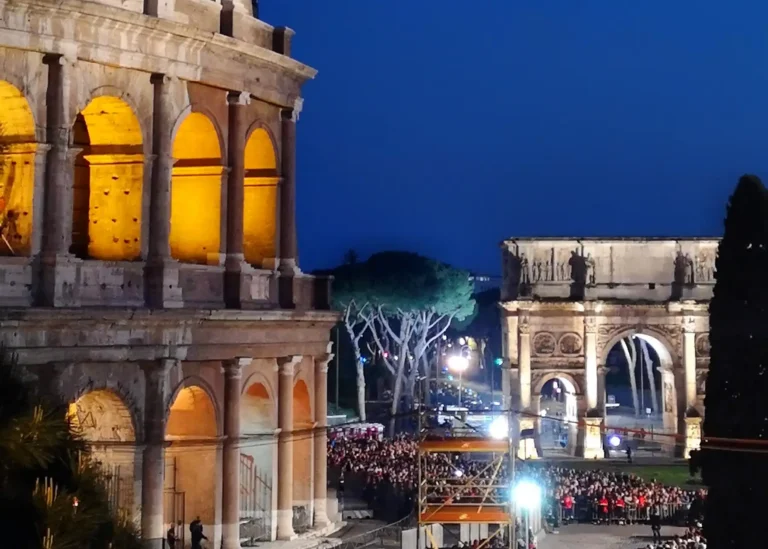
Colosseum, 9.15 PM
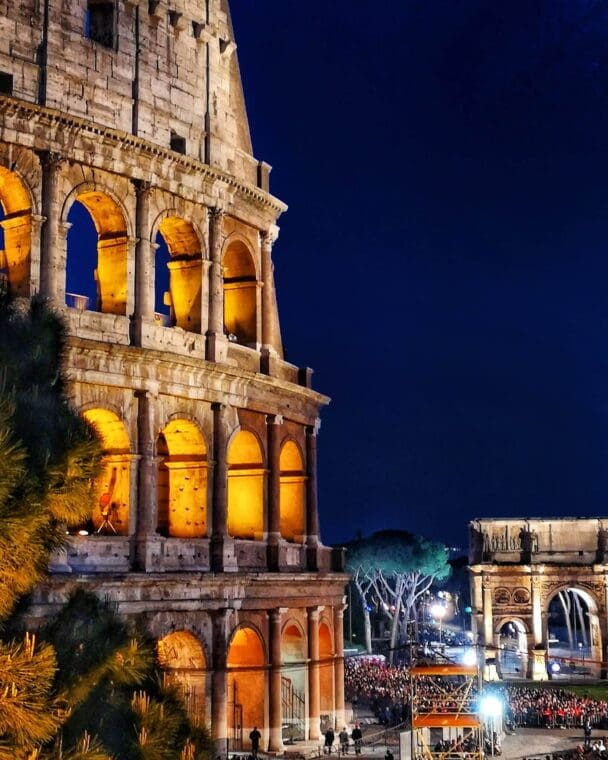
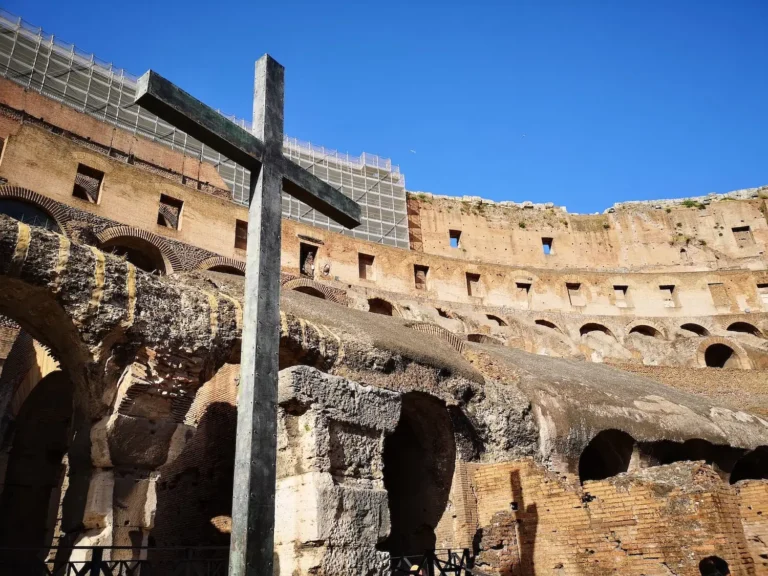
The torchlit Stations of the Cross is the most visually dramatic event of the entire Holy Week calendar and the one most accessible to visitors of all backgrounds and beliefs. The procession moves through the fourteen stations of the Cross – each one marked by a meditation written by a figure chosen specifically for the year – with the Pope presiding from a platform facing the illuminated Colosseum.
The meditations, which in recent years have been written by various figures including theologians and survivors of conflict from around the world, are read in Italian and translated; the combination of the ancient text, the contemporary reflection, the torchlight and the stones of the most famous monument in Rome make this the most memorable event in Easter Week. The ceremony is free and open to all, requires no ticket, and is broadcast live on Vatican Media.
- Good Friday in Rome: Beyond the great ceremonies, Good Friday in Rome has its own quieter character worth experiencing. The neighbourhood churches hold their own Stations of the Cross processions through the morning. The streets around the old basilicas of Santa Maria Maggiore and Santa Maria in Trastevere are particularly atmospheric in the early afternoon. Good Friday is not a national holiday in Italy so shops and restaurants are typically open as normal, although some may choose to reduce operating hours.
Holy Saturday — 4 April
Sabato Santo
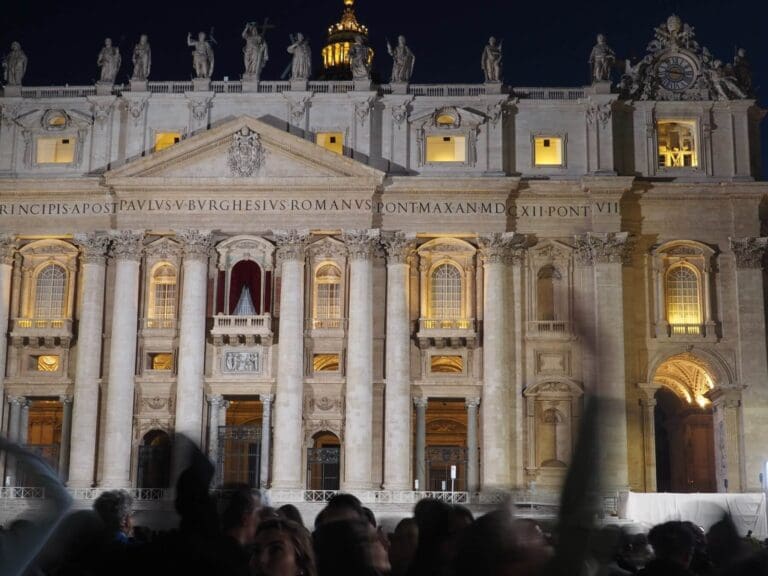
Holy Saturday is perhaps the most unusual day in the Christian calendar: a day suspended between death and resurrection when no masses are held, the altars are still bare from Thursday night and the churches are open only for private prayer and contemplation. The effect is of a city in waiting, the great ceremonial machinery of Holy Week paused for one day before its final, climactic act.
The Ceremony: The Easter Vigil
St Peter's Basilica. 9PM
The Easter Vigil is the longest and most complex liturgy of the year, unfolding in four distinct acts across several hours. The Liturgy of Light begins in darkness before the Paschal Candle is blessed and lit, the flame passed through the congregation candle by candle until the vast basilica gradually fills with points of light. The ancient Exsultet – the Easter proclamation, one of the oldest texts in Christian liturgy – is chanted by a deacon in the now candlelit basilica.
The Liturgy of the Word that follows encompasses no fewer than nine readings spanning the entire arc of salvation history from Genesis through the prophets to the Epistles, each punctuated by a psalm. Then, to accompany the Gloria hymn which is sung for the first time since the beginning of Lent, the lights of the basilica flood on and the bells ring out after their days of silence: the Liturgy of the Eucharist has begun.
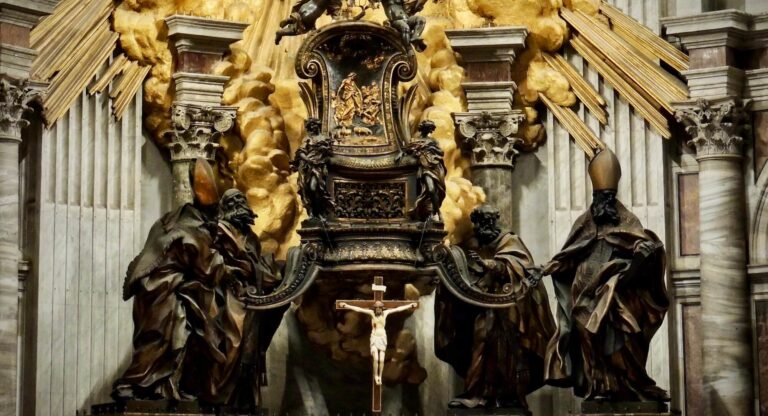
- For Visitors: Once again you must reserve your free tickets well in advance from the Prefecture of the Papal Household. The ceremony lasts approximately two and a half to three hours.
- The morning and afternoon of Holy Saturday offer another opportunity for visiting Rome’s major monuments. The Vatican Museums are open, as are the Colosseum, Forum and Palatine Hill, but expect them to be busy. Through the day, the churches continue to observe the ancient tradition of the repository altars, many of which will be decorated with elaborate floral arrangements.
Easter Sunday — 5 April
Domenica di Pasqua
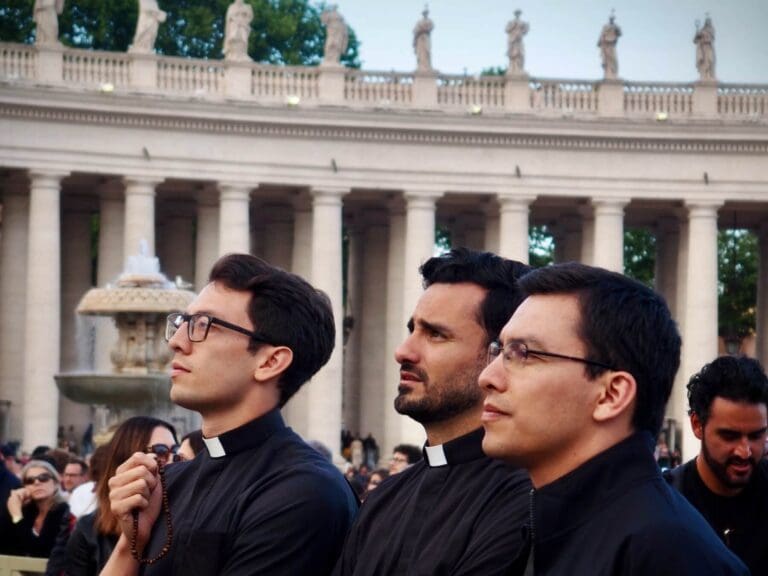
The week reaches its peak. After the solemnity of the Triduum, Easter Sunday has a quality of released joy that is almost physical – the bells that have been silent since Thursday ringing from every campanile in the city, the restaurants full, the streets alive with families in their finest clothes, the sky above St Peter’s Square full of light.
The Ceremony: Easter Sunday Mass
St Peter's Square, 10:15am
The Easter Sunday Mass is the largest and most internationally attended of all the papal ceremonies of the year, and sees hundreds of thousands of people from practically every country on earth gather in one of the most beautiful public spaces ever built, presided over by the head of the Catholic Church in the fullness of the Easter feast. The scale is genuinely staggering, and the setting – Bernini’s colonnade, the Egyptian obelisk at the centre, the fountains, the dome – so magnificent that even experienced Rome old hands are likely to be amazed.
For practical guidance on attending, including tickets, timing, transport, and the best positions, see the full section in our Easter hub article. These are the essentials: arrive very early, expect security screening and be patient. All the waiting will be worth it.
The Urbi et Orbi Address
Central Loggia of St Peter's Basilica, Noon
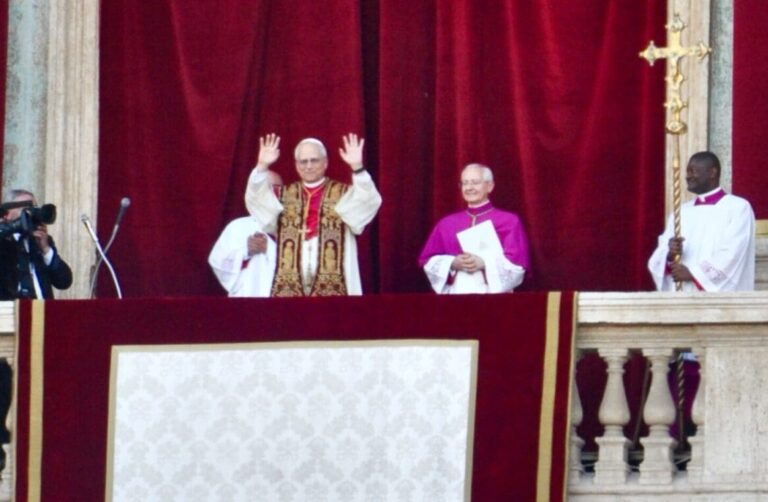
The Urbi et Orbi, literally “to the city and to the world,” is the Pope’s Easter address to humanity: a message that is watched live by hundreds of millions of people around the world and that traditionally addresses the major concerns of the moment, political and humanitarian as much as theological. Delivered from the central balcony of St Peter’s, the same loggia from which the new Pope is announced after a conclave, it is one of the great symbolic acts of the Catholic year.
No ticket is required for the Urbi et Orbi. The square and surrounding areas are open freely, and the blessing, accompanied by a plenary indulgence for Catholics who receive it, is broadcast on screens throughout the piazza and on Vatican Media internationally.
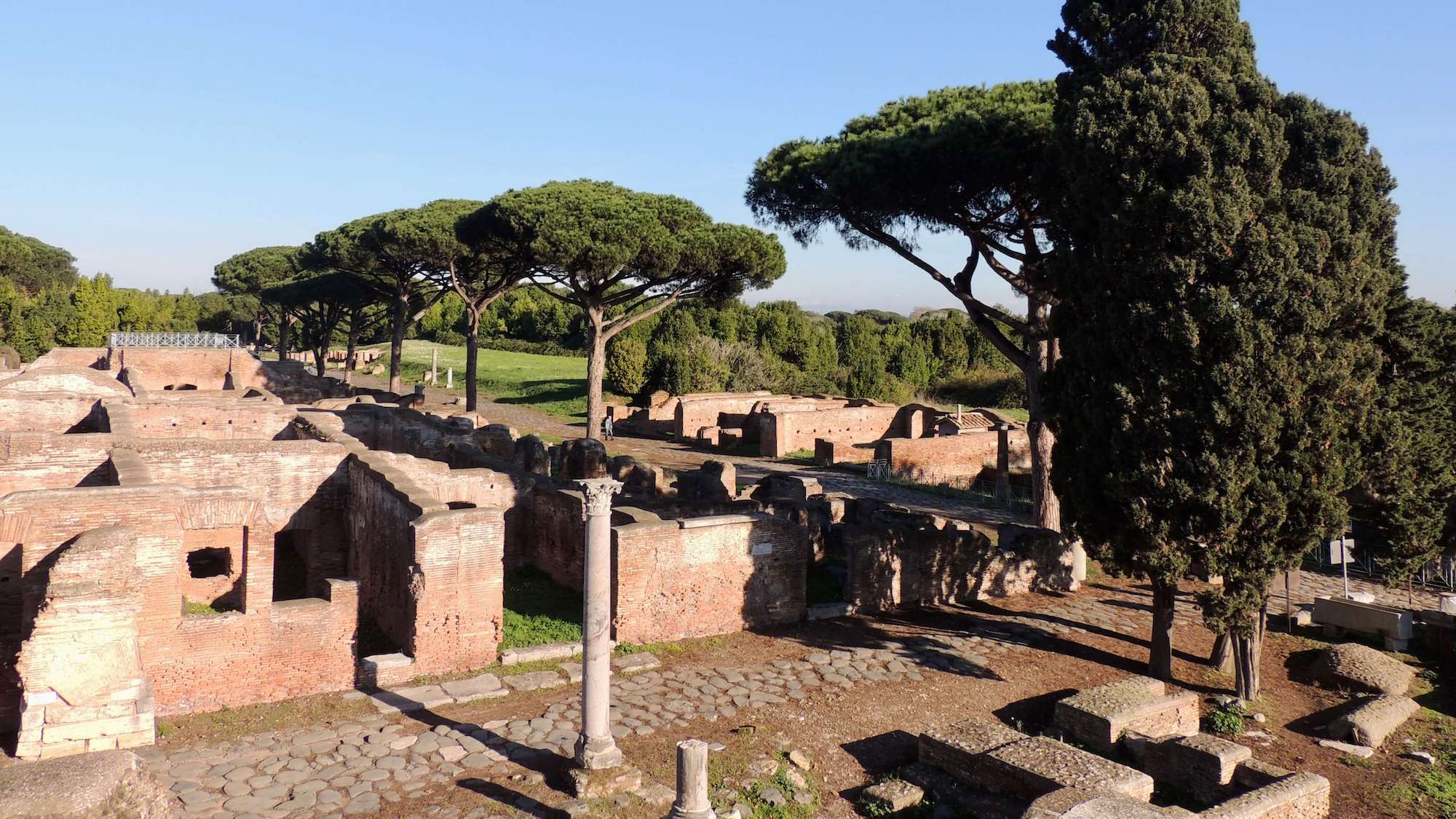
- The rest of Easter Sunday: The Vatican Museums are closed. St Peter’s Basilica reopens to visitors after approximately 1pm once the morning ceremonies have concluded. The Colosseum, Capitoline Museums and most of Rome’s major monuments are open. As Easter falls on the first Sunday of the month in 2026, state run museums and archaeological sites are free to visit. If you fancy a trip out of the city then Tivoli and Ostia are great nearby options which adhere to the initiative.
- Bear in mind that the city’s restaurants will be almost certainly fully booked today. Reserve well in advance if you want to have lunch or dinner at a specific place. Relying on walking up is a bad strategy. The streets around the historic centre in the afternoon and evening of Easter Sunday have a festive air different from the solemnity of the preceding days: families out walking, gelaterias doing a roaring trade, and the particular Roman pleasure of the passeggiata at its most animated.
Easter Monday — 6 April
Pasquetta — Lunedì dell'Angelo
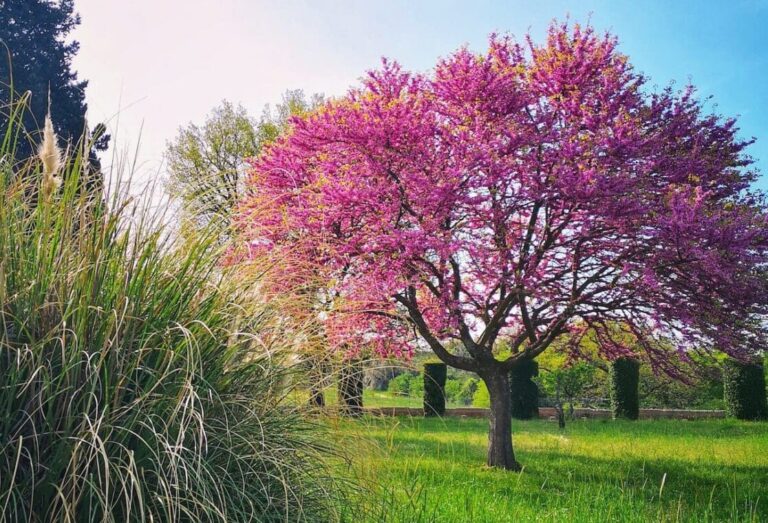
Easter Monday is a national holiday in Italy with a character entirely distinct from the formality and solemnity of the preceding week. The defining tradition is the gita fuori porta: Romans leave the city in their thousands for a day of outdoor eating, walking and fresh air in the surrounding countryside, hills and lakes.
Una Gita Fuori Porta
A Trip to the Country
- There are no papal ceremonies on Pasquetta. The Vatican Museums remain closed. The city is noticeably quieter than the preceding days as most everyone has decamped to the countryside, which makes the morning in particular a surprisingly good time to visit museums and monuments that were overwhelmed over the Easter weekend.
- But if you want to do as the Romans do, then you really should head out on a day trip into the surrounding hills. The Castelli Romani, a string of volcanic hill towns south-east of the city, are the classic Roman Pasquetta destination. Porchetta in Ariccia, local white wine in a traditional fraschetta in Frascati, the superb restaurants of Grottaferrata and Genzano, the great views in Castel Gandolfo and Nemi – you really are spoilt for choice!
FAQ: Visiting Rome at Easter
Is Easter a good time to visit Rome?
Yes — emphatically, though it requires more planning than most other times of year. The crowds are real, but so are the rewards: the Via Crucis by torchlight, the Easter Sunday Mass in St Peter’s Square, the azaleas on the Spanish Steps, and the particular quality of Roman spring light make this one of the most memorable times of year to be in the city. Come prepared, book early, and you definitely won’t regret it.
How crowded is Rome at Easter?
Busier than most of the year, but more manageable than the reputation sometimes suggests. Crowds concentrate around the Vatican, the Colosseum and the main tourist axis between them. Away from these focal points, much of Rome remains surprisingly accessible. The most effective crowd-management strategy is to visit major monuments at opening time and to plan Vatican visits for the days before or after Easter weekend itself, when the Museums are open and crowds slightly thinner.
How do I get tickets for the Easter Papal Mass?
This year the Papal Mass in St. Peter’s Square doesn’t require a ticket, but you’ll need to arrive early to get a decent vantage point. The Urbi et Orbi at noon likewise requires no ticket, but again you’ll need to get there early.
What is open and closed at Easter in Rome?
The Vatican Museums are closed on Easter Sunday and Monday. The Colosseum closes early on Good Friday. Most other major monuments — the Colosseum on other days, Capitoline Museums, Galleria Borghese, the Pantheon, Palazzo Barberini and Rome’s main archaeological sites — are open throughout, including on Easter Monday when many museums are normally closed. Book timed-entry sites well in advance.
What is Pasquetta?
Pasquetta is the Italian name for Easter Monday — a national holiday with the firm tradition of spending the day outdoors. Romans traditionally make a trip to the surrounding hills, lakes and countryside for a day of eating, walking and fresh air. For visitors it is an excellent day to explore Rome’s nearby destinations or to enjoy a noticeably quieter city for morning sightseeing.
What is the weather like in Rome at Easter?
Easter 2026 falls on 5 April, when Rome’s climate is mild and predominantly pleasant. Daytime temperatures are typically 15–20°C with long hours of good light. Early April weather is variable, however, and showers can be heavy and sudden. Pack layers and a waterproof jacket.
Do I need to dress a particular way for Easter in Rome?
The dress code requirements at the Vatican and all Roman churches – covered shoulders and knees – are strictly enforced during Holy Week when these spaces are operating as active places of worship. Ensure you have appropriate clothing for all church visits regardless of the weather. For outdoor ceremonies like the Via Crucis, respectful dress is appropriate even though there is no formal enforcement.
For over 25 years, Through Eternity have been organizing itineraries showcasing the best of Rome, from the Vatican to the Ancient City and beyond, led by our resident expert guides. If you’re planning a visit to the Eternal City this Spring, be sure to get in touch to help plan your perfect trip! For everything else you need to know about visiting Rome at Easter — practical information, the Via Crucis in depth, Easter food, Pasquetta, and more — see our complete Easter in Rome guide:
Book Your Rome Experience