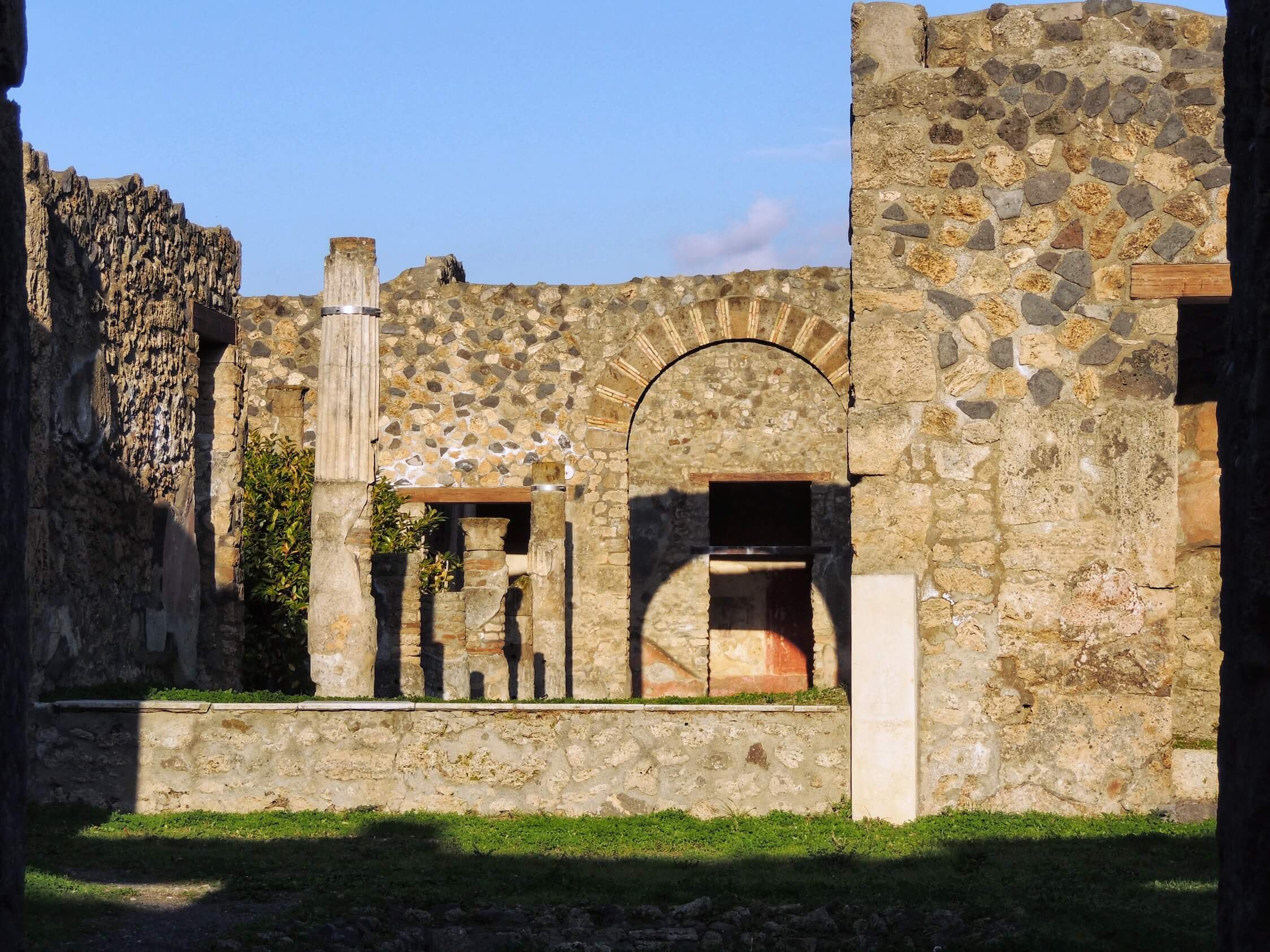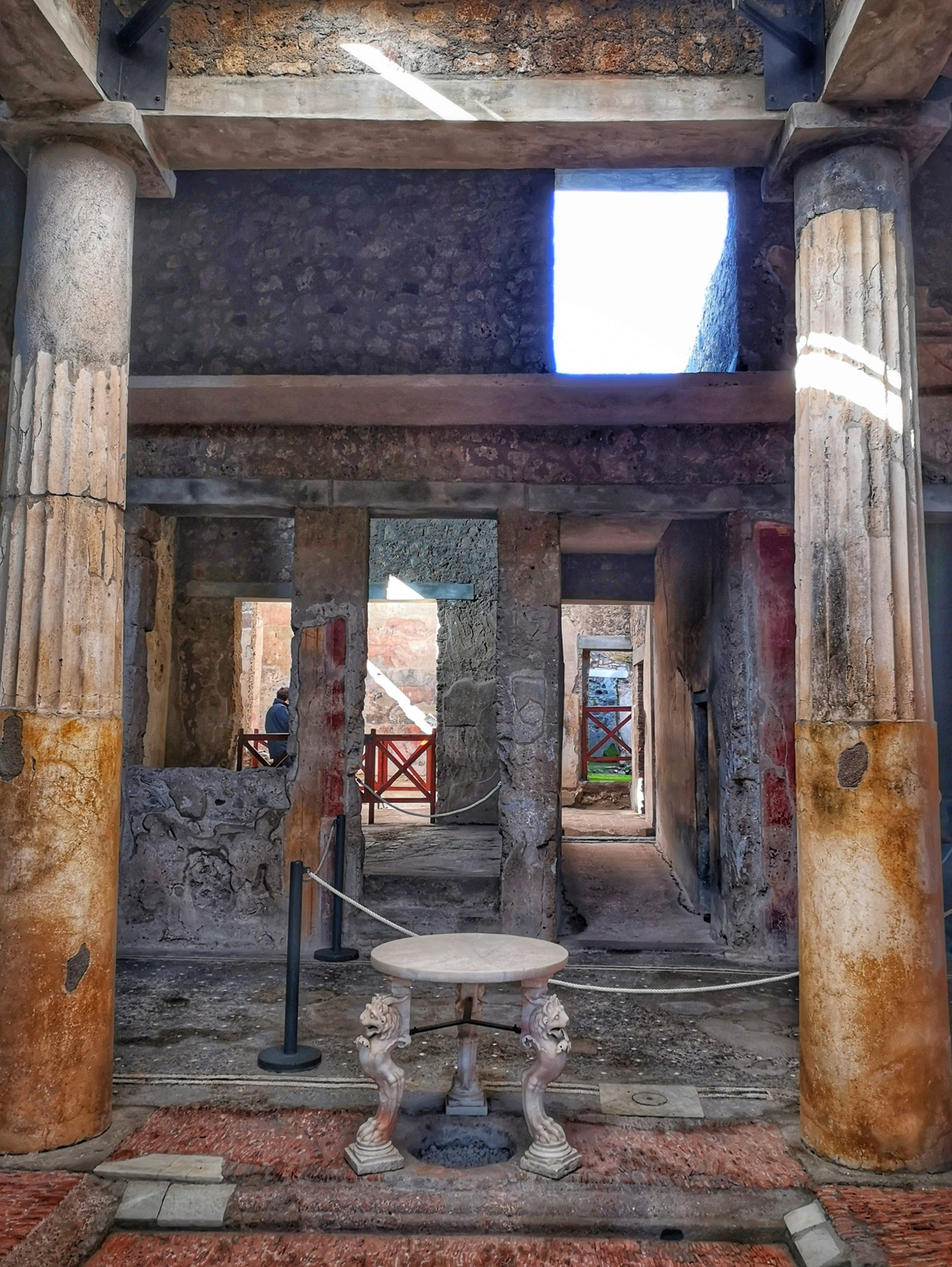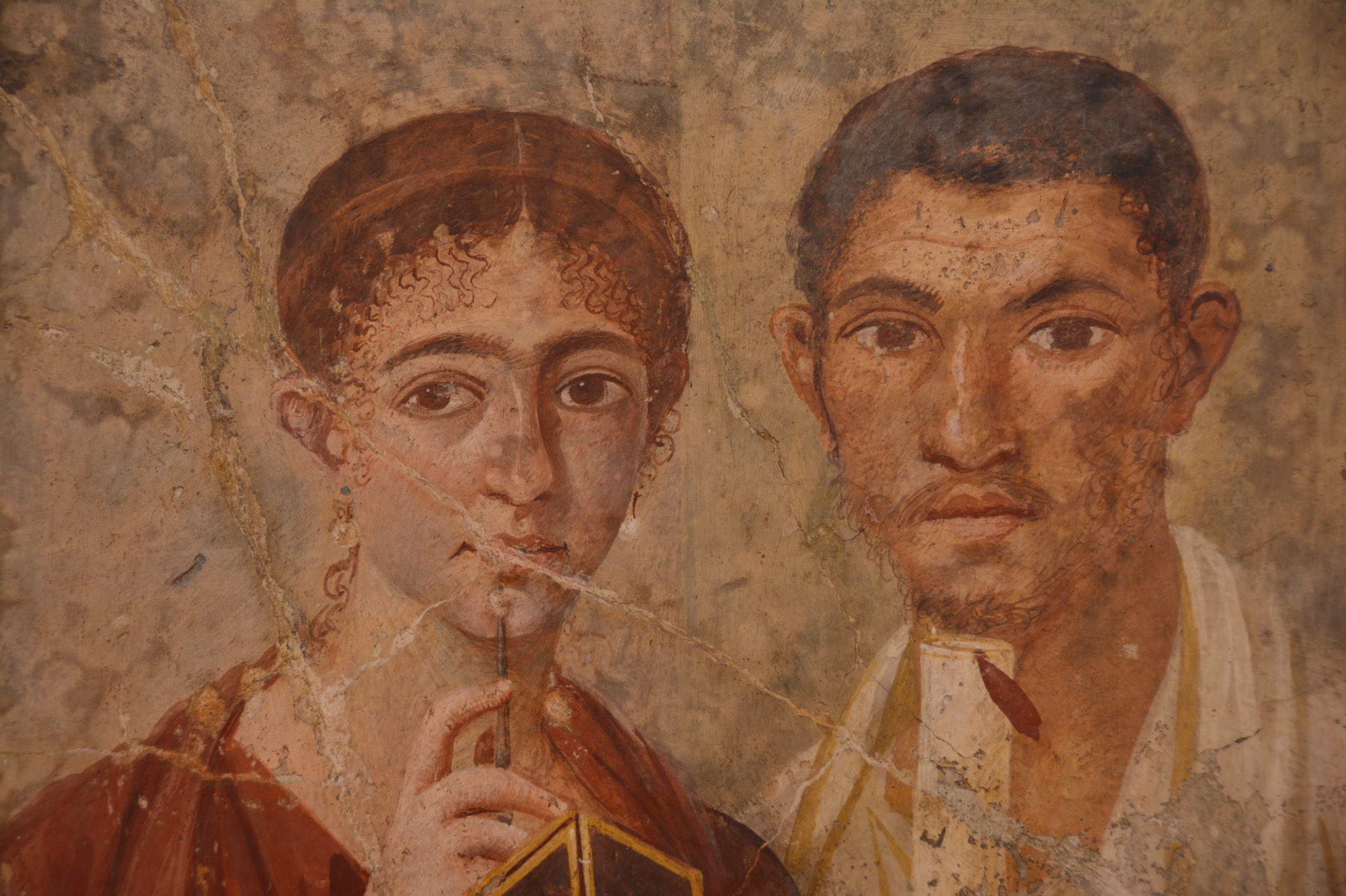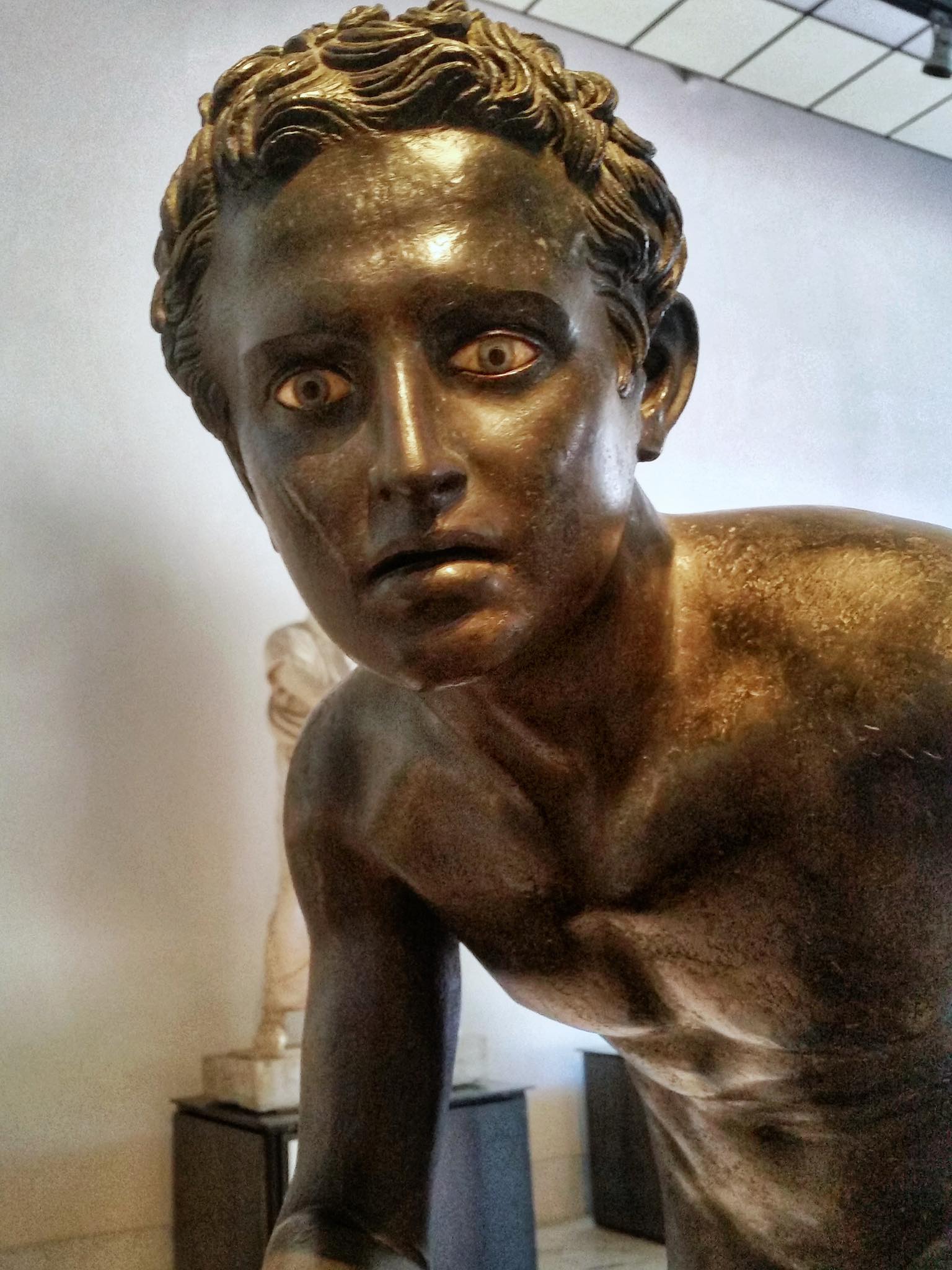
Everyone goes to Pompeii. And rightly so.
It’s one of the most extraordinary places on earth, a Roman city frozen in a single catastrophic moment that has been drawing visitors, scholars and dreamers to the slopes of Vesuvius for nearly three centuries. If you haven’t been, go. We can help with that!
But here is what the crowds at Pompeii’s entrance gates tend to obscure: the eruption of Vesuvius in 79 AD did not destroy one city. It destroyed several. And the volcanic fury that buried this corner of Roman Campania also, paradoxically, preserved it – leaving beneath the hardened ash and pyroclastic debris a record of ancient life so detailed, so intimate and so geographically concentrated that nowhere else on earth offers anything quite like it.
Beyond Pompeii, within an hour or two of Naples in almost every direction, lie sites of breathtaking significance that receive a fraction of the visitors they deserve. Some were buried by the same eruption. Some predate Rome itself. One lies beneath the sea. Together they build a picture of ancient Campania – one of the wealthiest, most cosmopolitan and most culturally extraordinary corners of the Roman world – that no single site, however famous, can provide on its own.
This is our guide to eight of the best. Some are easy half-day trips from Naples or the Amalfi Coast. Others reward a full day’s dedication. All of them will stay with you.
Pompeii and Campania Tours
Explore Ancient Ruins!
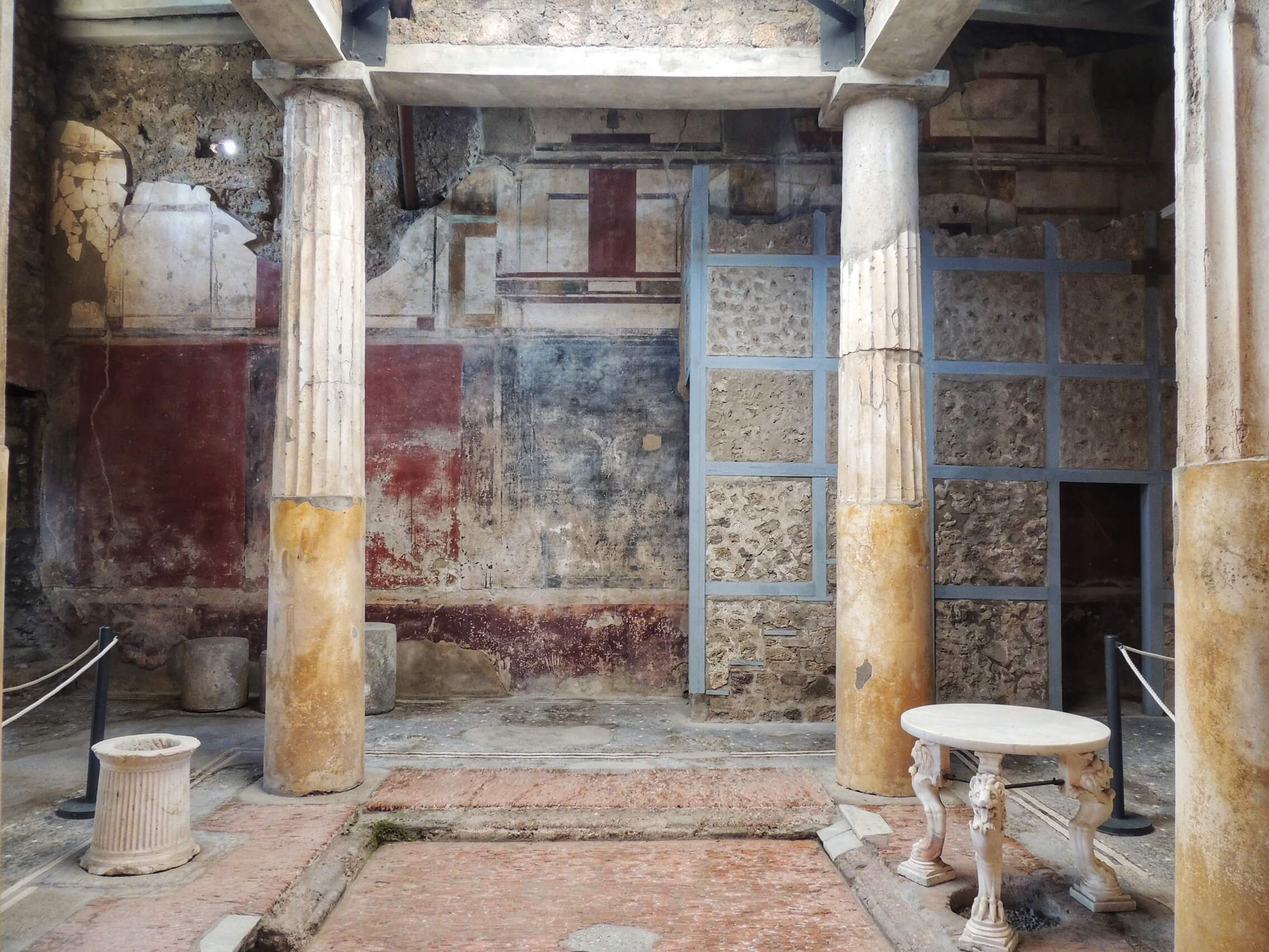
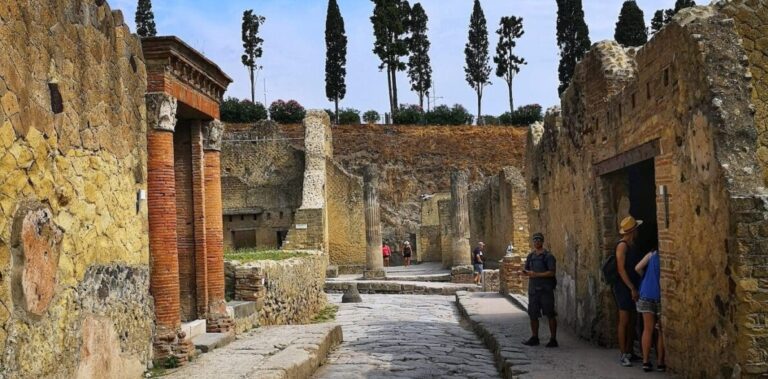
Why visit: Better preserved than Pompeii, far less crowded, and in many ways more emotionally immediate — this is ancient Roman life at its most viscerally intact.
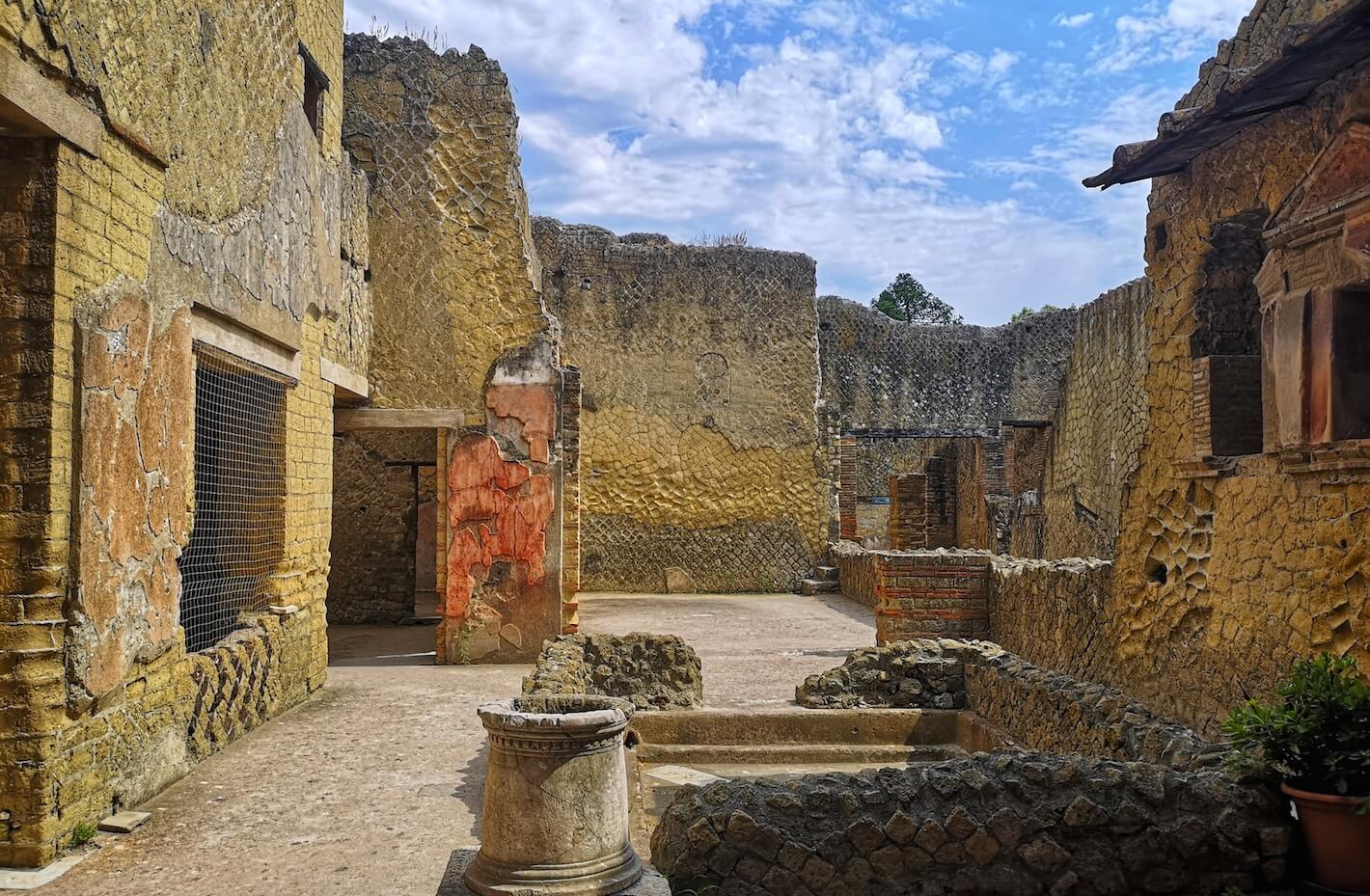
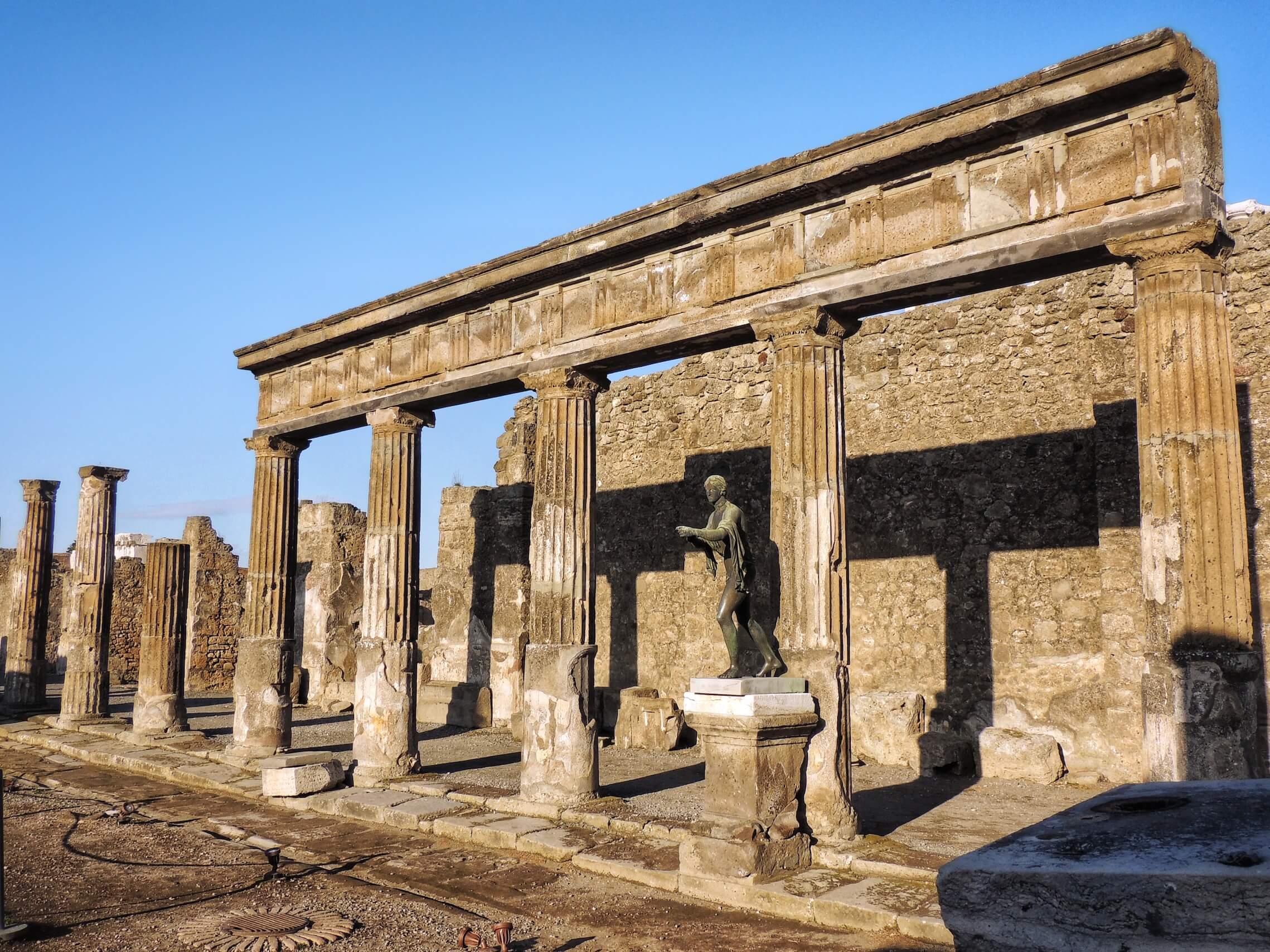
Pompeii’s fascinating but under-appreciated little brother, the small seaside resort of Herculaneum was also obliterated by the devastating eruption of Mount Vesuvius in 79 AD. The smaller town has actually survived in an even better state of preservation than Pompeii, thanks to a 16-meter thick wave of mud that buried Herculaneum whole.
As a result, buildings survive intact even including their upper stories, while a range of fossilized organic matter has resisted the ravages of time – it’s an eerie experience indeed peering into the stricken town’s dwellings and catching a glimpse of a wooden bed-frame, or a cloak hanging on a hook, untouched and unmoved for nearly two millennia.
The combined effect of these details — small, domestic, heartbreakingly ordinary — produces a particular quality of emotional encounter that even Pompeii, for all its drama, rarely matches.
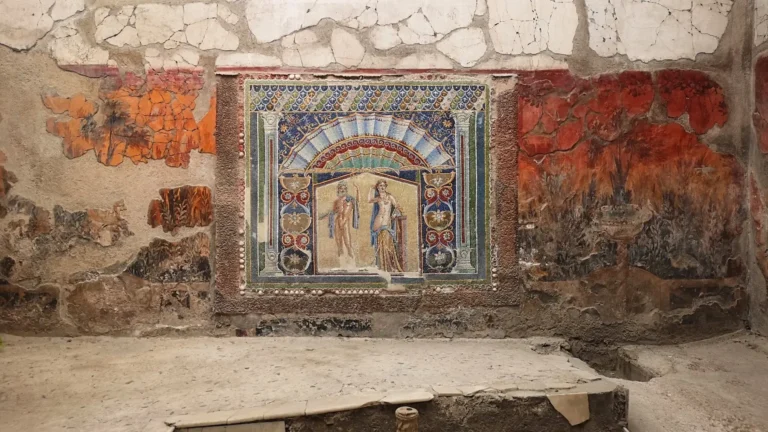
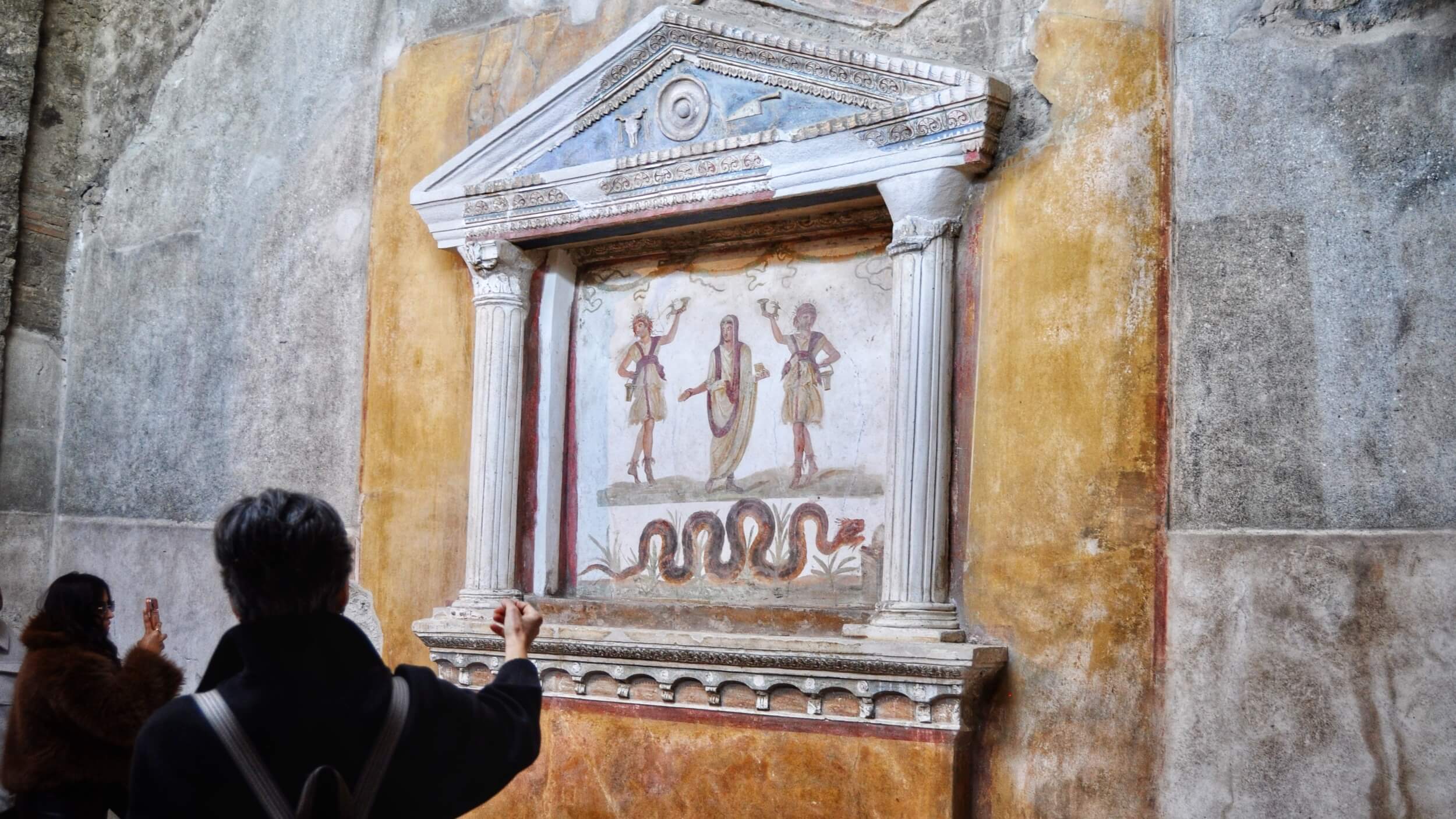
Beyond these snatches of everyday life silently speaking to us across the centuries, an array of superb artworks still adorn the walls of Herculaneum’s villas, temples and public spaces. Mosaics glimmer in the Mediterranean sun, while frescoes dazzle with the same chromatic vibrancy that they must have had when they were first painted in the Villa dei Papiri.
The sight of hundreds of skeletons huddled on what was Herculaneum’s shoreline, immolated by the blast-furnace heat of Vesuvius’ pyroclastic surges as they waited for a rescue that never came, provides a sobering human face to the town’s tragic fate.
Herculaneum is smaller and more manageable than Pompeii, and significantly less crowded. It is also, given its extraordinary state of preservation, arguably the better introduction to the Vesuvian world for a first-time visitor. The two sites together make for a natural pairing — we offer tours that combine both — and the short distance between them makes the logistics straightforward.

How to Visit
Getting there: Herculaneum is easily reached on the Circumvesuviana train line from Naples Porta Nolana or Sorrento — get off at Ercolano Scavi, from where it’s a ten-minute walk downhill to the entrance.
Tickets: €13 for adults; combination tickets with Pompeii and other Vesuvian sites are available and represent good value if you’re planning multiple visits.
Time needed: 2–3 hours for a thorough visit.

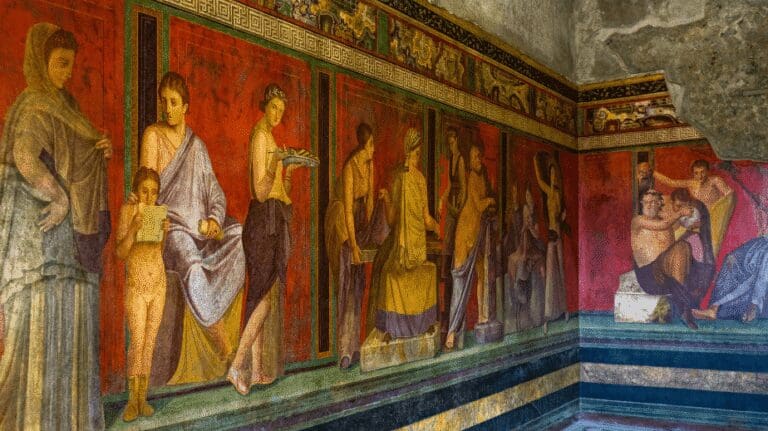
Why visit: The greatest cycle of ancient Roman painting in existence, hidden at the edge of Pompeii where most visitors never think to look.
Here is something most visitors to Pompeii never discover: at the western edge of the archaeological park, just inside the city walls and a fifteen-minute walk from the main entrance, stands a large suburban villa that contains what is widely considered the most important surviving example of ancient Roman painting.
The Villa of the Mysteries is technically within the Pompeii site, but it sits so far from the main thoroughfares that many visitors complete their entire tour of Pompeii without ever finding it.
This is a serious omission. The villa’s main room – the so-called Hall of the Great Frieze – is decorated with a continuous painted cycle that runs around all four walls at near life-size scale, depicting what appears to be a sequence of initiation rites into the cult of Dionysus. Twenty-nine figures, human, divine and somewhere in between, move through the scene in a procession of reading, sacrifice, flagellation, terror and ecstatic dance.
The painting dates to around 60–50 BC and is executed in the deep Pompeian red that has become synonymous with Roman domestic painting, a pigment derived from cinnabar that has retained its extraordinary intensity for over two thousand years.
The rest of the villa is also worth exploring: a wine production area, a well-preserved atrium, frescoed cubicula, and views across the ancient landscape that give a sense of the villa’s original position outside the city walls.
How to Visit
Getting there: The Villa of the Mysteries is within the Pompeii archaeological park – enter via the main Porta Marina entrance and follow signs west.
Tickets: Included on the Pompei Plus ticket (€25 for adults; pre-booking is recommended for busy periods, but you can also buy tickets at self-service machines on-site).
Time needed: Allow 30–45 minutes for the villa specifically, on top of your Pompeii visit.
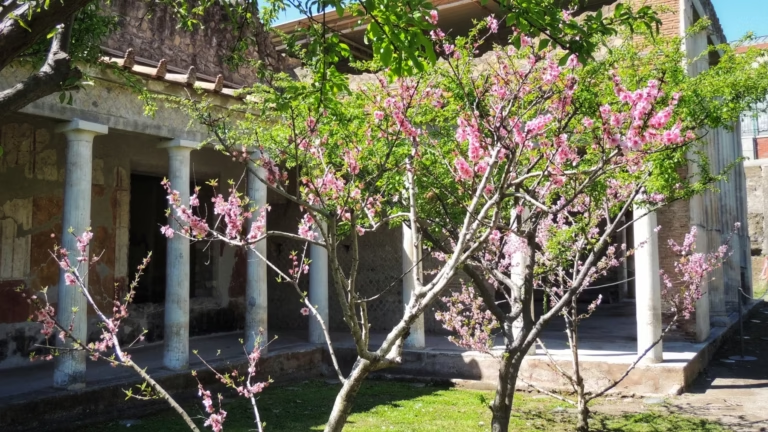
Why visit: The most opulent Roman villa to survive from antiquity, with frescoes so vivid and rooms so grand that the word “holiday home” feels entirely inadequate.
If Herculaneum shows us how the comfortable middle classes of Roman Campania lived, Oplontis shows us what money – serious, imperial, almost incomprehensible money – could buy.
The so-called Villa Poppaea is one of the largest and most lavishly decorated Roman villas ever excavated, a vast complex of gardens, colonnaded courtyards, swimming pools and frescoed reception rooms that once commanded sweeping views across the Bay of Naples from its waterfront position.
The coastline has shifted in the intervening two millennia, and the villa now sits inland in the rather less glamorous surroundings of Torre Annunziata; but within its walls the world of Roman aristocratic luxury survives with astonishing completeness.
The villa takes its popular name from Poppaea Sabina, the famously beautiful second wife of the emperor Nero, on the basis of an inscription found on an amphora during excavations. Whether she actually owned it remains a matter of scholarly debate, but the attribution is irresistible: Poppaea was one of the most powerful and controversial women in the Roman world, a figure of genuine political influence who reportedly persuaded Nero to exile and then execute his own mother Agrippina.
Her own end was not much better – according to ancient sources, Nero kicked her to death in a fit of rage whilst she was pregnant with their second child. The villa, if it was hers, outlasted her by fifteen years before Vesuvius ended the matter entirely.
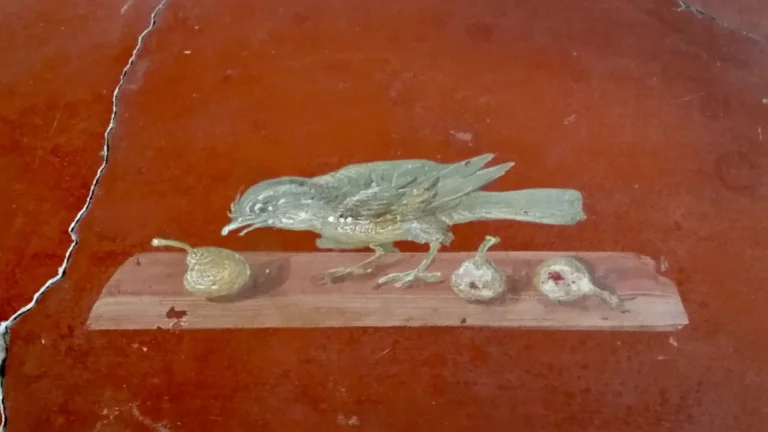
What survives is incredible. The Second Style frescoes that cover the walls of the villa’s main rooms are among the finest examples of ancient painting anywhere in the world – vast fictive architectural vistas that open the walls outward into imaginary colonnaded spaces, populated with peacocks, masks, festoons of fruit and flowers, and painted statues that seem to occupy real niches.
Although the villa was uninhabited at the time of Vesuvius’ eruption due to ongoing renovation works after an earthquake damaged the property, 54 bodies were discovered at the site by archaeologists during excavations – likely inhabitants of Pompeii who had taken refuge here during a doomed attempt to flee the stricken city.
How to Visit
Getting there: Take the Circumvesuviana train to Torre Annunziata; the villa is a short walk from the station.
Tickets: €8. Also included in the combined Grande Pompei area ticket (Pompeii, Herculaneum, Oplontis, Stabiae, Boscoreale), €30 and valid for 3 days.
Time needed: 1-2 hours. Oplontis is one of the least visited of all the Vesuvian sites — even in high season you may have it largely to yourself.
Why visit: Two aristocratic villas perched above the sea, almost entirely unvisited, with some of the finest ancient frescoes outside Naples – and a remarkable story of last-minute heroism to set the scene.
Of all the sites in this guide, Stabiae may be the one most likely to reward a visitor with the sensation of genuine discovery. The ancient resort town on the promontory above what is now Castellammare di Stabia was, at the time of the 79 AD eruption, one of the most fashionable addresses in the Roman world: a strip of clifftop villas belonging to the wealthiest families in the empire, that boasted commanding views across the Bay of Naples towards Capri.
Stabiae played an important role in the events of 79 AD. Pliny the Elder – admiral, naturalist, author of the encyclopedic Historia Naturalis, and perhaps the most important scientific mind of his age – was stationed at Misenum, across the bay, when Vesuvius erupted. His nephew, Pliny the Younger, later described in two letters to the historian Tacitus how his uncle initially launched his fleet to observe the eruption as a scientific phenomenon, then turned course when he realised that people on the shore were trapped and needed rescue.
Pliny landed at Stabiae, spent the night at the villa of a friend named Pomponianus, and the following morning set out for the beach to attempt departure. He collapsed there and died, almost certainly overcome by volcanic gases, and is the only named individual whose death in the eruption is historically documented.
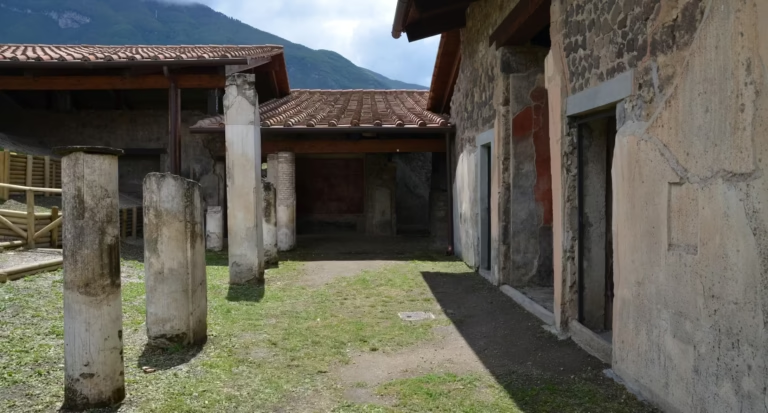
The two principal villas open to visitors, known as the Villa Arianna and Villa San Marco, are vast, labyrinthine complexes that have still only been partially excavated. Villa San Marco in particular, with its colonnaded garden, its swimming pool, its painted walls and its long belvedere terrace overlooking the sea, gives perhaps the clearest sense of any surviving site of what daily life in a great Roman coastal villa actually felt like. The frescoes here include some remarkable landscape paintings – thin, atmospheric, almost impressionistic views of harbours and coastlines – that feel almost modern.
Both villas are free to enter and almost invariably empty. There is something quietly extraordinary about wandering through rooms of this quality and antiquity with no other visitors around – just the painted walls, the sea view, and the silence.
How to Visit
Getting there: Take the Circumvesuviana train to Castellammare di Stabia; the villas are about 20 minutes on foot uphill, or a short taxi ride.
Tickets: Free entry.
Time needed: Allow 2 hours for both villas.
Why visit: A modest site with a monumental backstory – and a reminder that the most extraordinary treasures from the ancient world sometimes turn up in the most unexpected places.
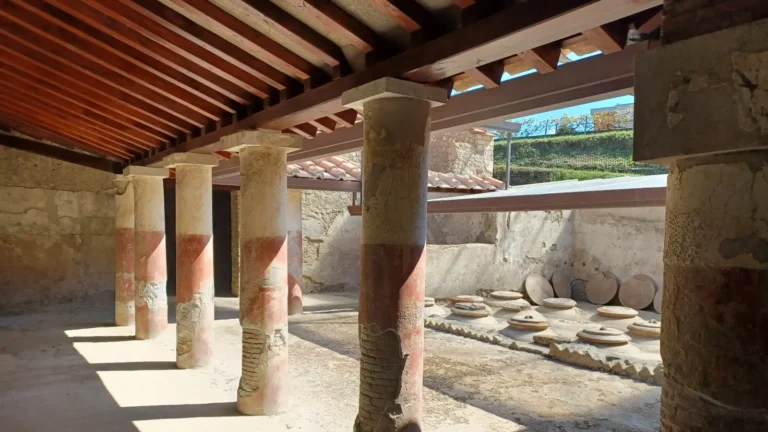
Boscoreale sits in the agricultural hinterland between Pompeii and Vesuvius; its name – literally “royal wood” – is a reminder of a time when this fertile volcanic soil was covered in vines and orchards rather than the suburban sprawl that surrounds it today. The ancient villas excavated here in the late 19th century were working farm estates rather than aristocratic pleasure grounds, and the Villa Regina (the principal site open to visitors) gives a vivid picture of the productive rural economy that underpinned the leisure culture of the great coastal villas further down the slope.
The wine-producing equipment preserved here is remarkable in its completeness: a large pressing room, a series of dolia – great ceramic storage vessels buried up to their necks in the ground to maintain temperature – and a torcularium, or press room, that makes the process of ancient viticulture suddenly tangible. Vesuvian wine was highly regarded throughout the Roman world, and the slopes of the volcano produced it in considerable quantities right up to the morning of the eruption.
But the real reason Boscoreale belongs in any serious account of the Vesuvian sites is a story that begins in 1895, when a farmer digging in his fields discovered the skeleton of a woman who had apparently fled her villa during the eruption carrying a wooden box. Inside the box was a treasure of extraordinary richness: 109 pieces of silver tableware, over 1,000 gold coins, and a collection of gold jewellery of the highest quality.
The Boscoreale Treasure, as it became known, was sold almost immediately after its discovery and dispersed across the world; the largest portion went to the Louvre in Paris, a significant part to the Metropolitan Museum in New York, and a small selection to the Naples Archaeological Museum. It remains one of the greatest hoards of Roman silver ever found. The small Antiquarium on site tells the story well, with casts and reproductions that give a sense of what was found and lost here.
How to Visit
Getting there: Boscoreale is best reached by car from Pompeii (about 10 minutes) or by local bus. It is not directly served by the Circumvesuviana.
Tickets: €8. Also included in the combined Grande Pompei area ticket (Pompeii, Herculaneum, Oplontis, Stabiae, Boscoreale), €30 and valid for 3 days.
Time needed: 1–1.5 hours. Boscoreale is best combined with: Pompeii or Herculaneum on the same day. On it’s own it doesn’t justify a dedicated trip, unless you have a lot of time on your hands, but as part of a broader Vesuvian itinerary it adds significant depth.
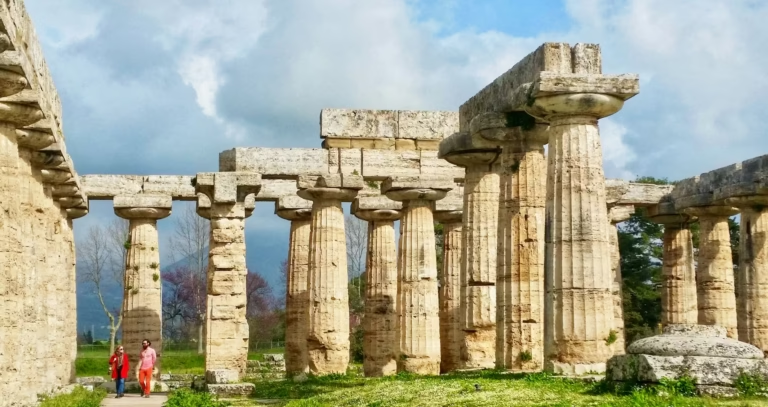
Why visit: Three Greek temples so perfectly preserved they make the Parthenon look unfinished — in a landscape of such beauty that you’ll wonder how this place is not more famous.
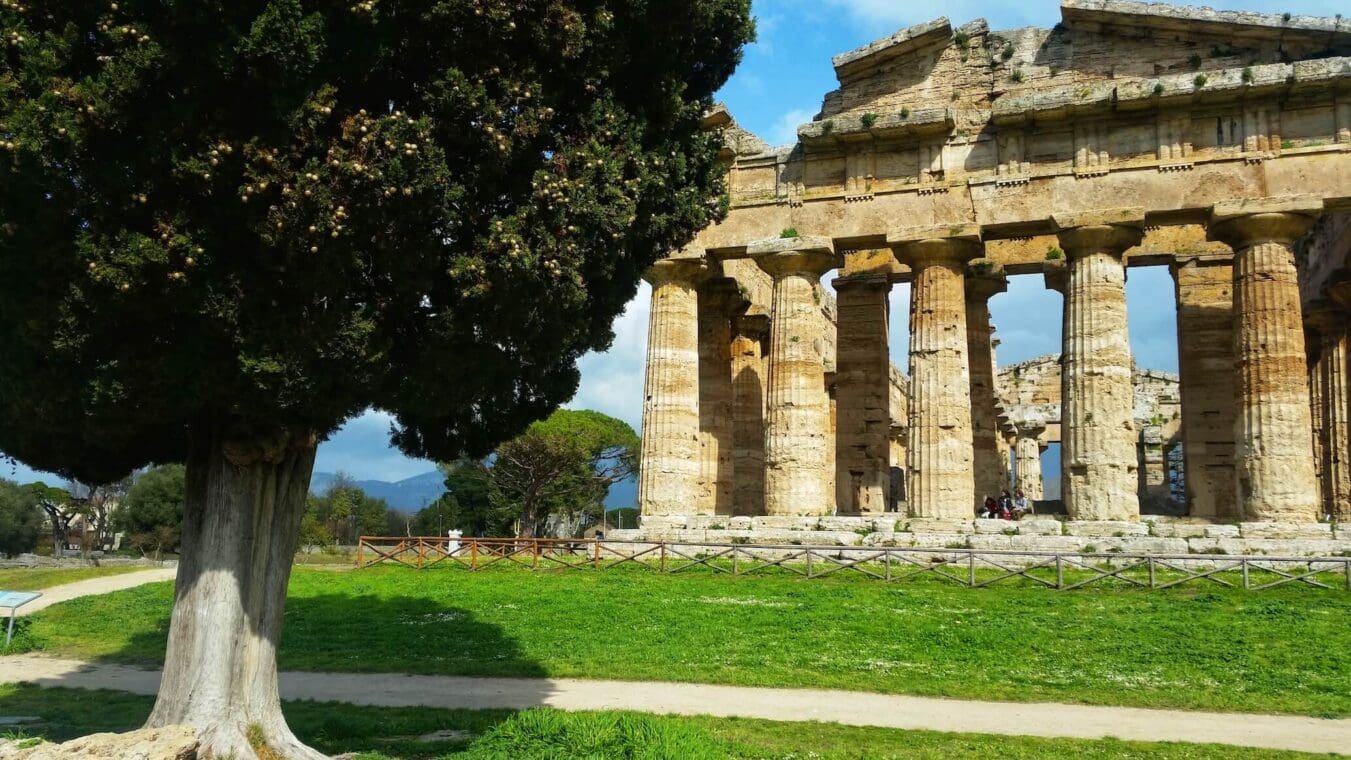
A hundred kilometres south of Naples, beyond the mountains of the Cilento and the flat coastal plain that stretches down towards Calabria, the ancient city of Paestum rises from the landscape with a suddenness that takes the breath away. All at once, three enormous Greek temples appear, standing in an open field surrounded by wild flowers and pine trees, intact after two and a half thousand years, as if the ancient world lives on.
Paestum was founded in the late 7th century BC by Greek colonists from Sybaris, part of the network of settlements called Magna Grecia (Greater Greece) that stretched along the southern coast of Italy and made this peninsula, for several centuries, one of the most culturally vibrant places on earth.
The city they built, originally called Poseidonia in honour of the god of the sea, grew prosperous on the fertile soil of the coastal plain and the trade routes of the Tyrrhenian coast, before passing successively under the control of a local Italic people called the Lucanians and then, in 273 BC, Rome. The three temples that survive here are among the best preserved in the world – better, in some respects, than anything in Greece itself, where centuries of spoliation, earthquake and the recycling of stone have taken a heavier toll.
The Temple of Hera I, the oldest of the three at around 550 BC, is squat and massively powerful, communicating an almost physical sense of divine weight. The Temple of Neptune (in reality also dedicated to Hera) dates to around 450 BC and is the finest of the three: a textbook example of mature Doric design, its proportions so close to perfect that it was used as a teaching model for generations of architects. The Temple of Athena, intermediate in date and size, completes the group.
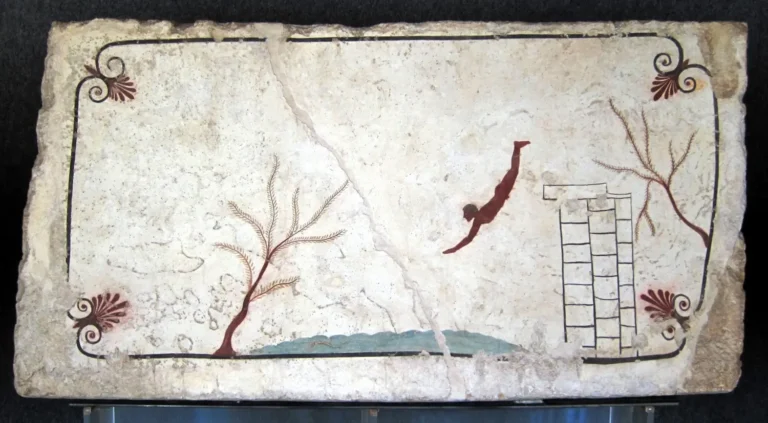
Whatever you do, make sure to visit the on-site museum when at Paestum. It houses the remarkable Tomb of the Diver: a complete painted burial chamber from around 480 BC, that features the only example of figured Greek painting on panel to survive from the ancient world.
The image on the lid of the sarcophagus, showing a human figure diving from a high platform into a blue expanse of water, is one of the most haunting and debated images in ancient art: at once a literal depiction of a dive and, almost certainly, a metaphor for the transition from life to death. Standing in front of it, in a room full of terracotta votives and funerary goods, is one of those museum experiences that stays with you.
How to Visit
Getting there: From Naples Centrale, take a Trenitalia regional train to Paestum station (approximately 1 hour 15 minutes); the site is a short walk from the station.
Tickets: €15 (March–November); €10 (December–February). Reduced rates for EU visitors aged 18–25; free for under-18s. Museum entry is included.
Time needed: A full half-day minimum. Try to visit Paestum in spring, when the temples are surrounded by wild orchids – it’s is one of the most beautiful sights in southern Italy.
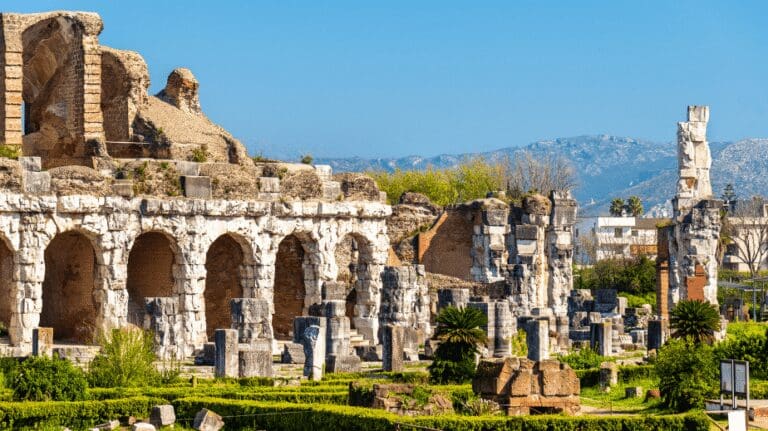
Why visit: The second largest amphitheatre in the Roman world, the birthplace of gladiatorial combat as we know it, and the place where Spartacus began his revolt – all hiding in plain sight in a small Campanian town.
Did you know that the second largest amphitheater of the ancient Roman world is located in a small town outside Naples? These days Santa Maria Capua Vetere is a rather unprepossessing town of 30,000 inhabitants in the outskirts of Caserta, but in antiquity the ancient city of Capua was one of the great cities of the pre-Roman world. Founded by the Etruscans and later absorbed by the Samnites, it became a Roman ally and eventually a Roman city of enormous importance.
Connected directly to the capital by the Via Appia, the queen of roads, it was described by Cicero as worthy of comparison with Carthage and Corinth. The city’s name was synonymous throughout the ancient world with luxury, with fine bronze work, with perfume and with pleasure. It was also synonymous with gladiators.
Capua’s gladiatorial school, known as the Ludus Campanus, was the oldest, largest and most prestigious in the Roman world, producing fighters of such quality that success on its sands was effectively a prerequisite for advancement to the great games of Rome. It was from this school, in 73 BC, that a Thracian slave named Spartacus escaped with around 70 companions, took refuge on the slopes of Vesuvius, and began the revolt that would eventually gather an army of 120,000 and bring the Roman republic to the brink of crisis before being crushed two years later.
The Anfiteatro Campano itself was capable of holding over 50,000 spectators, and it predates the Colosseum by at least a century. When the emperors of Rome wanted to build the defining monument of their power, it was Capua they looked to for the model. Whilst the building was extensively pillaged for building materials after the fall of Rome – its stones were used in the construction of a nearby Lombard castle whose outline is still visible – what remains is still extremely impressive.
The underground passages, or hypogea, that run beneath the arena floor are among the best preserved in the Roman world, giving a vivid sense of the machinery of spectacle: the lifts and trapdoors, the animal pens, the waiting areas for gladiators about to be sent up into the light.
A small but excellent museum adjacent to the site displays the sculptures that once decorated the exterior, including a remarkable series of bust portraits of deities that lined the arches of the upper tiers.
How to Visit
Getting there: Take a train from Napoli Centrale to Santa Maria Capua Vetere (approximately 1 hour); the amphitheater is about 20 minutes on foot from the station, or a short taxi ride.
Tickets: €10 for adults; €2 for ages 18–25; free for under-18s.
Time needed: 1.5–2 hours including the museum. The underground hypogea are the highlight -make sure they are open before you visit, as access can occasionally be restricted.
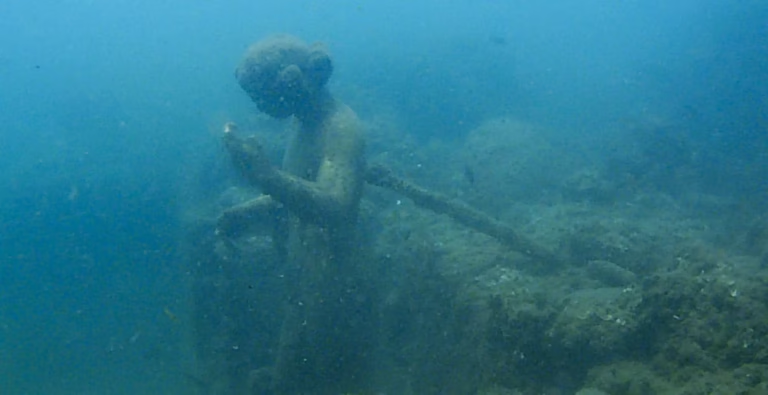
Why visit: An entire Roman city lying on the seabed, waiting to be explored – maybe the most surreal and unforgettable archaeological experience in Italy.
There is nowhere else quite like Baia. At the height of the Roman empire, this small promontory on the northern shore of the Bay of Naples was the ancient world’s most exclusive resort whose luxurious villas and sprawling spa complexes played host to the rich and famous of antiquity. Far from the prying eyes of the capital, Roman senators, consuls, emperors and businessmen would make the journey south to the Bay of Naples to let their hair down and indulge their pleasures.
Cicero had a villa here. So did Julius Caesar and his great rival Pompey. Nero spent so much of his reign at Baia that hostile commentators in Rome complained that the emperor was governing the empire from a pleasure resort. The combination of luxury, sea air and aristocratic company made “corrupt Baia” – in the words of the poet Propertius – “a coast fatal to chaste girls.”
What made Baia famous in antiquity has, over the centuries since the fall of Rome, made it literally disappear. The volcanic activity that heated its waters also caused the land on which the city stood to subside, and more than half of ancient Baia now lies beneath the waters of the Mediterranean. Still on dry land is a substantial portion of the ancient baths complex including the so-called Temple of Mercury, a concrete dome of 21 metres diameter punctuated by an oculus that predates the Pantheon in Rome by over a century.
What really makes Baia unmissable, however, is what lies beneath the water: a submerged city of streets, mosaic floors, marble columns, painted walls and intact statuary, colonised by fish and sea grass, preserved by the sea in a kind of cool, blue suspension. Regular boat tours with glass bottoms offer views of the submerged streets and statues without getting wet – it’s hard to describe the effect of the ancient city hovering in the blue below you like something from a dream. For those who want to go further, guided snorkelling and diving tours offer direct access to the ruins, and the shallow depth means that even inexperienced snorkellers can see the main features with relative ease.
Bear in mind that the statues visible underwater are casts; the originals now reside in the site’s excellent museum, but the context of seeing them in the water, surrounded by the ruins of the rooms they once decorated, adds a dimension that no museum display can replicate.
How to Visit
Getting there: Take the Ferrovia Cumana from Piazzetta Montesanto station in Naples towards Torregaveta; get off at Fusaro and walk approximately 15–20 minutes to the site.
Tickets: Tickets for the Parco Archeologico delle Terme di Baia in Baia cost €5 for adults and €2 for EU visitors aged 18-25. There is an additional fee to explore the underwater areas, which must be booked separately through licensed operators.
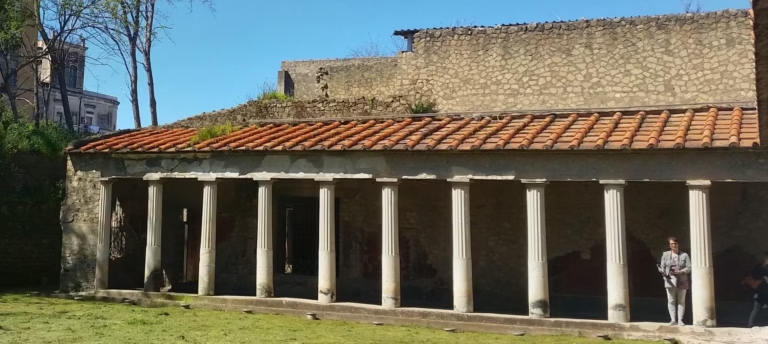
The sites in this guide span a considerable geographical range — from the Vesuvian towns clustered within thirty minutes of Naples to Paestum in the deep south of Campania and Capua to the north. A few planning principles are worth keeping in mind.
The Vesuvian sites — Herculaneum, Oplontis, Stabiae, Boscoreale and the Villa of the Mysteries — are linked by the Circumvesuviana railway and are best approached as a multi-day programme rather than a single exhausting day. The combined ticket covering all five sites offers excellent value and is valid for three days. Pompeii itself sits at the centre of this constellation, and any of our Pompeii tours can be extended or combined to include the neighbouring sites.
Paestum and Capua are both easily reached by train from Naples but are full-day commitments in their own right – Paestum particularly so, given its distance (plus, you can combine the ancient ruins with a beach visit).
Baia requires the most advance planning of any site in this guide, particularly if you want to explore the underwater portion — but it is also the most singular experience on this list – a real once-in-a-lifetime experience.
Plan Your Pompeii Visit Today!