Only have one day in Naples, or thinking about a day trip from Rome? Let me make the case for going, and show you exactly how to spend it.
I’m Gracelyn, an Italian-American who has called Rome home for over 20 years. As a licensed guide in the city, I’ve learned how to read a place quickly — how to find the thread that runs through a city’s history, food and daily life and follow it somewhere worth going. Over the years I’ve travelled extensively through Italy, and I can tell you that Naples is, without question, one of my absolute favourite cities in the country. I don’t let a year pass without at least one visit, usually two.
The question I’m asked most often by clients planning trips to the Amalfi Coast or Pompeii is some version of: “Should we go to Naples? We have a free day — is it worth it?” My answer is always the same: yes, you should, and yes, one day is enough to fall genuinely in love with it. Fair warning, though: it will almost certainly not be enough to satisfy you. Naples tends to do that.
If Rome is my home and my heart, Naples is something closer to my soul. There’s an energy in its streets that’s unlike anywhere else in Italy — the noise, the theatre of daily life, the banter between shopkeepers that sounds like dialogue lifted straight from a film you’ve been dropped into without warning. This itinerary is my attempt to distil that into a single day.
Follow it, and you’ll leave with a sense of the city that most visitors, rushing through on the way to somewhere else, never quite find.
Best Italy Tours
Visit Naples!

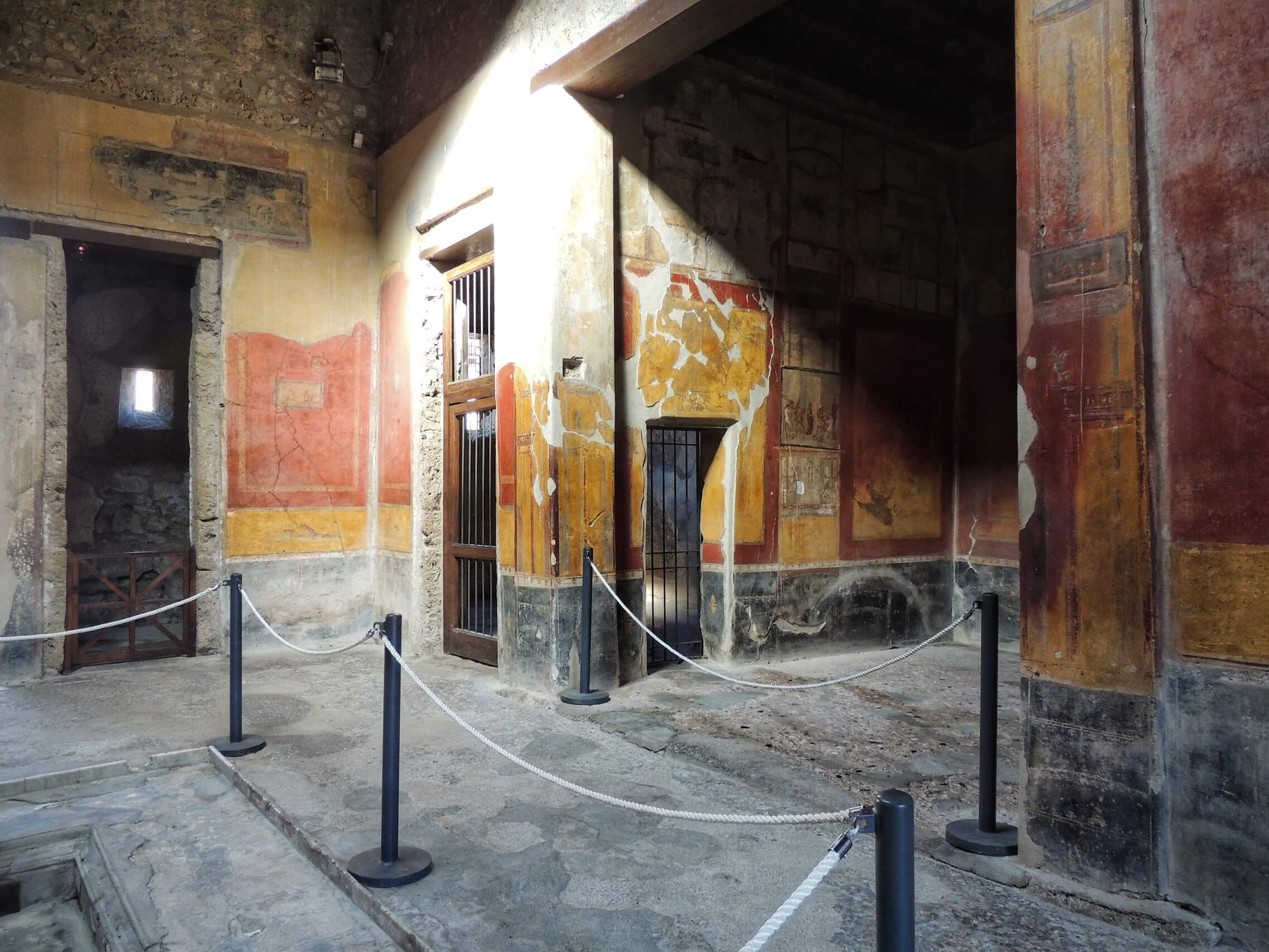
What Makes Naples so Special?

There are cities you visit and cities that visit you. Naples is emphatically the latter. The assault begins the moment you step off the train. Before you’ve oriented yourself, the city is already working on your senses — the warm, yeasty drift of pizza from a wood-burning oven, the sugar-dusted sweetness of fresh pastry, the salt and diesel tang of the waterfront.
The colours seem to operate at a higher frequency here: narrow vicoli strung with the blue and white flags of the Napoli football team, shop fronts draped in bright red coral horns against the evil eye, Pulcinella dolls grinning from every doorway. Naples does not ease you in.
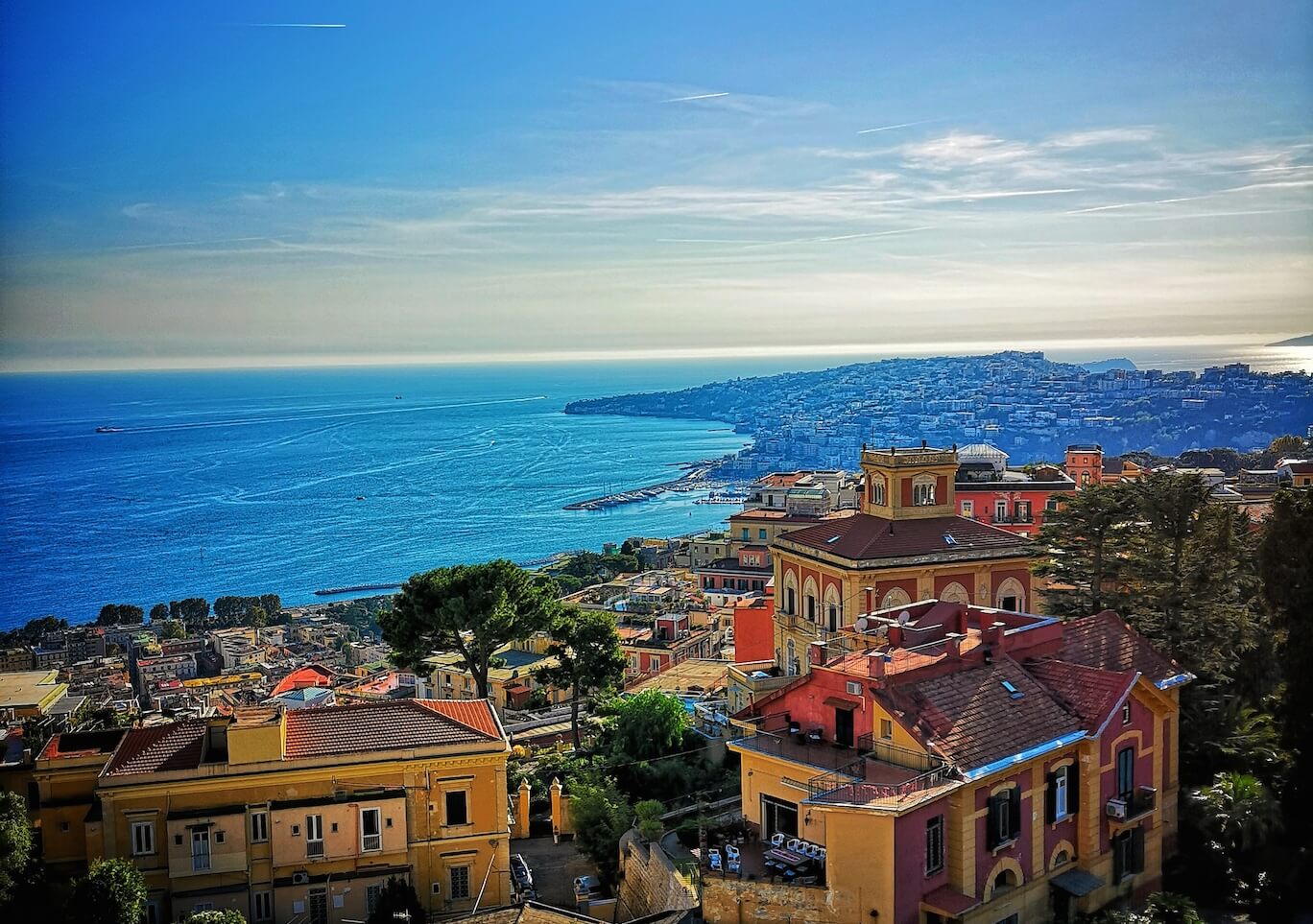
Down by the bay, bleached stones line the edge of water so deeply blue it looks painted, as Vesuvius looms menacingly but beautifully across the gulf. Walking along the lungomare, you half expect Sophia Loren to materialise at a street food stall, selling fried pizza just as she did in one of her earliest films, The Gold of Naples. The city has that quality — cinematic, vivid, slightly unreal, and entirely itself.
For those with more than a day, Naples rewards deep exploration: world-class museums, a legendary opera house, a waterfront that rivals any in the Mediterranean, and Pompeii waiting just half an hour down the road. But if you’re arriving by train from Rome and working against the clock, what follows is a route through the beating heart of the city — a concentrated taste of something that will, I promise you, stay with you long after you’ve left.
MORNING
09:00
1. Arrival at Napolo Centrale and Breakfast

Arriving at Napoli Centrale, the advice is simple: don’t linger. The area around the station is, to put it charitably, functional rather than scenic, and the city’s real pleasures lie elsewhere. What you need right now is coffee and sugar, and fortunately, one of the finest addresses in Naples for both is just around the corner.
Antico Forno Attanasio has been producing sfogliatelle since 1930, and it remains one of the best places in the city to try this most Neapolitan of pastries. The sfogliatella — all shattering, paper-thin layers of pastry encasing a warm filling of ricotta and candied citrus — is a small miracle of texture and flavour, and its origins are as romantic as the city itself: legend has it the recipe was dreamed up by nuns in a remote Amalfi Coast convent in the 17th century, before eventually making its way to Naples and becoming a permanent fixture of daily life.
The motto displayed inside the bakery says it all: “Naples has three beautiful things: the sea, Vesuvius and sfogliatelle.” Hard to argue with that.
Follow it with an espresso taken standing at the counter of a nearby bar — the only correct way to drink coffee in this city — and you are ready to go.
09:45
2. The Cathedral and San Gennaro

The Cathedral of Naples — officially the Cathedral of the Assumption of Mary, though everyone calls it the Duomo — has been at the spiritual centre of this city for seven centuries. Commissioned by Charles I of Anjou in the late 13th century and completed in 1314, it layers Gothic, Renaissance and Baroque across its long, grand interior in a way that feels entirely Neapolitan: not always tidy, but never less than magnificent.
At its heart is one of the most distinctive religious traditions in Italy: the liquefaction of the blood of San Gennaro, the city’s patron saint. Three times a year the faithful gather to watch as the dried blood of the 4th-century martyr — kept in two ancient vials — liquefies. Whether or not you share the faith, the intensity of devotion the miracle inspires is genuinely moving. When it fails to occur, the city takes it as an omen. The chapel dedicated to the saint is among Naples’ finest Baroque interiors, with frescoes by Domenichino and Lanfranco that are worth a long, slow look.
Before you leave, seek out the entrance to Santa Restituta, an early Christian basilica from the age of Constantine built into the cathedral complex — itself raised over a temple to Apollo. Beneath it lies a 4th-century baptistry with early mosaics that feel astonishing in their age and intimacy. Naples, as ever, goes deep.
10:30
3. Walk the Decumanus (Spaccanapoli)

Crossing out of the Duomo and onto Via dei Tribunali, you’re walking one of the oldest streets in the Western world. This is the decumanus maximus — the main east-west axis — of the ancient Greek city of Neapolis, founded in the 5th century BC by settlers as part of Magna Grecia, or Greater Greece. The city became part of the Roman Empire in 326 AD and barely changed the street plan. In many respects, neither has anyone since.
Today it’s alive with pizzerias, pastry shops, street food stalls and the kind of cheerful, unstoppable energy that makes Naples unlike anywhere else in Italy. The buildings may have changed over two and a half millennia, but the function of this street — a place to move through, to meet, to eat, to argue — is exactly what it always was. Walk it slowly, dodging scooters, dogs and children as you go. There’s always something happening.
11:00
4. A Stroll Down San Gregorio Armeno

If there is one detour I would insist upon in the historic centre, it is this one. Via San Gregorio Armeno is one of the strangest, most charming and most distinctly Neapolitan streets you will ever walk down, a narrow lane lined almost entirely with the workshops and showrooms of artisans producing handmade presepe — Nativity scene figures — in terracotta.
The tradition of the Neapolitan presepe stretches back to the 13th century, and the craftsmanship on display here is remarkable: these are not tourist trinkets but genuinely handmade, one-of-a-kind pieces, each figure painted and clothed by hand. I collect one every year. I have never managed to walk the length of the street without stopping at least twice. In the weeks approaching Christmas the street becomes practically impassable, but at any time of year it has an energy and colour all of its own.
You’ll also find the full cast of Neapolitan folk culture along the way — Pulcinella masks, coral horns, figures from the commedia dell’arte tradition that has entertained Neapolitans since the Middle Ages. Pulcinella himself — the hook-nosed, white-costumed trickster who is in many ways the spirit of the city — has been a fixture of Neapolitan street theatre since the 16th century. Don’t be entirely surprised if you encounter a costumed version working the crowd in the street. In Naples, the theatrical and the real have always had a complicated relationship.
The street takes its name from the church at its centre, San Gregorio Armeno, a quietly beautiful Baroque church from the 16th and 17th centuries that holds the relics of the 4th-century Armenian bishop who converted his country from Zoroastrianism to Christianity. Worth a look inside when open.
11:30
5. A Stop for Coffee and Pastries in Piazza San Domenico

Turn right at the end of Via San Gregorio and you’ll find yourself, within a minute or two, in one of the loveliest squares in the city. Piazza San Domenico Maggiore takes its name from the imposing Gothic church that commands one side of it, reached by a broad staircase that functions, as Neapolitan church steps invariably do, as an unofficial gathering point for students, locals and anyone who needs a moment to sit and think.
The square has serious intellectual credentials. The philosopher Giambattista Vico was baptised in the church; Thomas Aquinas studied and taught at the adjacent Dominican convent in the 13th century; and for a period, the great Renaissance mage Giordano Bruno — later burned at the stake in Rome for his cosmological ideas — walked these stones as a young monk. Naples has always attracted brilliant, difficult, complicated minds.
I never pass through without stopping at Scaturchio, the historic pasticceria that has anchored one corner of the square since 1905. The babà — a small cake soaked in rum syrup, of which Naples considers itself the undisputed world capital — is exceptional here, and their version shaped like Vesuvius is both delicious and extremely hard to resist photographing. The chocolate medallions with rum filling are, I’ll warn you now, dangerously good. Buy extras for the journey home if you have any self-control at all, which after a morning in Naples you may not.
AFTERNOON
12:30 PM
6. A Simple Neapolitan Lunch

By now you’ve earned some lunch . And one of the many things to love about Naples is that eating well here requires almost no effort at all — the city’s food culture runs so deep that even the most unassuming doorway tends to conceal something worth eating.
Keep it simple if you can. Step into a traditional salumeria and you’ll find the building blocks of a perfect lunch ready and waiting: fresh buffalo mozzarella, good prosciutto, spicy local salami, olives, bread that tastes like bread should. Add a glass of local wine or a cold Peroni and you have one of those meals that somehow exceeds the sum of its parts.
You’ll find innumerable places around the historic center that fit the bill. Salumeria Rafele ‘O Lattaro, right on Via dei Tribunali, is a reliable favorite; Alimentari Coscia, a little further along, is another. Neither will disappoint.
If you want something more structured, Mangi & Bevi — a magnificent little trattoria that perfectly embodies the Neapolitan genius for unpretentious, high-quality cooking at prices that feel almost unreasonably fair — serves a multi-course lunch at communal tables alongside a largely local clientele. It is loud, cheerful, and completely wonderful.
2:00 PM
7. The Cappella Sansevero and The Veiled Christ
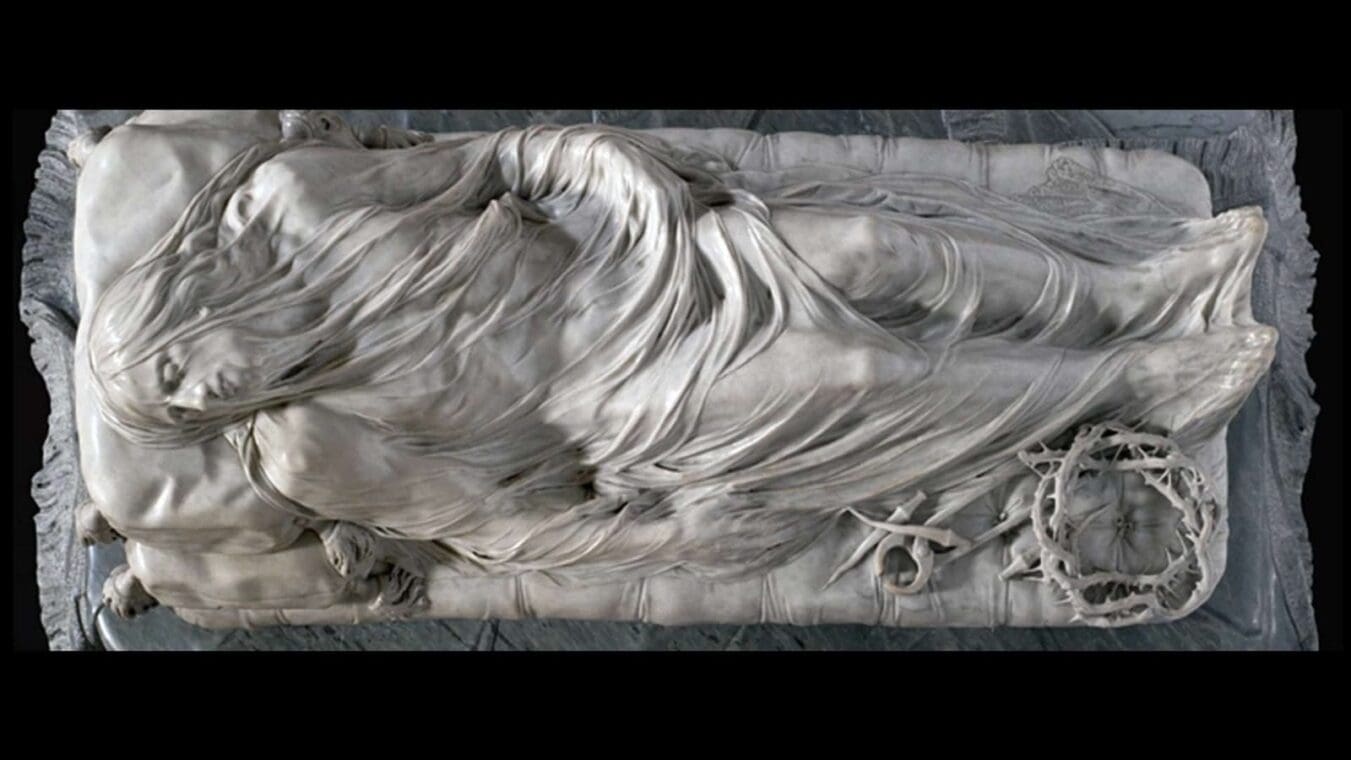
As someone who has the privilege of admiring Michelangelo’s Pietà on a near-weekly basis, I know something about the power great sculpture has to stop you in your tracks. Few works of art can do that — reach inside you and produce something close to disbelief. The Cristo Velato, or Veiled Christ, in Naples’ Cappella Sansevero is one of them.
Carved from a single block of marble by Giuseppe Sanmartino in 1753, the life-size figure of Christ lies beneath a sheer shroud so convincingly rendered that early viewers refused to believe it was stone. You can see his face, his muscles, the veins on his hands, the wounds on his feet. Canova, no less, declared he would give ten years of his life to have made it. The rumour at the time was that an alchemist had taught Sanmartino how to petrify real cloth. You’ll understand why, when you see it.
But the chapel itself is equally extraordinary. It was the obsession of Raimondo di Sangro, the eccentric 18th-century Prince of Sansevero — inventor, philosopher, alchemist and provocateur — who filled every recess with sculpture and designed an elaborate iconographic scheme mapping the rational mind’s path toward enlightenment.
Descend to the underground chamber and you’ll find his most unsettling legacy: two human skeletons with their circulatory systems preserved in vivid, disquieting detail. Modern analysis has since revealed the veins are silk, wire and beeswax — but Raimondo never bothered to correct anyone.
Book ahead. Entry is limited and this one is not to be missed.
3:30 PM
8. Santa Chiara and Cloister

Continuing through the old city, you’ll arrive at Santa Chiara — a medieval complex that has survived war, time and the particular chaos of Naples with its spirit remarkably intact. The church itself was devastated by Allied bombing in 1943 and painstakingly rebuilt, though it still shelters some extraordinary original works, including the towering Gothic tomb of King Robert of Anjou at the high altar, dating to 1343.
The real revelation, though, is the cloister. Step through and the noise of the city simply falls away. In the 18th century, architect Domenico Antonio Vaccaro transformed the ancient garden into something almost dreamlike: 72 octagonal columns and the benches connecting them are covered from top to bottom in hand-painted majolica tiles — vines, citrus trees, farm scenes, figures going about their daily lives, all in those warm Mediterranean blues and yellows. The nuns who once contemplated here must have found it a very beautiful world to retreat into.
Don’t overlook the small museum, which opens onto a section of ancient Greco-Roman ruins sitting quietly beneath the city. Naples has a habit of doing that — pulling back a curtain to reveal another layer of itself entirely.
4:15 PM
9. Shopping on Via Toledo

A short walk from Santa Chiara brings you to Via Toledo, and to one of the great pleasures of any Naples visit: the passeggiata. This long, arrow-straight road has been the city’s main artery for nearly five hundred years, laid out in the 16th century by the Spanish Viceroy Don Pedro de Toledo. Travellers on the Grand Tour walked it; today it belongs to everyone.
It’s a wonderful sensory jumble — international chains sit beside small Neapolitan shops, street food vendors, and the kind of animated, shoulder-to-shoulder foot traffic that reminds you this is a city that genuinely lives outdoors. Don’t be in too much of a hurry. Let it carry you along at its own pace, and it will deposit you, almost without noticing, at one of the city’s most impressive piazzas.
5:00 PM
10. Piazza del Plebiscito

Piazza Plebiscito stands as a magnificent testament to Naples’ rich history and cultural legacy. Once the royal capital of the Kingdom of Naples, this sweeping square is one of the largest public spaces in the city, drawing visitors from all over the world. Its grandeur and historical significance make it a must-visit landmark for anyone exploring Naples.
At the center of Piazza Plebiscito, you’ll find the impressive Royal Palace of Naples, once the residence of the Bourbons. This stately building, along with the nearby Teatro di San Carlo – one of the oldest opera houses in Europe – showcases the opulence and artistic spirit that flourished in Naples during the 18th century (both sites are open to visits). In fact, during this era, Naples was considered the cultural capital of Europe, surpassing even Paris in its artistic influence.
As you wander through these elegant sites, the lavish architecture and rich history come alive, offering a glimpse into a time when Naples was at the forefront of European culture.A delightful tradition awaits first-time visitors to Piazza Plebiscito: the challenge of crossing the square blindfolded.
From the entrance of the Royal Palace to the equestrian statues of Ferdinando I and Carlo III at the center, this approximately 170-meter stretch presents a fun and whimsical challenge. Due to the square’s unpredictable slope, many who attempt this feat find themselves going in circles!
5:30 PM
11. Caffè Gambrinus

Standing in the vast sweep of Piazza del Plebiscito — the Palazzo Reale on one side, the church of San Francesco di Paola with its borrowed Pantheon grandeur on the other — it would be a serious mistake not to cross the square and take a coffee at Caffè Gambrinus.
This is not just any café. Opened in 1860, it is one of the oldest and most storied coffee houses in Italy, a gilded, mirrored, splendidly over-the-top room that has served artists, intellectuals, writers and royalty for a century and a half. Oscar Wilde came here. Gabriele D’Annunzio had his regular table. Pope Francis stopped in for breakfast on a visit to the city in 2015. The coffee — small, intense, served in a pre-warmed cup — is among the very best you’ll drink anywhere in Italy, which is saying something.
While you’re there, look out for the caffè sospeso — the “suspended coffee.” The custom, born here in Naples, involves paying in advance for an extra coffee that any stranger who needs it can later claim without embarrassment. On a recent visit with friends from San Francisco, I explained the tradition as we stood at the counter.
Within minutes, they had paid one forward — and shortly after, an elderly gentleman came in, caught the barista’s eye, and was handed his espresso and his small glass of sparkling water (always sparkling, always, in Naples) without a word exchanged. My friends were thrilled to see their kindness in action, and to have participated in this most Neapolitan of coffee rituals.
EVENING
6:00 PM
12. A Walk by the Bay

If your legs have anything left in them — and I promise it’s worth finding out — make your way down to the waterfront. It’s no more than ten minutes from the Piazza, and the bay of Naples at this hour is one of the great urban views in Europe: the long curve of water, the elegant 19th-century lungomare, the famous hotels and restaurants facing the sea, and Vesuvius presiding over it all from across the gulf with its characteristic mix of beauty and latent menace.
My preference is always to walk out past the grand hotels towards the Castel dell’Ovo — the ancient Egg Castle — that juts into the bay on a small islet. The castle itself has a history stretching back to the Romans; its name supposedly derives from a legend that the poet Virgil hid a magical egg in the foundations, with the fate of the city tied to its safety. Naples has always liked its myths.
Descend the stone stairs on the far side to the small harbour below, where brightly coloured fishing boats bob alongside each other and a handful of bars set out their tables facing the open water.
This is, in my experience, the perfect spot to be when the light starts to shift. Watch the sky change over the sea and the volcano, and for a few minutes, feel extremely fortunate to be exactly where you are.
7:00 PM
13. Aperitivo Time in Piazza Bellini

As the evening properly sets in, make your way back into the old city (to save time it might be worth getting a taxi) and find Piazza Bellini. If Piazza San Domenico is where Naples thinks, this is where it loosens its collar. By early evening, the square fills with students, artists and locals settling in for the long, sociable Neapolitan night, glasses in hand, conversations overlapping.
Caffè Letterario Intra Moenia and Primo Maggio next door are both reliable options for a spritz or a Negroni — grab a table outside and you’ll be drinking in the shadow of the ruins of the ancient Greek city walls, which sit in quiet excavation at the square’s edge, entirely untroubled by the cocktail hour going on around them. Only in Naples!
Around the corner, Libreria Berisio is one of those places you genuinely don’t expect to find: a bookshop-bar with shelves running floor to ceiling — antiquarian volumes, art books, the kind of collection you could lose an hour in — where you can browse a first edition with a remarkably good cocktail in hand. It has become, deservedly, one of the neighbourhood’s most atmospheric addresses. Berisio is also a great spot for a post-dinner drink as it’s open late and always lively, so you should be able to build it into your schedule at some point. Go. You won’t regret it!
8:30 PM
14. Dinner! Yes, That Means Pizza

There is really only one answer to dinner in Naples, and you already know what it is.
Pizza was invented and perfected here, and the Neapolitans have never let anyone forget it. The Associazione Verace Pizza Napoletana, which certifies restaurants meeting the exacting standards of traditional Neapolitan pizza production, is your friend: look for their sign (a masked Pulcinella pulling a pizza from the oven) and you are in safe hands.
For the definitive experience, L’Antica Pizzeria da Michele is the place. Over a century old, famously spartan in décor and defiantly minimal in its ambitions — the menu offers exactly two options, Margherita and Marinara, and requests for modifications are not entertained — it produces pizza that has made believers of food writers, chefs and sceptics from around the world. The queue is part of the ritual.
Gino e Toto Sorbillo, right on Via dei Tribunali, is regularly cited as the city’s best and is always worth the wait. Pizzeria Starita, slightly further out, offers a few more creative departures from tradition without sacrificing quality. And for a genuine piece of Neapolitan culinary history, seek out Da Attilio alla Pignasecca, widely credited as the birthplace of the stuffed crust pizza — a claim that predates any fast food chain by several decades, and tastes considerably better.
By the time you walk out into the night, full and slightly disbelieving that a day can hold this much, you’ll already be planning your return visit – in Naples, one day really is never quite enough.

Getting Around Naples

Naples is best explored on foot, and the itinerary in this guide is designed to be walked entirely — the historic centre is compact, and much of what makes the city worth visiting is best discovered at street level, at a pace slow enough to notice things.
That said, a few practical notes are worth keeping in mind. The city’s metro system is efficient and reasonably easy to navigate, with Line 1 connecting the historic centre to the waterfront, the central station and beyond. It’s particularly useful for arriving from Napoli Centrale (Piazza Garibaldi station) and heading into the heart of the old city. Naples also has one of Italy’s most architecturally ambitious metro networks — several stations, particularly Toledo and Università on Line 1, double as genuine works of contemporary art and are worth a look in their own right.
Taxis are widely available and metered, though as in any busy Italian city, agree on the fare or confirm the meter is running before you set off. Ride-hailing apps including Uber and the local alternative itTaxi also operate in the city and can be a more straightforward option for visitors.
One thing to bear in mind: Naples traffic is famously intense, and the narrow streets of the centro storico are not designed for cars. Walking will almost always be faster — and considerably more enjoyable — than trying to navigate the old city by road.
FAQ: Visiting Naples

Is one day enough in Naples?
One day is enough to get a meaningful and genuinely memorable taste of Naples — but almost everyone who spends a day here leaves wishing they had longer. The itinerary in this guide covers the historic centre’s most essential sights, some of the city’s best food stops, and a walk along the waterfront at sunset, all within a single day. That said, Naples rewards extended stays: the National Archaeological Museum alone deserves half a day, and neighbourhoods like the Quartieri Spagnoli and Chiaia have a character all of their own. Think of one day as an introduction that makes the case for coming back.
What is the best way to spend a day in Naples?
Start early, eat well, and walk. The historic centre — a UNESCO World Heritage Site — is the city’s soul, and most of its great monuments, churches, street food and atmosphere are concentrated within a relatively small area that can be covered comfortably on foot. This guide traces a route from the central station through the ancient Greek and Roman street grid of the centro storico, taking in the Cappella Sansevero, Santa Chiara, the Duomo, Via Toledo and the waterfront. For most visitors, this combination of history, food and local colour gives the clearest and most satisfying sense of what makes Naples unlike anywhere else in Italy.
Is Naples safe for tourists?
Naples has a reputation that, in many respects, the city has long since outgrown. The historic centre — where virtually all of the sights in this guide are located — is busy, lively and generally very safe for tourists during the day and into the evening. Standard urban precautions apply: keep an eye on your belongings in crowded areas, be alert around the central station, and take taxis or rideshare apps after late nights rather than walking in unfamiliar areas. Beyond that, Naples is a city of enormous warmth and hospitality, and the vast majority of visitors find it far more welcoming than its reputation might suggest. Don’t let outdated clichés put you off one of Italy’s most extraordinary cities.
Do I need to book in advance for Naples?
For most of the city’s churches, streets and piazzas, no advance booking is needed or possible — you simply arrive. The major exception is the Cappella Sansevero, home to the Veiled Christ, where entry numbers are limited and queues can build quickly, particularly in high season. Booking ahead online is strongly recommended. Similarly, the city’s most famous pizzerias — L’Antica Pizzeria da Michele in particular — can have significant waits at peak times; arriving early or slightly off-peak hours will save you time. For everything else, Naples is a city that rewards turning up and seeing what happens.
Book Your Naples Experience