We think Rome is a great city to visit at any time of year, but if you forced us to pick our favorite season, there could only be one answer. Not summer, when the city bakes and tourist numbers peak. Not the atmospheric grey of January (although winter in the Eternal City certainly has its own charm).
No, it has to be Spring, when the weather is mild, the light is extraordinary, the wildflowers are growing between the ancient stones of the Forum, and Rome is simultaneously at its most beautiful and its most liveable.
This guide covers the full range of what Rome has to offer between March and May: the iconic spring sights, the parks and gardens, the food and markets, the cultural events of 2026, the quieter neighbourhoods and hidden pleasures, and the best day trips from the city as the landscape around it comes back to life.
Best Rome Tours
Explore the Eternal City this Easter

Why Visit Rome in Spring?
Spring is the season when the city seems to find itself. People throng the outdoor terraces again. The parks recover their colour. The markets overflow with artichokes, strawberries and wild asparagus. The evenings lengthen gradually toward summer, and Romans fully emerge from their winter rhythms with a collective relief that is almost palpable in the streets.
For visitors as well as locals, spring offers something that no other season can match: the city’s greatest sites in ideal conditions – good light, comfortable temperatures, and crowds that are not yet overwhelming. A full calendar of events and a mouthwatering seasonal food culture only add to the charm. If you are planning a first visit to Rome, or returning after a long absence, Spring is when you should come.
If your visit falls over Easter, our dedicated Easter in Rome guide covers the full Holy Week programme in detail:

The Spanish Steps in Bloom
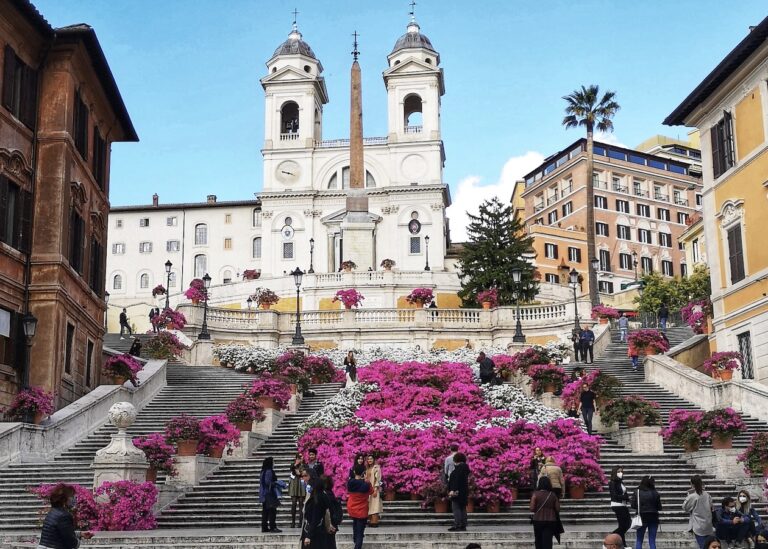
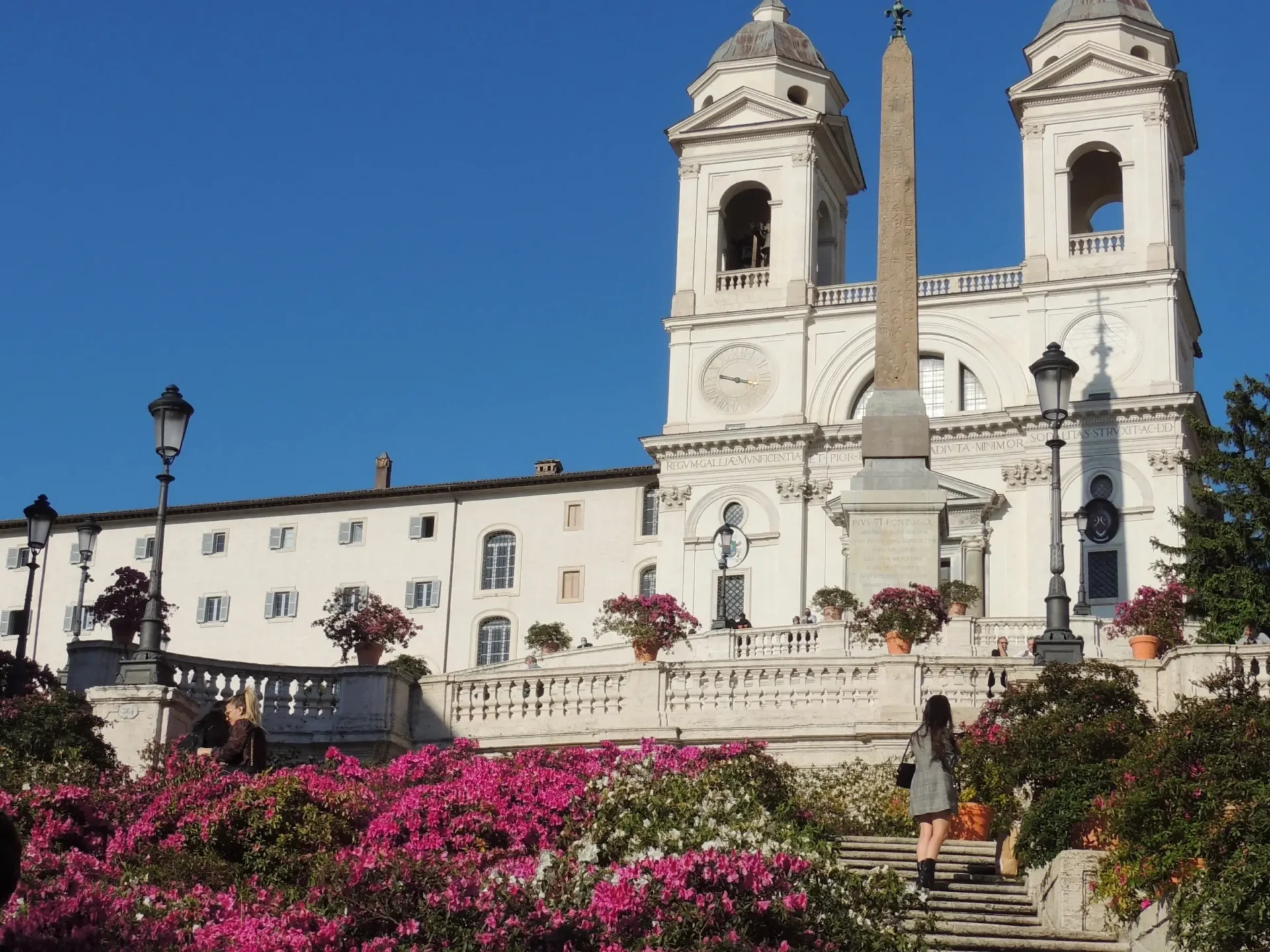
The single most vivid announcement that spring has arrived in Rome is the appearance of the azaleas on the Spanish Steps – an annual floral display that transforms one of the city’s great Baroque set pieces into something even more theatrical than usual, and that has been stopping passers-by in their tracks since 1952.
The staircase itself is already one of the finest pieces of urban design in Rome. Built in 1725 by Francesco de Sanctis to link the hilltop church of Santissima Trinità dei Monti with the piazza below, its 135 steps ripple down the slope in a series of elegant curves and landings that have made it a natural gathering point for everyone from 18th-century Grand Tourists to 21st-century shoppeers stopping for a gelato to watch the city go by.
In spring, the steps are lined with hundreds of potted azaleas – lilac Rhododendron indicum from Japan alongside the white Bianca di Piazza di Spagna, a hybrid varietal developed specifically for the Roman climate – arranged in great cascades of colour from top to bottom. The timing of the display varies slightly year to year depending on the climate, but you will reliably find the azaleas in full bloom from mid-April through early May.
The tradition has an appropriately ancient backstory. The connection between flowering plants and the Roman spring recalls the myth of Proserpina, abducted by Pluto to the underworld and released each year at her mother Ceres’ insistence, her return to earth marked by an explosion of wildflowers across the landscape.
Villa Borghese and Rome's Great Parks
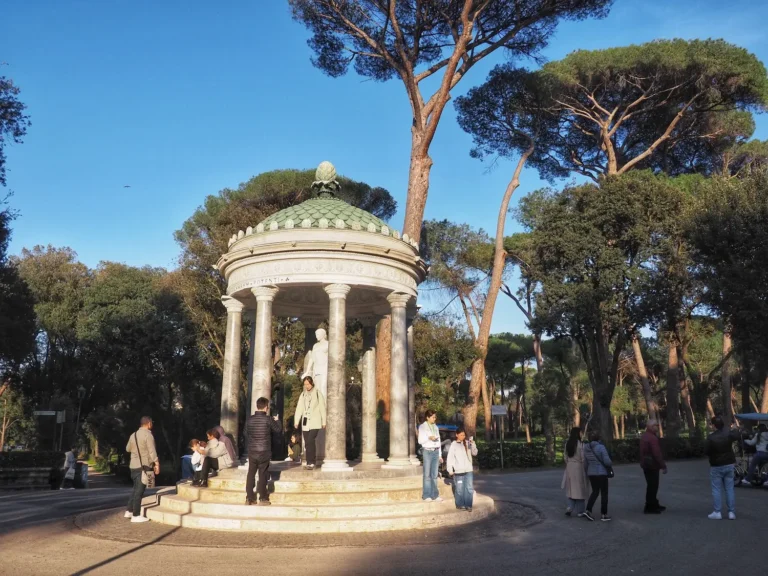
Spring is the season for Rome’s parks, and no park rewards a spring visit more than Villa Borghese. This 80-hectare estate sprawls across the Pincian Hill above Piazza del Popolo, functioning both as Rome’s great green lung and the finest urban park in the city.
The estate was created in the early 17th century as the private suburban retreat of Cardinal Scipione Borghese – nephew of Pope Paul V, voracious art collector, and the man who commissioned Bernini’s first great sculptures. These days the Villa is a haven for Romans and tourists alike looking to escape the bustle of downtown.
In spring, the park is transformed: blossoms appear on the ornamental cherries, wildflowers spring up along the paths between the umbrella pines, and the waters of countless fountains beautifully catch the April light. It’s the perfect setting for a morning walk between museum visits, or simply for the pleasure of being outdoors and at peace with the world.
Whilst here seek out the lovely boating lake, where you’ll always find a family of ducks happily quacking in the shadow of the Temple of Aesculapius, an 18th-century imitation of an ancient temple featuring a sculpture of the ancient Roman god of medicine.
Within the park, the Galleria Borghese is one of the great art museums of Italy — a collection assembled by Scipione himself that includes Bernini’s Apollo and Daphne, The Rape of Proserpina and David, as well as paintings by Caravaggio, Raphael, Titian and Rubens, all displayed in the cardinal’s original casino.
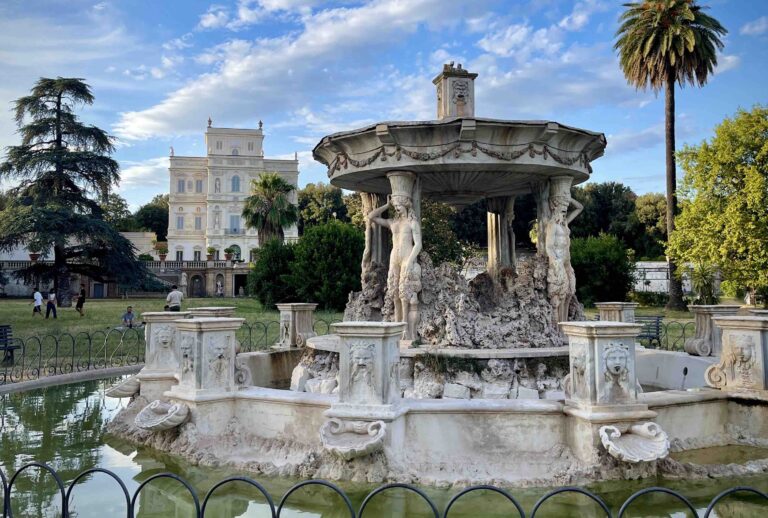
Other green spaces worth seeking out in spring: the enormous Villa Doria Pamphilj on the Janiculum hill, Rome’s largest park and far less visited than the Borghese. The Orto Botanico of the University of Rome La Sapienza, a botanical garden of genuine beauty tucked behind the Palazzo Corsini in Trastevere.
The Parco degli Acquedotti, where the majestic remains of ancient aqueducts stand silent watch over a landscape of flowering almonds.
Finally, the Roseto Comunale on the Aventine Hill, where Rome’s municipal rose garden opens to the public each spring with over a thousand varieties in bloom – free to visit and one of those hidden pleasures that most visitors never find.
The Roman Forum and Ancient Sites in Spring
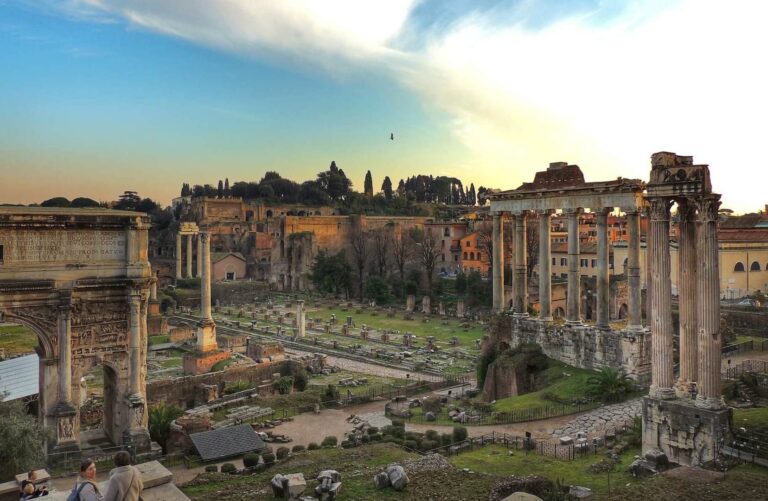
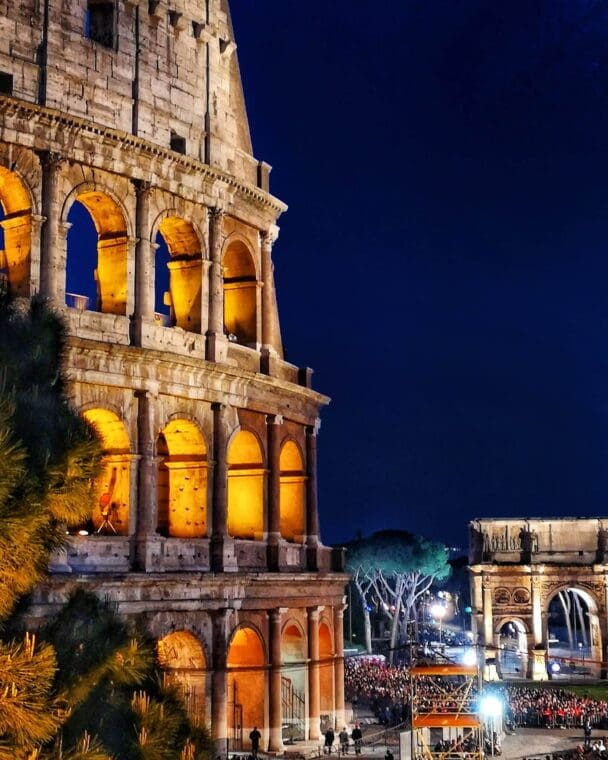
Anyone who has visited the Roman Forum in the height of summer – squinting through the heat haze, seeking shade at every available column, surrounded by crowds – knows that rummaging through the ancient ruins of the Roman Forum can be hot, thirsty and dusty work.
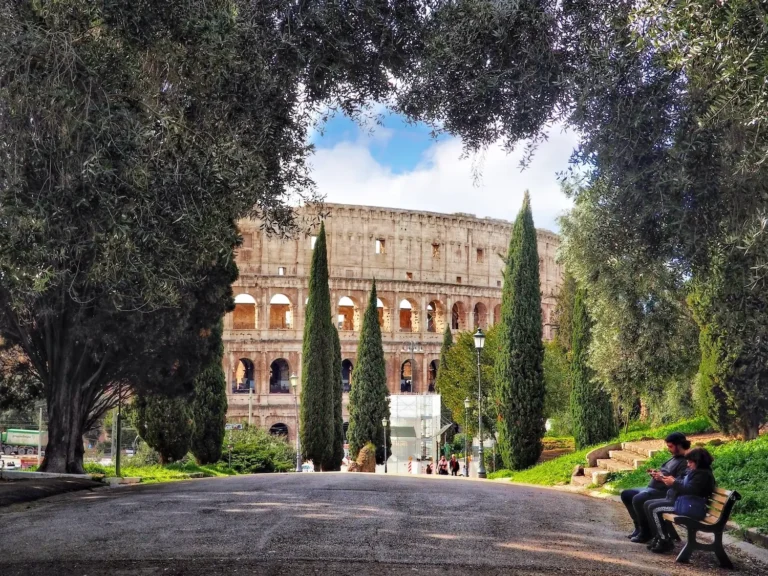
Spring is different. In April and May, visiting the Forum is a pleasure: the temperatures are comfortable, wildflowers grow between the ancient stones, the light is warm without being brutal, and the crowds are rarely overwhelming.
The same is true of the Palatine Hill above the Forum, where the ruins of the imperial palaces sit in a landscape of remarkable beauty at this time of year – think pine trees, flowering herbs, and wide views across the city in every direction.
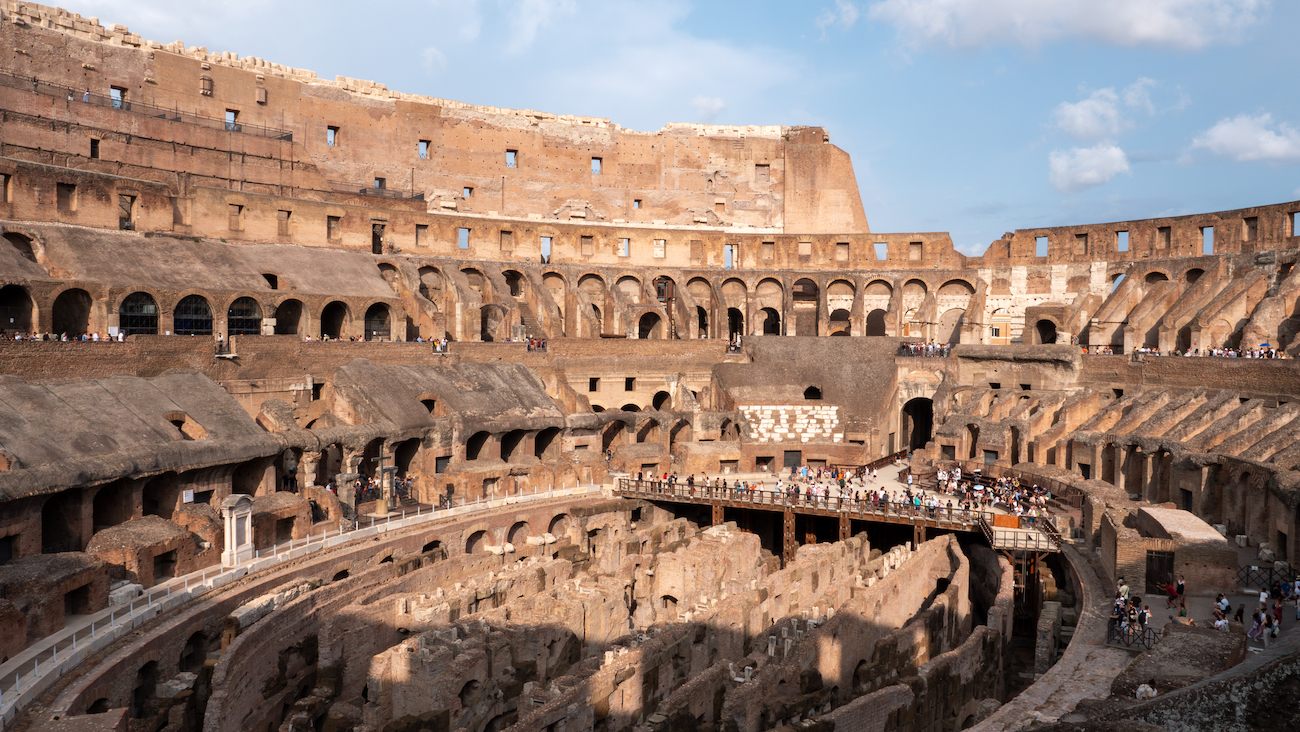
Allow at least half a day for the combined Colosseum, Forum and Palatine complex in spring, and consider arriving at opening time (9am) to get ahead of the group tours that build through the morning.
Take a Spin Down the Appian Way
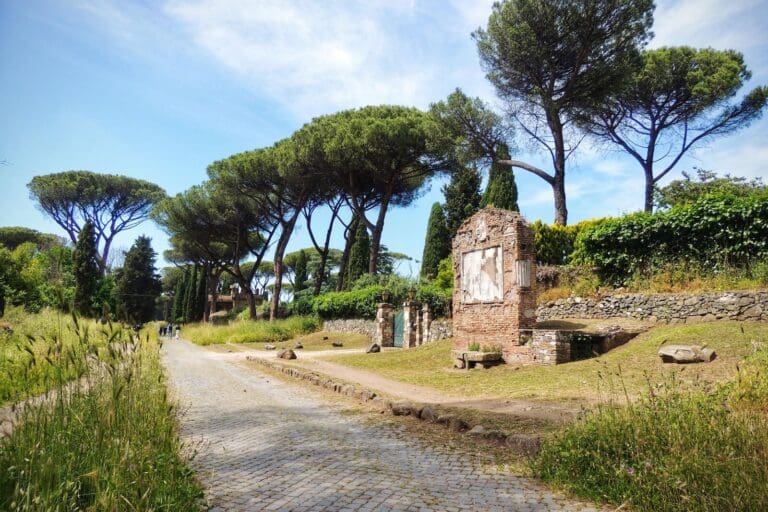
The Appian Way deserves particular mention as a spring destination. Rome’s oldest road, known in antiquity as the regina viarum, or the queen of roads, runs south-east from the city walls through a landscape of extraordinary historical resonance: ancient tombs, catacombs, ruined villas, and stretches of the original basalt paving that have barely changed in two thousand years.
On a spring morning, with the umbrella pines casting their characteristic shadows and the traffic reduced on the sections accessible only on foot, it is one of the most beautiful walks in the city. The stretch between the Porta San Sebastiano and the tomb of Cecilia Metella is the most rewarding for first-time visitors.
You can also rent a bike at the beginning of the road, which means you’ll be able to cover more ground. It’s one of our favorite things to do in Rome during the Spring.
Get to grips with the Easter Story with Michelangelo
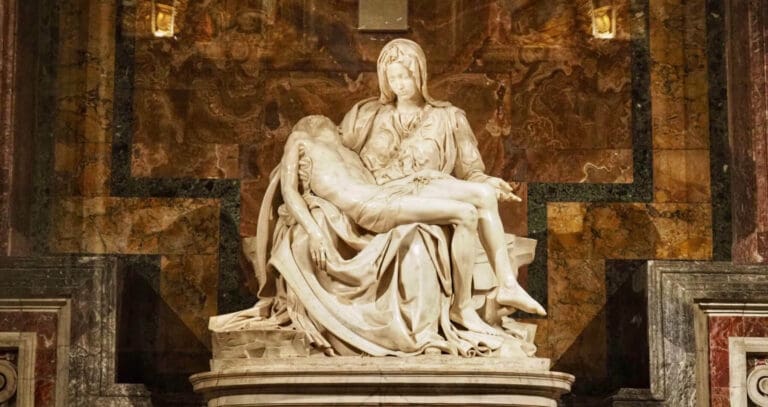
Easter is one of the two most important feasts in the Christian calendar, and the story of Christ’s crucifixion, death and resurrection is vividly told in artworks all across the Eternal City.
The key moments are portrayed with earth-shattering dynamism by Renaissance great Michelangelo in two Roman sculptures: the tragic Pietà in St. Peter’s Basilica in which the Virgin Mary cradles the beautiful but lifeless body of her murdered son, and the Risen Christ in the church of Santa Maria Sopra Minerva where the newly alive Son of God looks towards eternal life as he clutches the cross upon which he was crucified.
Although nowadays considered one of the master’s more minor works, contemporaries were far more enthusiastic: the painter Sebastiano del Piombo reportedly gushed that Christ’s knees were worth more than the rest of Rome put together.
Spring Exhibitions and Cultural Events 2026

Rome’s cultural calendar in spring 2026 is notably rich, with several major exhibitions running through April and May across the city’s principal museums and galleries.
- At the Scuderie del Quirinale — Rome’s most prestigious temporary exhibition space, housed in the former papal stables — the headline exhibition of the season is Treasures of the Pharaohs, running until 3 May 2026. This large-scale international loan show brings together extraordinary objects from ancient Egypt, offering a sweeping overview of pharaonic civilisation.
- At Palazzo Barberini, the major spring exhibition is Bernini e i Barberini, running from 12 February – 14 June 2026. The show explores the relationship between Gian Lorenzo Bernini and the Barberini family, above all Pope Urban VIII. Palazzo Barberini is one of Rome’s finest Baroque palaces, and worth visiting for its architecture alone, with Pietro da Cortona’s extraordinary ceiling fresco of the Triumph of Divine Providence presiding over the permanent collection of Raphael, Caravaggio and Holbein.
- At the Museo dell’Ara Pacis, one of the season’s standout international exhibitions is Impressionism and Beyond: Masterpieces from the Detroit Institute of Arts (through early May 2026). This is a rare opportunity to see works by Edgar Degas, Pierre-Auguste Renoir, Vincent van Gogh, Paul Cézanne, and Pablo Picasso in Rome, tracing the evolution from Impressionism into the experimental languages of modern art.
Rome's Markets in Spring
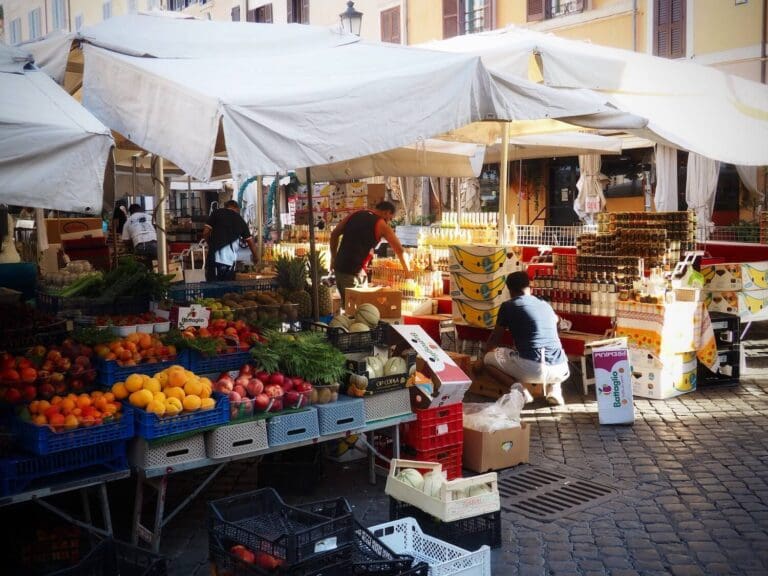
Spring is market season in Rome, and the city’s outdoor markets are at their best when the weather is mild and the seasonal produce is at its peak.
- The Porta Portese flea market is held every Sunday morning in Trastevere, sprawling across the streets around the eponymous gate in a vast, chaotic, occasionally overwhelming jumble of antiques, clothing, books, housewares, curiosities and outright junk. It’s one of Rome’s great weekly institutions, and there are always treasures to be found. The market is best experienced early before the crowds build and the best finds disappear. It is free to browse and operates rain or shine.
- The Campo de’ Fiori food market is held every morning (apart from Sunday) in one of the city’s most atmospheric piazzas. These days it can be a bit touristy, but it’s still worth stopping by for the atmosphere and people watching.
- If you’re serious about your food then you need to head to the Mercato Testaccio, located in the covered market hall of the Testaccio neighbourhood. This is the choice of serious food lovers: a working local market with excellent produce vendors, good cheese and cured meat stalls, and some of Rome’s best street food at the stalls inside. Less scenic than Campo de’ Fiori but considerably more authentic, it’s a natural complement to a morning exploring the neighbourhood’s remarkable ancient and medieval history.
- Equally impressive is the Trionfale Market, housed in a purpose-built structure near the Vatican. For an in-depth guide to visiting Trionfale market and the stalls to look out for, check out our guide here.
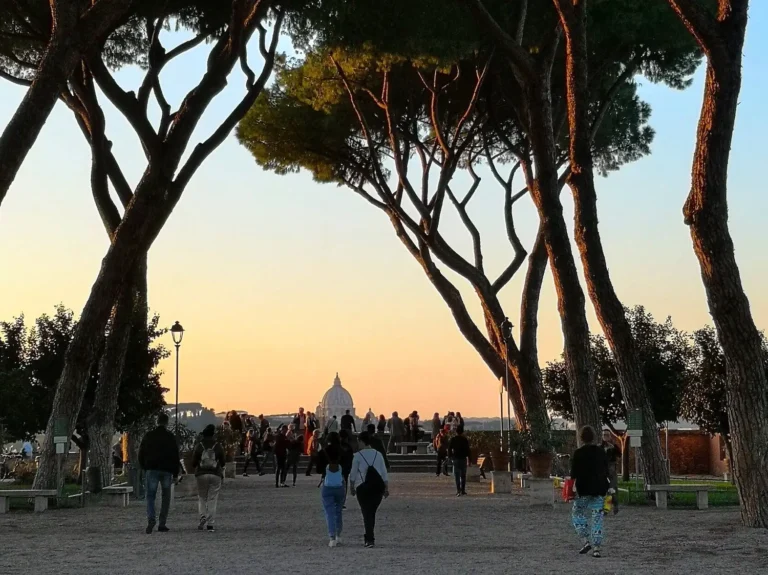
The Aventine Hill is one of Rome’s great underrated neighbourhoods – a quiet, residential area of tree-lined streets and beautiful gardens that sits above the Circus Maximus which features some of the most rewarding spring walking in the city.
The Giardino degli Aranci (Garden of Oranges) occupies the site of a medieval Benedictine fortress and is one of Rome’s finest small gardens: a terrace planted with bitter orange trees and aromatic herbs, with an extraordinary view across the Tiber and the rooftops of Trastevere toward St Peter’s dome.
In April the orange blossom fills the air with a scent that can stop you mid-stride. It offers up one of the best sunset panoramas in the city.
From the garden, a short walk leads to the Basilica di Santa Sabina – one of the finest early Christian churches in Rome, dating to the 5th century, with original wooden doors that include the oldest known depiction of the Crucifixion in Western art.
Just around the corner is the famous keyhole of the Knights of Malta – a small circular aperture in an otherwise unremarkable door that frames a perfectly composed view of St Peter’s dome at the end of a long tunnel of sculpted hedgerow. It is one of Rome’s most justly celebrated hidden pleasures, and is free to see (although you might have to wait a few minutes for your turn to take a peek).
Spring Food in Rome
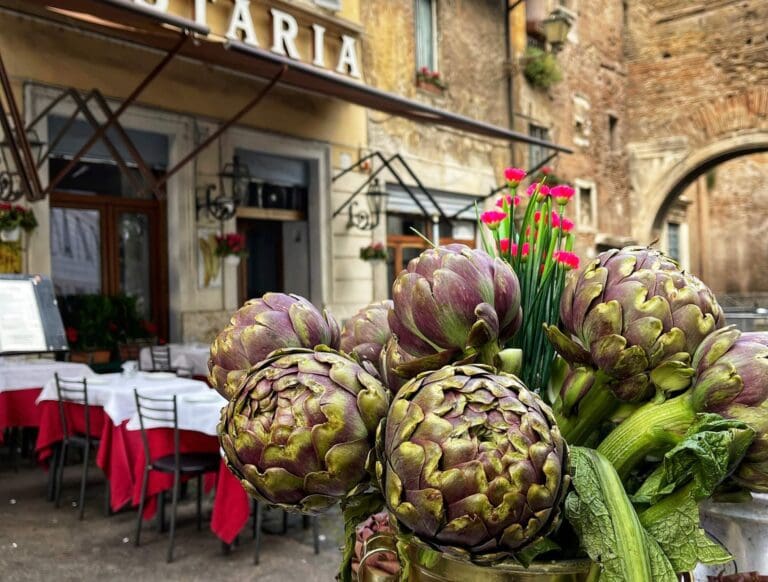
As with all Italian regional cuisine, Roman cooking changes dramatically with the seasons. Spring brings a cluster of ingredients specific to this time of year that makes eating in Rome between March and May a real pleasure.
The carciofo romanesco – the great round artichoke of the Roman and Lazio countryside – is available through winter but reaches its absolute peak in spring, and in April it is everywhere: at market stalls, in restaurant windows, piled high on the counters of neighbourhood trattorias.
Prepared alla giudia (deep-fried whole until the outer leaves are crackling and the heart is tender, a technique perfected in Rome’s Jewish Ghetto) or alla romana (braised in olive oil with garlic, mint and parsley until collapse), the Roman artichoke at its best is one of the great joys of Italian food culture. Order it wherever you see it.
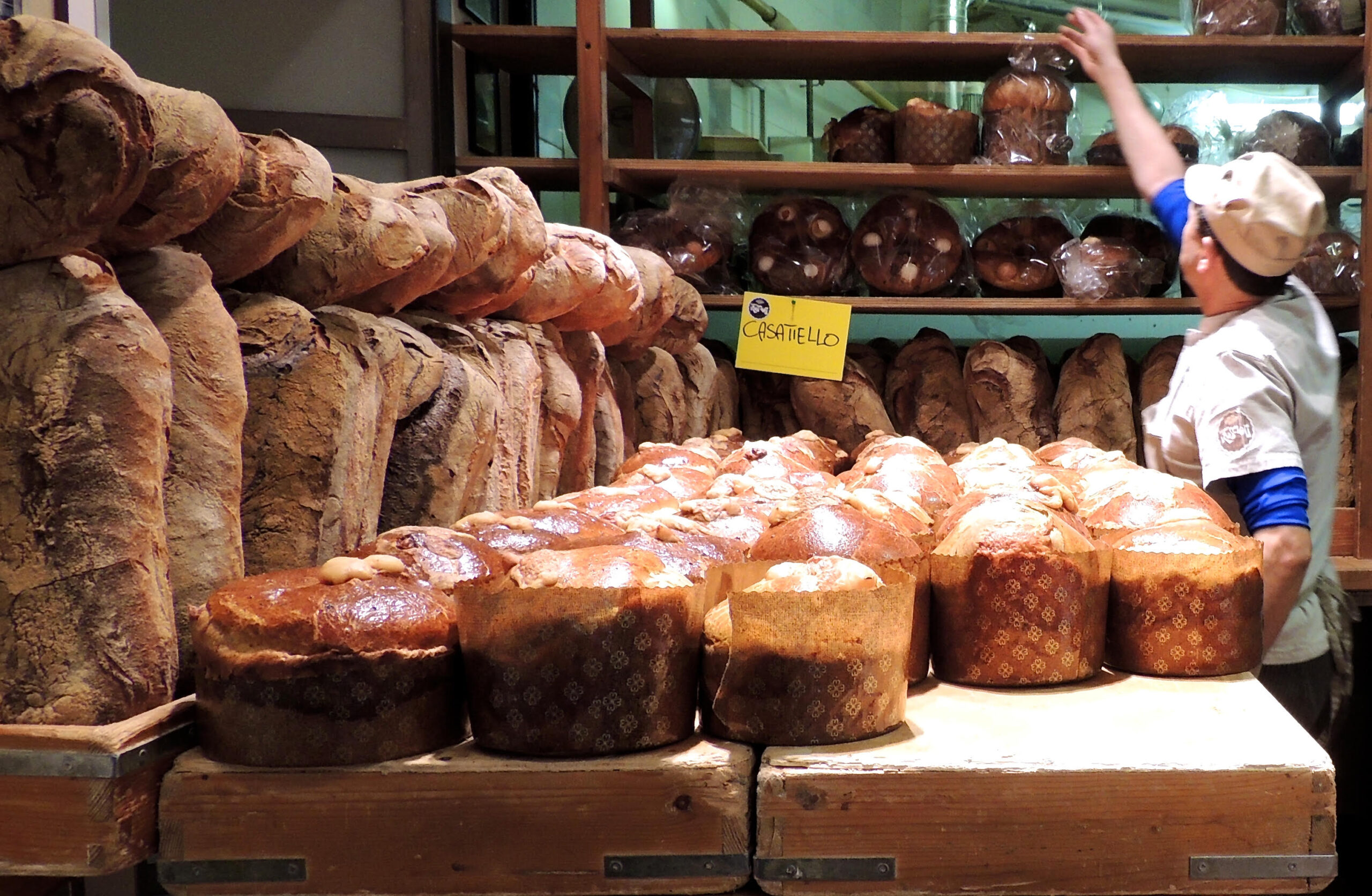
Spring also brings the first fave – broad beans – eaten young and raw in Rome with slices of sharp pecorino romano to herald the season: vignarola, a Roman spring vegetable stew of artichokes, peas, broad beans and guanciale, appears on menus across the city through April and May as a seasonal dish of considerable charm. Fragole di bosco – wild strawberries hailing from the hills of the Castelli Romani – also arrive in the markets in April, tiny and intensely flavoured.
For a properly seasonal Roman lunch, the neighbourhood trattorias of Testaccio, San Lorenzo, Tor Pignattara and the Jewish Ghetto are amongst the best destinations: these are the parts of the city where the connection between the market and the kitchen remains most immediate, and where a spring menu genuinely reflects what arrived at the stalls that morning.
Day Trips from Rome in Spring
The landscape around Rome comes alive in spring in ways that make the city’s surrounding countryside among the most rewarding in Italy for short excursions.
- Tivoli (30km east, reachable by bus or train): home to Villa Adriana and Villa d’Este, Tivoli is at its finest in spring, when Hadrian’s vast archaeological complex is carpeted with wildflowers and the infinite fountains of Renaissance gardens of Villa d’Este run at full water pressure before the summer heat reduces the flow. Both sites offer free entry on the first Sunday of each month — in April and May this is an excellent option, though arrive early as the free Sundays draw crowds.
- Giardino di Ninfa (80km south): This is one of Italy’s most celebrated romantic gardens, a medieval ghost town reclaimed by nature and transformed through the 20th century into a garden of extraordinary beauty. The garden opens for guided visits on weekends from April through November. You’ll need to book well in advance.
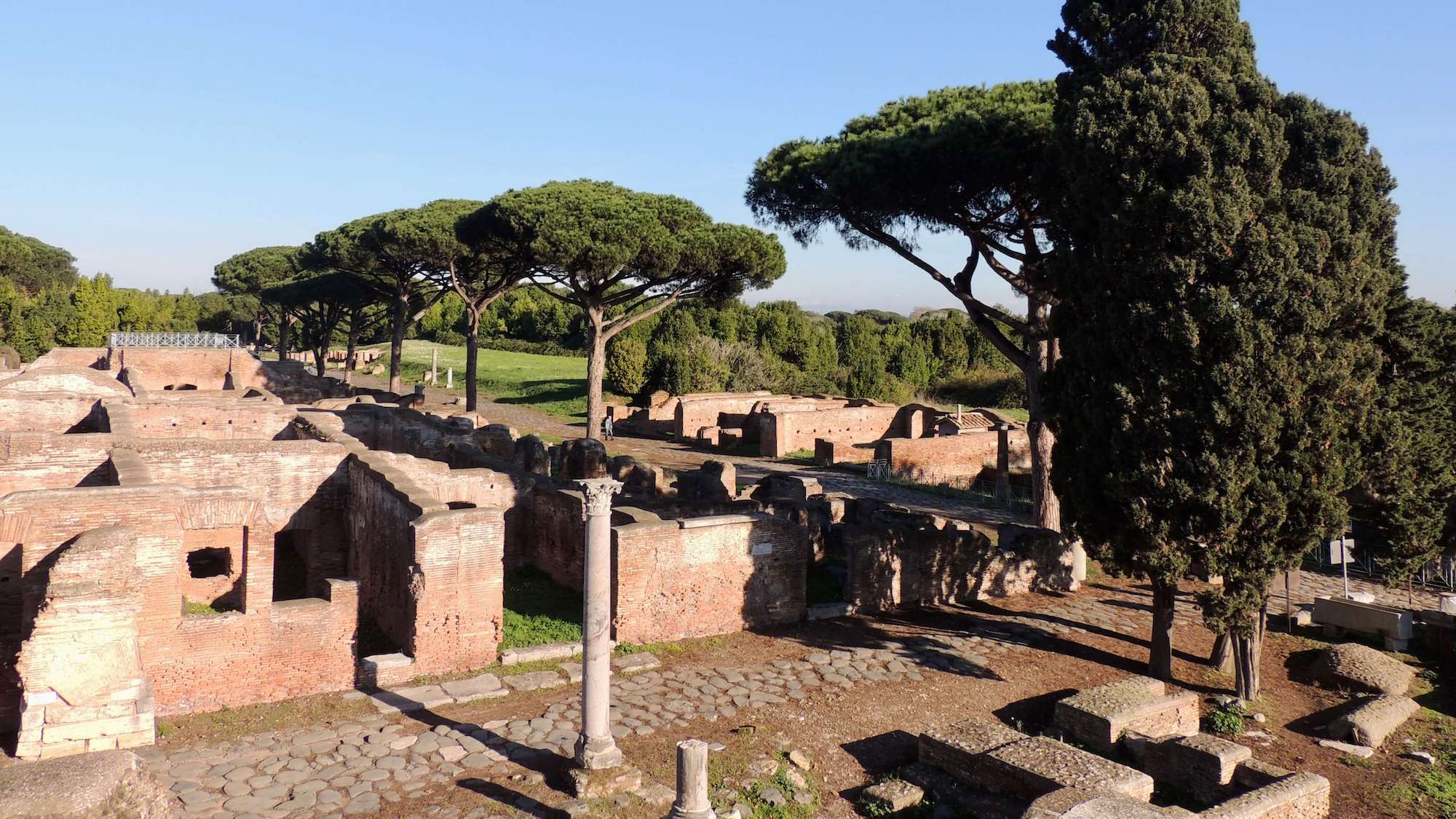
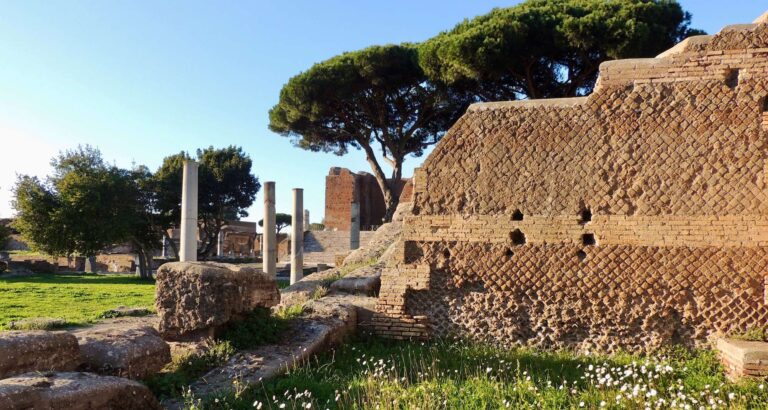
- Ostia Antica (30km south-west, reachable by metro and local train). The remains of Rome’s ancient sea port at Ostia Antica are worth a visit at any time of the year, but this vast archaeological park looks especially spectacular in the springtime, when wild flowers and blooming trees burst into life, providing a stunning natural backdrop for the ruins. An added bonus is that the in-situ mosaics, often covered for conservation reasons during the winter, are finally uncovered.
- The Castelli Romani are a string of volcanic hill towns south-east of Rome on the Alban Hills that make an ideal spring day trip, combining beautiful landscape, excellent local wine, ancient history and the particular pleasure of sitting outdoors on a hillside with views toward Rome in the distance. Castel Gandolfo, overlooking the blue volcanic Lago di Albano, is home to the Pope’s lavish summer villa, complete with stunning gardens you can visit. Nemi meanwhile is famous for the wild strawberries that are harvested at this time of year – you’ll find them sold in paper cones at roadside stalls through May. For food lovers, porchetta-producing Ariccia is tough to beat.
Practical Information: Visiting Rome in Spring FAQ
Is Spring a good time to visit Rome?
Absolutely. Late March or Mid-April through May is the sweet spot of the Roman spring. Early April usually coincides with Easter, which brings its own extraordinary atmosphere but also significant crowds and requires more advance planning – see our dedicated Easter guide here. By mid-April the Holy Week crowds have dispersed, the weather is reliable, and the city is operating at something close to ideal conditions. May is particularly beautiful: warm, long days, the city in full seasonal stride, the prospect of summer just around the corner…the city is always in a good mood!
What is the weather like in Rome in Spring?
Spring weather in Rome is mild but variable. Daytime temperatures in April typically range from 15 to 20°C, rising to 20–25°C in May. April showers are real and can be heavy; May is generally more settled. Pack a light waterproof layer regardless of the forecast because Roman weather can change quickly.
How crowded is Rome in spring?
The main sites – the Vatican, the Colosseum and its surroundings, the Spanish Steps and Trevi – will be busy throughout April and May. The effective strategies are familiar: visit major sites at opening time, book timed entry in advance for the Vatican Museums, Galleria Borghese and the Colosseum. If you are considering a guided tour for any of these sites – which we strongly recommend for first-time visitors – you won’t have to worry about tickets as skip-the-line entry is part of the service.
Explore the less central neighbourhoods in the middle of the day when the tourist traffic around the main monuments is at its peak. Never be afraid to do some exploring off the beaten path, because most visitors never make it to some of the city’s most interesting areas like the Aventine, Testaccio, Prati, San Lorenzo and Pigneto.
What Should I Wear in Spring in Rome?
Spring in Rome means layers – dress like an onion, as the locals say. Mornings can be cool, afternoons often warm considerably and the evenings cool once more. The dress code for churches – covered shoulders and knees – applies throughout the year and is worth planning for, particularly in spring when the temperature difference between street and church interior can make the choice of what to wear complicated. Comfortable walking shoes are essential: Rome’s cobblestones are not designed for heels.
For over 25 years, Through Eternity have been organizing itineraries showcasing the best of Rome, from the Vatican to the Ancient City and beyond, led by our resident expert guides. If you’re planning a visit to the Eternal City this Spring, be sure to get in touch to help plan your perfect trip!
Book Your Rome Experience