The experience we propose is an exclusive one, primarily because you will be among the first few visitors to enter the Sistine Chapel before the Vatican Museums are open to the public, allowing you to enjoy these masterpieces as they were originally enjoyed by popes and princes. With such optimal conditions it will be easier to admire these works of incomparable beauty, to fully comprehend their meaning, and linger over their details and curious points. Our presentation will help you visualize the cultural context in which such works arose, immersing you in the climate of the Renaissance, in the passions that accompanied artists and princes, merchants and bankers in the creation of a new world of palaces, domes, and cities designed to proclaim the greatness of man. Thus you will discover this happy season of human history when the flowering of the arts was accompanied by the evolution of science, together laying the foundations for much of our modern world, from the laws of perspective to the invention of the printing press and the instruments that permitted Columbus to reach the New World.
The Sistine Chapel and the Raphael Rooms
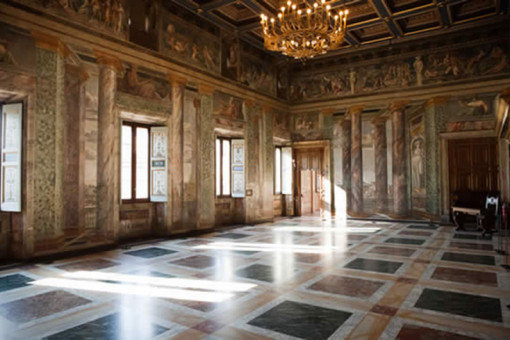
The years in which Michelangelo and Raphael gave life to their masterpieces of tremendous significance were years of great cultural fervor in Rome and had a lasting impact on the history of art. Between roughly 1508 and 1512, they worked only a short distance from one another, one in the Sistine Chapel, the Pope's private chapel, and the other in the Pope's apartments. The Pope was the famous Julius II, a controversial figure, melancholic and tempestuous, whose artistic intuition is difficult to deny. It was he who wanted Michelangelo to fresco the entire gigantic vault of the Sistine Chapel, though the artist's fame arose from his sculpture and his experience with fresco painting was limited. Some months later the same Pope invited the young Raphael, fresh from his success in Florence, to fresco the papal apartments. The last word will never be written on how these two great artists perceived this thinly veiled competition or what each thought of the other's work, though some type of escalation clearly led each to the top. The marvelous figures that they painted will nevertheless speak for them. The knowledge of how to read the gestures, expressions, and the stories of humanity and creation that they recount, will makes it possible for us to enter into the lives of these artists and their patrons, to sense their inspirations, and to gather their ideas and passions. We will familiarize you with the very different personalities of these two masters, their difficult relationship, and the false legends - like that of Michelangelo painting the Sistine ceiling by himself, a myth circulated by those unfamiliar with the technique of fresco. We will also introduce you to some of the other artists and art lovers who would have met around the luxurious tables of Popes Julius II, Leo X, or Paul III for impassioned discussions of philosophy, texts from antiquity, and of the poets of the present. These works of art will come alive for you with such immersion in the ideals and personalities of those who created them. Like the men of that era, you will be caught between admiration, stupor, and the excitement of scandal.
The Vatican Picture Gallery
This part of the Vatican Museums has fortunately remained relatively quiet, and it is still not on the itinerary of many of the mass tours. It offers an unrivaled collection of paintings that include a powerful and typically unfinished work by Leonardo da Vinci that depicts St. Jerome, Raphael's last painting, the Transfiguration, Caravaggio's innovative Deposition, as well as masterpieces by Giotto, Perugino, Titian and many others. The gallery is arranged in a series of rooms that strive to present a chronological order that begins with 12th century Medieval painting and continues to the Renaissance, Baroque, and beyond. Passing through the rooms, the paintings will show us how man's vision of his role in relation to earthly experienced changed, and how in the Renaissance man self-confidently asserted his centrality. In this transition the human figure and the illusion of three-dimensional space became more tangible, man appears to descend from an otherworldly realm to inhabit the earth.
Greek and Roman Art
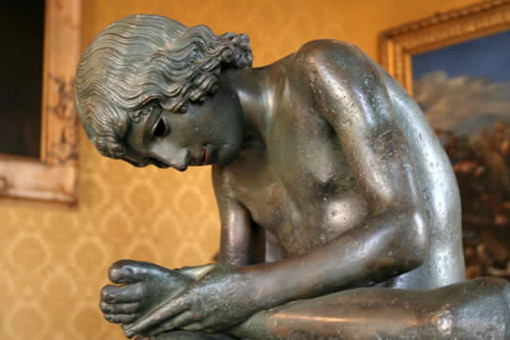
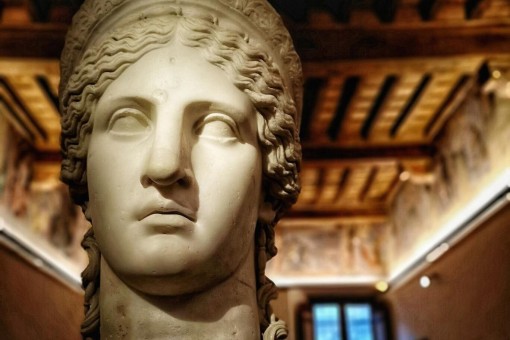
The Apollo Belvedere, the Laocoon, the Belvedere Torso, and dozens of other works of extraordinary beauty and historical significance are housed in still other spaces, that are themselves architecturally rich and lavishly decorated. They too make up part of the dense historical picture, built through the centuries by various popes not only to expand their living quarters but also to give space to their collections, constantly growing in the fervor of excavations that animated Rome from the Renaissance onward. There are many layers of meaning to such works—what did the Laocoon, for example, mean to the Greeks of the tempestuous Hellenistic age, and why did the Romans prize these antiquities and collect an infinite number of precious copies, what inspiration did they generate in the minds of Michelangelo and Raphael? We will thoroughly cover these and other topics in our Vatican journey, giving you the chance to discover and appreciate the dramas of gods and man that animated these works with infinite expressive force.
Other Works
Additionally we will see the porphyry sarcophagi of the emperor Constantine's mother and daughter, Helen and Costanza, each displaying Early Christian symbolism. We will see many other artworks and fascinating details in the Gallery of the Candelabra, the Gallery of the Maps, and the Gallery of the Tapestries, each receiving the appropriate attention—and likewise for the sumptuous and sometimes spectacular palaces themselves that house not only these galleries, but many little secrets as well.
Saint Peter's Basilica and the Piazza
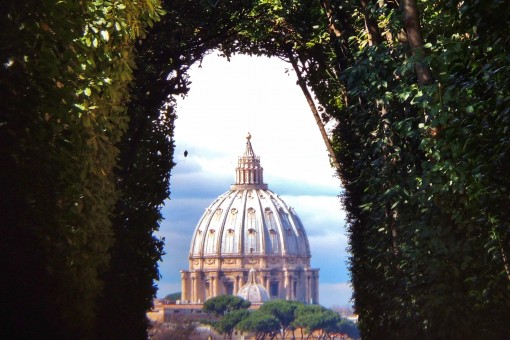
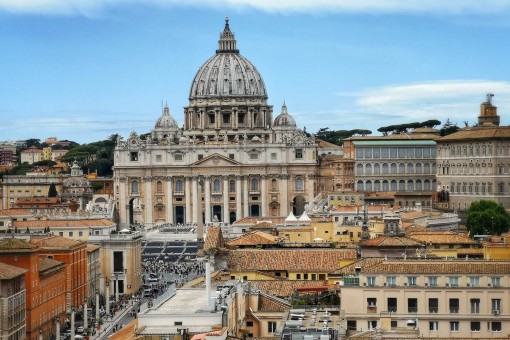
Our tour of the Basilica, starting with the history of Peter's crucifixion in the Circus of Nero, will pass through various phases of the diffusion of Christianity and the veneration of the tomb of the apostle until the construction of the first basilica in the 4th century and the growth of the surrounding neighborhood traversed by ever growing numbers of pilgrims from all over Europe. We will explain the history of the enormous undertaking to rebuild the original basilica and create the present one. On the orders of Julius II, work was begun in 1506 and during the course of 120 years it involved the plans of great architects such as Bramante, Raphael, Michelangelo, and Maderno. Of course we will guide assist you in the comprehension and emotional enjoyment of the masterpieces inside the basilica, including the bronze canopy over the high altar by Bernini, and the wonderful Pieta' by Michelangelo, in addition to those objects of more strictly religious veneration such as the medieval statue of St. Peter, venerated for centuries, and the exposed remains of one of the great popes who touched the hearts of the people, John XXIII. We will conclude in the Piazza of St. Peter with an analysis of the Baroque architectural genius of Bernini, capable of extraordinary optical illusions that multiply the dynamics of the space in front of the Basilica. And finally we will briefly recount the history of the great moments in Rome, from the elections of the popes to the Jubilees that have for centuries brought thousands and thousands of the faithful here in prayer.
A singular journey that will immerse you in the great events, ideas, and art of the most formative moments in the past; a journey that will give you precious insights, emotions, and memories.
For a complete visit of the city, we recommend our semi-private tour
of the ancient city, Nero’s Rome, and our private Underground Rome tour. |